
Teacher Portal
Investigation 3: Faith in Depth
Maternal-Fetal Interaction
NOTE TO RELIGION TEACHER: This page consists of more in-depth theological connections for this Investigation. In it, you will find additional Scriptural Connections, Catechism Connections, Theology of Body References, and Catholic Virtues related to this scientific Investigation.
Before beginning the theological reflection, briefly recall what students investigated in science. This shared experience anchors theological discussion in concrete observation.
Scientific Content and Concepts
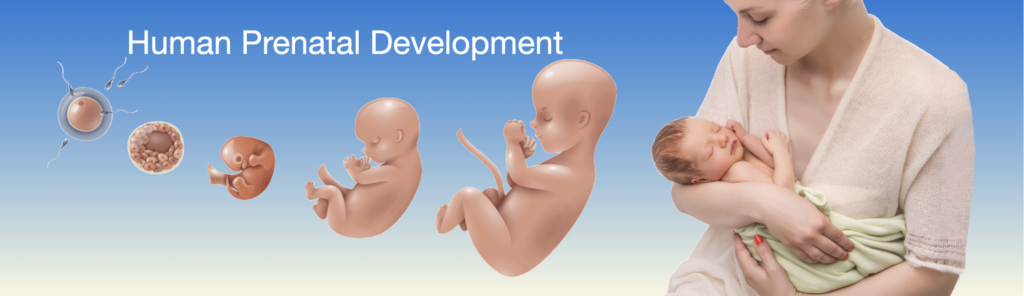
In Investigation Three, you continued to follow the initial series of events that occur when male and female gamete cells (spermatozoa and ovum) fuse, forming a zygote. This is followed by a well-understood sequence of mitotic cell divisions that form a human fetus.
During this Investigation, you:
- Learned about the defined stages of fetal development.
- Learned how the developing fetus interacts with its mother through a highly specialized tissue called the placenta.
- Learned how toxic molecules are removed from the growing fetus and transported through the placenta to the mother and how nutrients from the mother are transported to the fetus.
- Observed that, by the 21st week of pregnancy, the fetus has grown and is rapidly developing.

Scriptural Connections
Psalm 139:13–16 – “For you formed my inward parts; you knitted me together in my mother’s womb…”
Highlights God’s intimate role in human development.
Jeremiah 1:5 – “Before I formed you in the womb I knew you…”
Emphasizes the personhood and divine purpose assigned to each individual prior to birth.

Luke 1:41–44 – “When Elizabeth heard Mary’s greeting, the baby leaped in her womb…”
Affirms the recognition and response of the unborn John the Baptist to the presence of Jesus.
Isaiah 49:1,5 – “The Lord called me from the womb…”
Highlights God’s calling and purpose for individuals even before birth.
Galatians 1:15 – “But God set me apart from the time I was born…”
Indicates divine selection and purpose from birth.
Job 31:15 – “Did not he who made me in the womb make him?”
Acknowledges God’s role in the formation of all humans in the womb.
Catechism Connections:
CCC 2270 – “Human life must be respected and protected absolutely from the moment of conception.”
Establishes the Church’s unwavering stance on the sanctity of life from conception.
CCC 2271 – “Since the first century the Church has affirmed the moral evil of every procured abortion.”
Reiterates the Church’s consistent teaching against abortion.
CCC 2274 – “Since it must be treated from conception as a person, the embryo must be defended in its integrity…”
Emphasizes the moral obligation to protect embryonic life.
CCC 1711 – “Endowed with a spiritual soul, with intellect and with free will…”
Affirms the inherent dignity and divine orientation of human life from its beginning.
CCC 2258 – “Human life is sacred because from its beginning it involves the creative action of God…”
Highlights the sacredness of life due to its divine origin.
CCC 2319 – “Every human life, from the moment of conception until death, is sacred…”
Reinforces the sanctity of life throughout its entire span.
Theology of Body References:
-
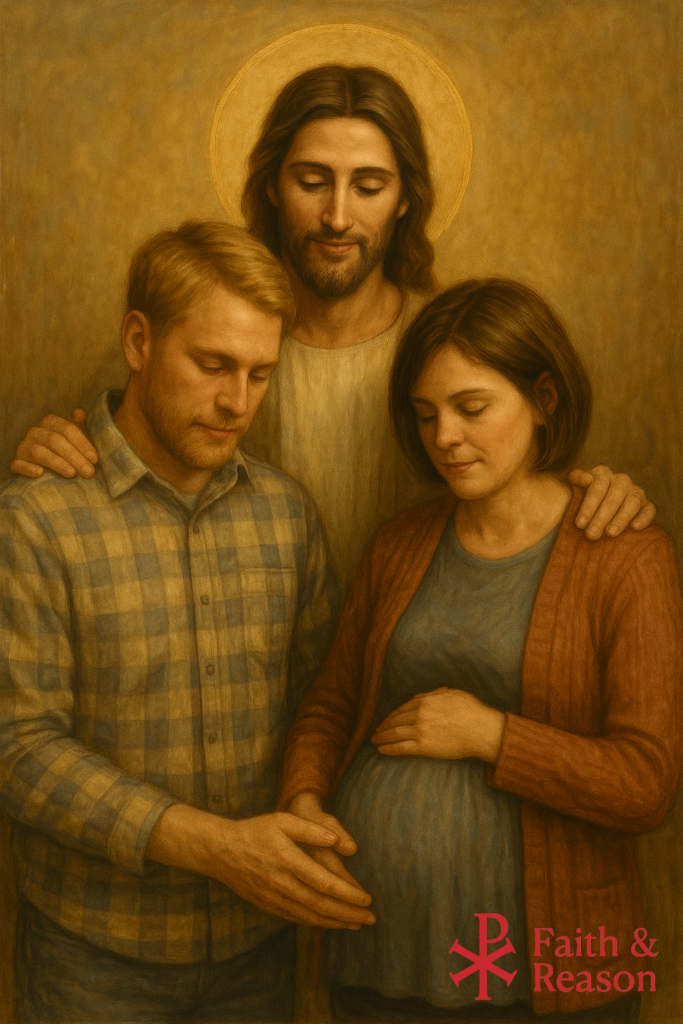
TOB 13:2 – The human body, even in its earliest form, reveals the person and is integral to understanding human identity.
-
TOB 19:4 – The body’s role in expressing the person, indicating that from the beginning, the body is a visible sign of the invisible soul.
-
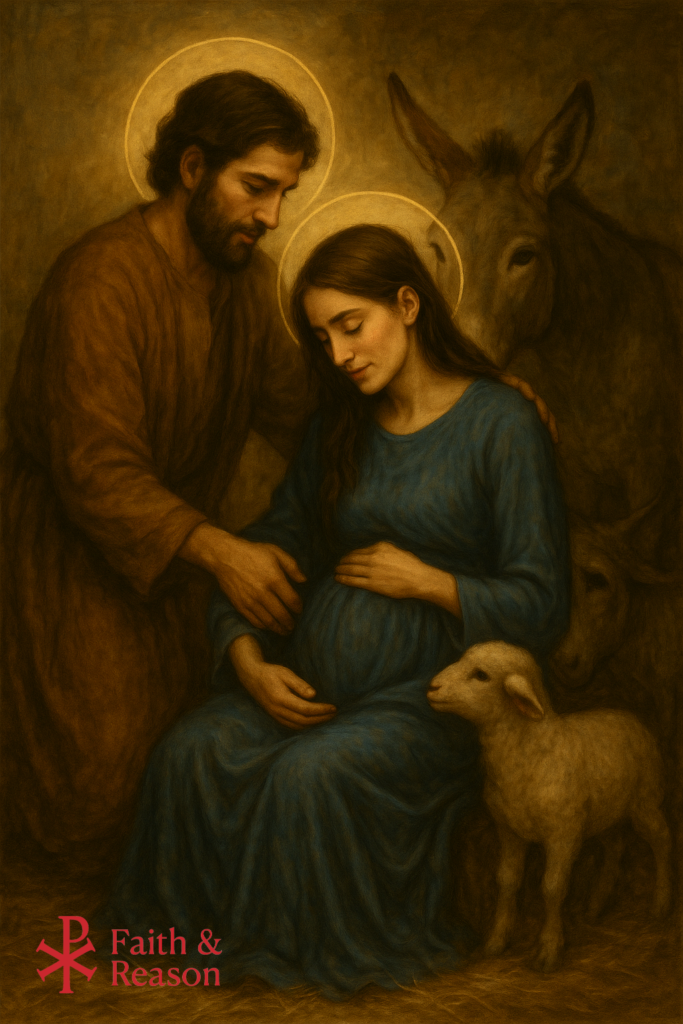
TOB 57:6 – The human body, in all stages, is created for communion and love, reflecting the Trinitarian nature of God.
-
TOB 60:4 – Discusses the sanctity of human life and the body’s role in expressing the person from the very beginning.
-
TOB 61:6 – Explores the concept of the body as a gift and its significance in the context of human dignity and vocation.
-
TOB 63:4 – Reflects on the integral connection between the body and soul, emphasizing the person’s unity from conception.
Catholic Virtues:
Reverence for Life – Recognizing the sacredness of life at all stages.
Compassion – Empathizing with the vulnerable, including the unborn.
Justice – Advocating for the rights of the unborn.
Prudence – Making ethical decisions regarding prenatal care and technologies.
Fortitude – Standing firm in pro-life convictions amidst societal pressures.
Faith – Trusting in God’s plan for every human life.
Hope – Believing in the potential and purpose of every unborn child.
Charity – Loving and supporting all human life selflessly.
Temperance – Exercising self-control in decisions affecting life and health.
Humility – Acknowledging our role as stewards, not owners, of life.
Reflection Prompt:
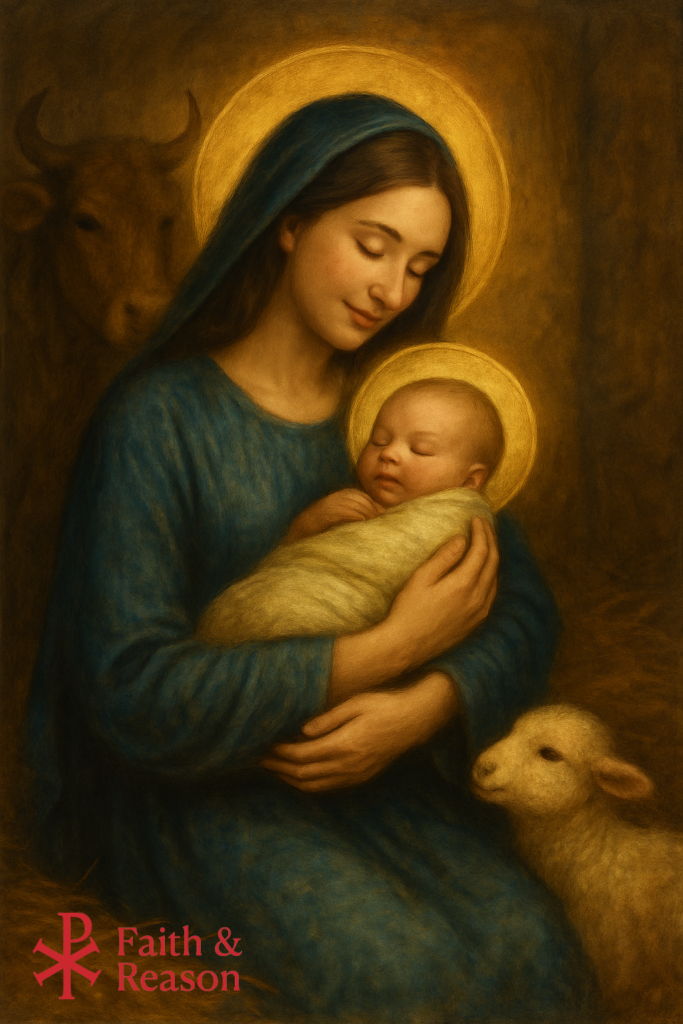
“How does witnessing the rapid and intricate development of the human fetus affect your understanding of the dignity and worth of every human life?”
Ethical Discussion Prompt:
Explore how modern prenatal procedures (e.g., ultrasound, in utero surgery, genetic screening) must be governed by respect for the full humanity of the unborn.
References
Scriptural Connections
Incorporating biblical references into the study of LabLearner science enriches the educational experience by connecting scientific exploration with spiritual reflection. By integrating scripture, students gain a deeper appreciation for the harmony between God’s creation and scientific discovery. For instance, verses such as “For You created my inmost being; You knit me together in my mother’s womb” (Psalm 139:13-14, New International Version) emphasize the sacredness and complexity of human life, aligning seamlessly with the study of prenatal development. The use of the New International Version (NIV) ensures a modern, accessible translation while maintaining theological depth. These references not only illuminate scientific concepts but also foster critical thinking about the moral and spiritual dimensions of science, encouraging students to approach their studies with both curiosity and reverence.
Catechism Connections
Incorporating references from the Catechism of the Catholic Church (CCC) into the study of LabLearner science helps students see the profound connections between faith and reason. The Catechism provides a theological framework that underscores the sanctity of life, the dignity of the human person, and the moral responsibility to care for creation. For example, CCC 2270 states, “Human life must be respected and protected absolutely from the moment of conception.” This teaching beautifully complements scientific lessons on prenatal development by emphasizing the sacredness of life at its earliest stages. By integrating these Catechism insights, students are encouraged to view scientific knowledge not in isolation but as a means to deepen their understanding of God’s creation and their moral responsibilities within it. This approach fosters a holistic view of education, where faith and science are partners in truth.
Theology of the Body Reference
Incorporating references from Pope John Paul II’s Theology of the Body (TOB) into the study of LabLearner science offers a profound way to connect biological processes with the spiritual and theological dimensions of human existence. TOB emphasizes the unity of body and soul, the sacredness of the human body, and the vocation of self-giving love. For example, TOB 19:4 states, “The body, and it alone, is capable of making visible what is invisible: the spiritual and the divine.” This insight beautifully aligns with the study of prenatal development, where the visible growth of the human body reflects the invisible dignity and purpose bestowed by God. By integrating TOB, students can explore how the scientific marvels of human development mirror the divine plan for creation, fostering an appreciation for the sacredness of life and the call to live as persons in communion. This approach bridges science and theology, cultivating a deeper understanding of the human person as a masterpiece of both physical and spiritual dimensions.
Virtue Education
Incorporating virtues into Christian education, particularly in the study of prenatal development, is essential to fostering a holistic understanding of human dignity and moral responsibility. Virtues such as patience, gratitude, and reverence for life align deeply with the Christian worldview, encouraging students to see human development as a miraculous and intentional act of God. These virtues serve as a bridge between knowledge and action, inspiring students to appreciate the complexity and sanctity of prenatal life and live in a way that honors the Creator. By cultivating virtues alongside scientific inquiry, Christian education equips students with the moral framework necessary to approach ethical issues with compassion and wisdom, fostering a profound respect for life at all stages.