Teacher Portal
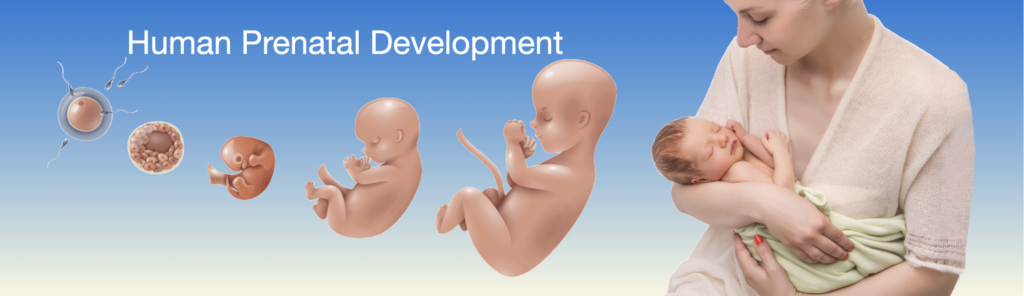
Investigation 4: Theological Connections
Navigate:
Once the slide presentation is launched:
- use your left and right arrows to advance or go back in the slide presentation, and
- hover your mouse over the left edge of the presentation to get a view of the thumbnails for all the slides so that you can quickly move anywhere in the presentation.
- Click HERE to launch the slide presentation for the CELL.
SLIDE HPDtheo-4-1
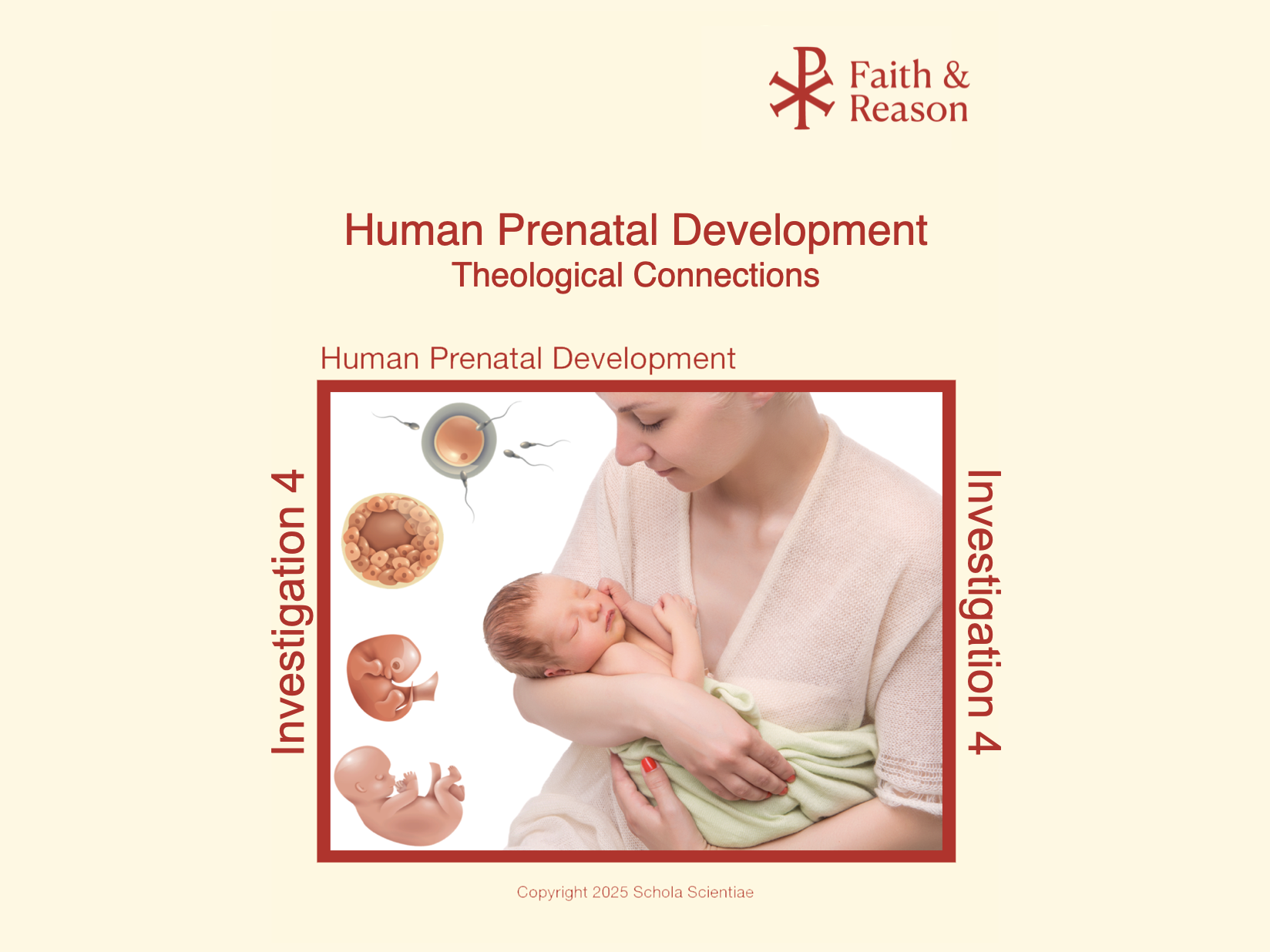
Human Prenatal Development – Theological Connections (Introduction)
This introductory slide sets the tone for the Human Prenatal Development Investigation 4 Theology lesson. It visually connects the scientific journey from fertilization to birth with the theological theme of God’s design and love for human life at every stage.
• Reflection Question: What do you notice about the way human life grows from the very beginning?
SLIDE HPDtheo-4-2
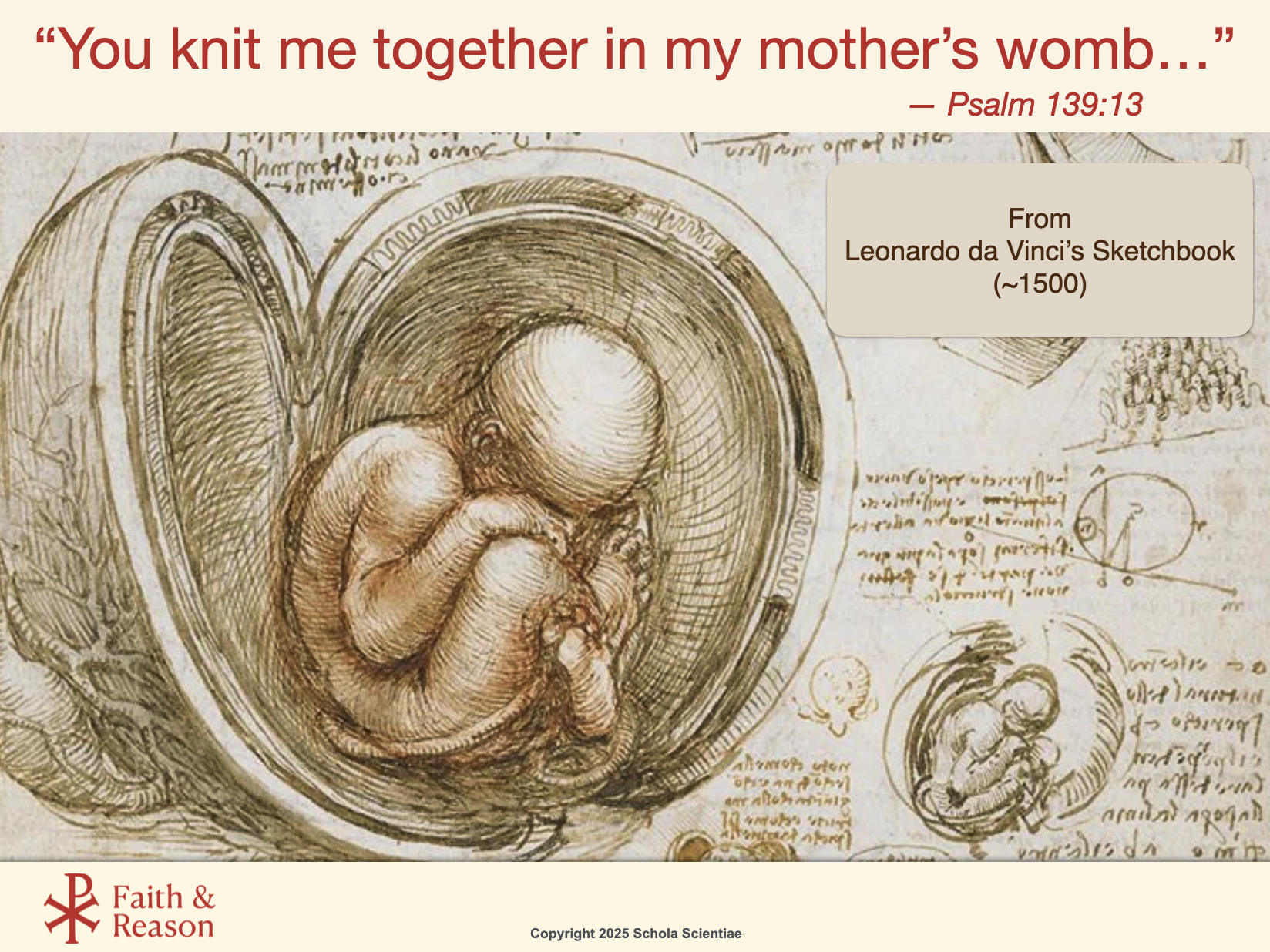
Late prenatal development is not just physical preparation for birth — it is part of a sacred journey. From the moment of conception, the human person grows according to a divinely ordered plan. Every heartbeat, every breath practiced, every moment of sensory experience in the womb reflects the beauty of God’s creation.
From a single cell to a newborn child, every stage of development reveals God’s plan and presence. The final weeks of pregnancy are not just physical preparation — they are part of a sacred design.
Reflection Question: What does this verse suggest about God’s role in your life before you were even born?
SLIDE HPDtheo-4-3
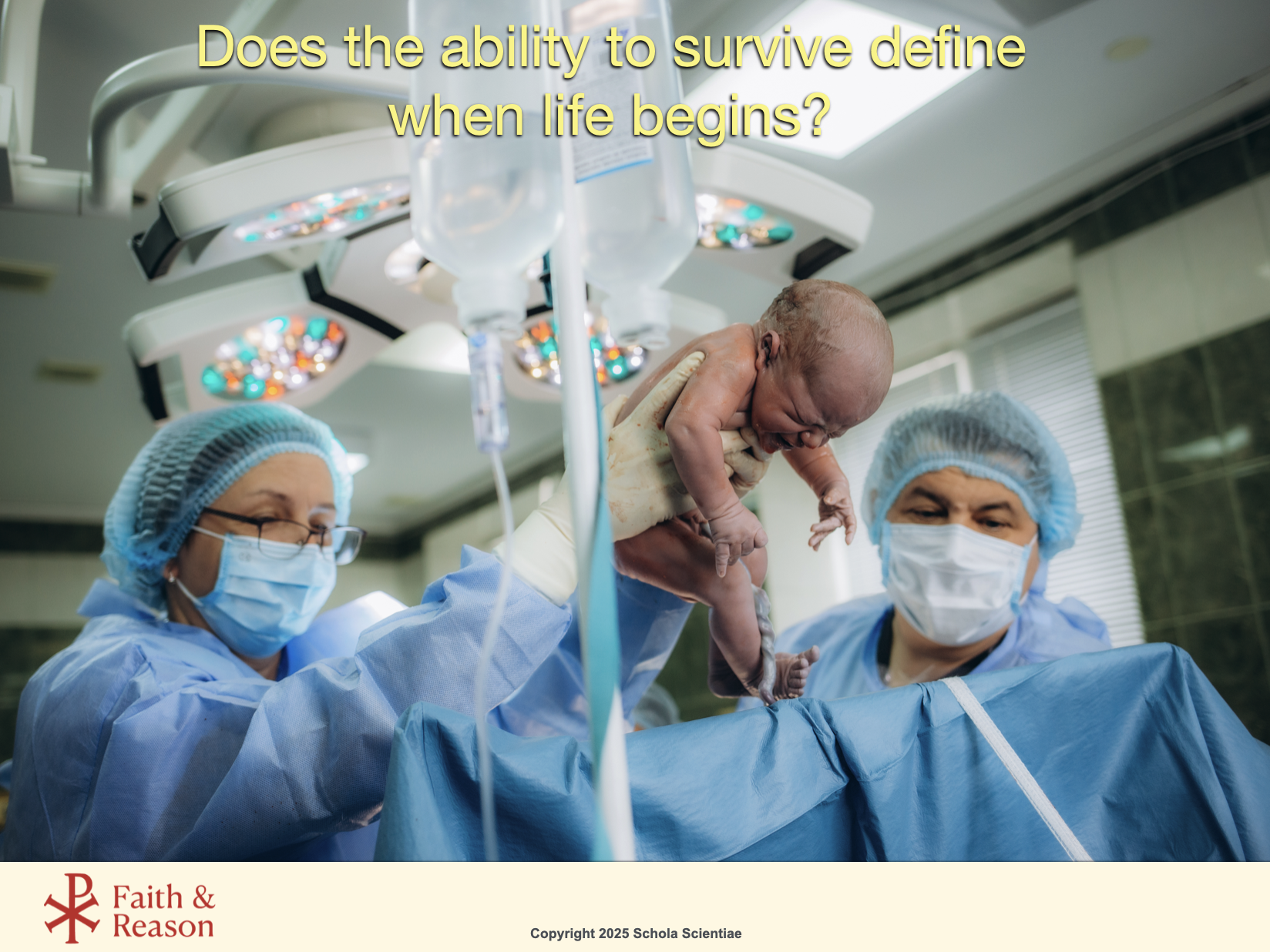
Does the ability to survive define when life begins?
Doctors define “viability” around 24–28 weeks. But the Church teaches that every human life is valuable from conception—regardless of ability, age, or size.
CCC 2270: “Human life must be respected and protected absolutely from the moment of conception.”
Reflection Question: How would our world be different if every person were valued from the moment of conception, regardless of their abilities?
SLIDE HPDtheo-4-4
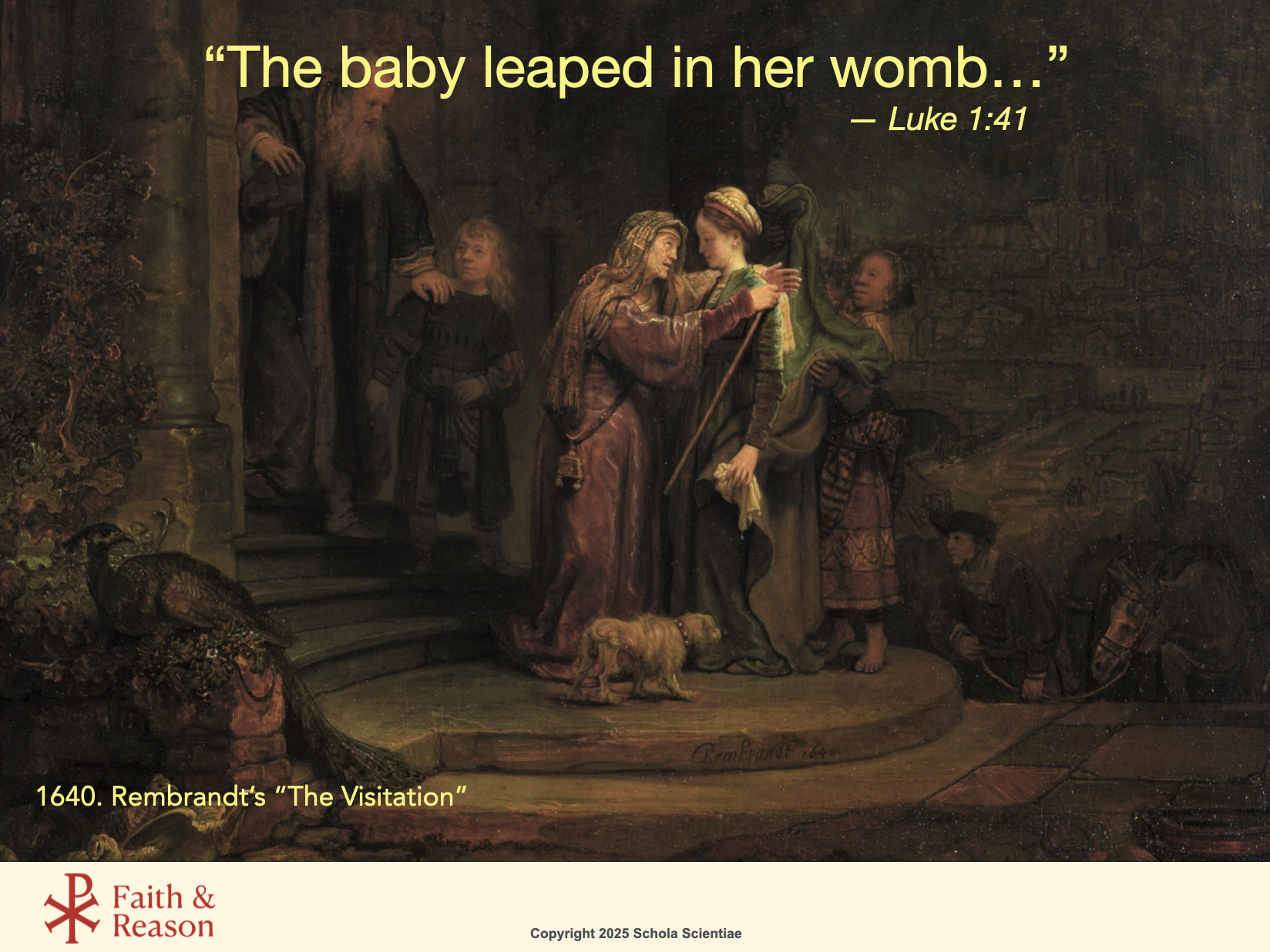
1640. Rembrandt’s “The Visitation”
Modern ultrasounds show that fetuses respond to music, voices, and even taste. John the Baptist recognized Christ while still in the womb. The Church has always affirmed that life in the womb is not only biological but relational.
Reflection Question: What does it mean that an unborn child can recognize love, voice, and presence?
SLIDE HPDtheo-4-5
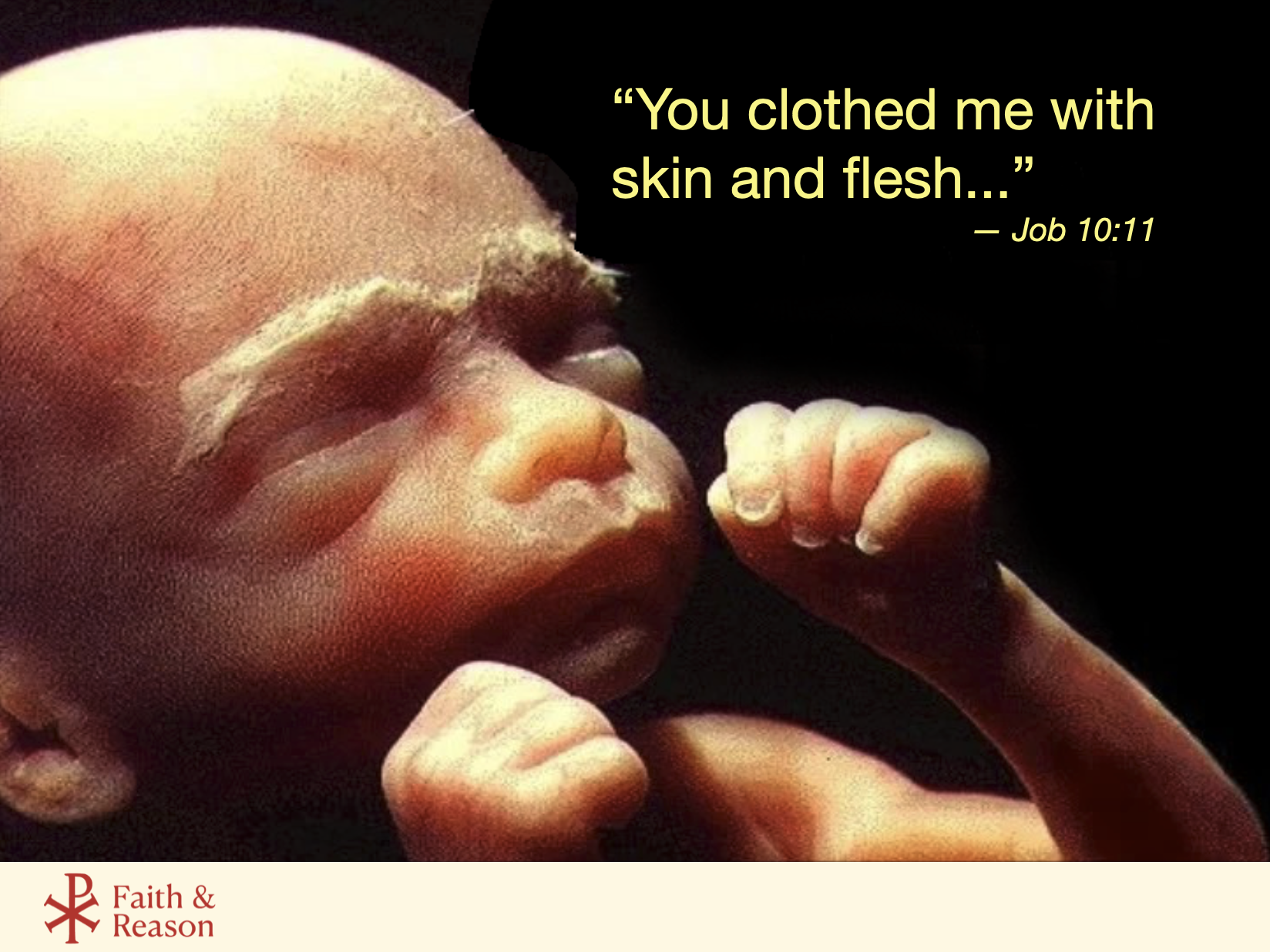
“You clothed me with skin and flesh…” Job 10:11
We chart the timing of the brain, heart, and lung development—but these don’t define our humanity. The Church teaches that our soul is present from conception, and our body expresses that inner reality. The body expresses the person—even before birth.
Reflection Question: Can we see the soul through the body, even in the womb? How?
SLIDE HPDtheo-4-6
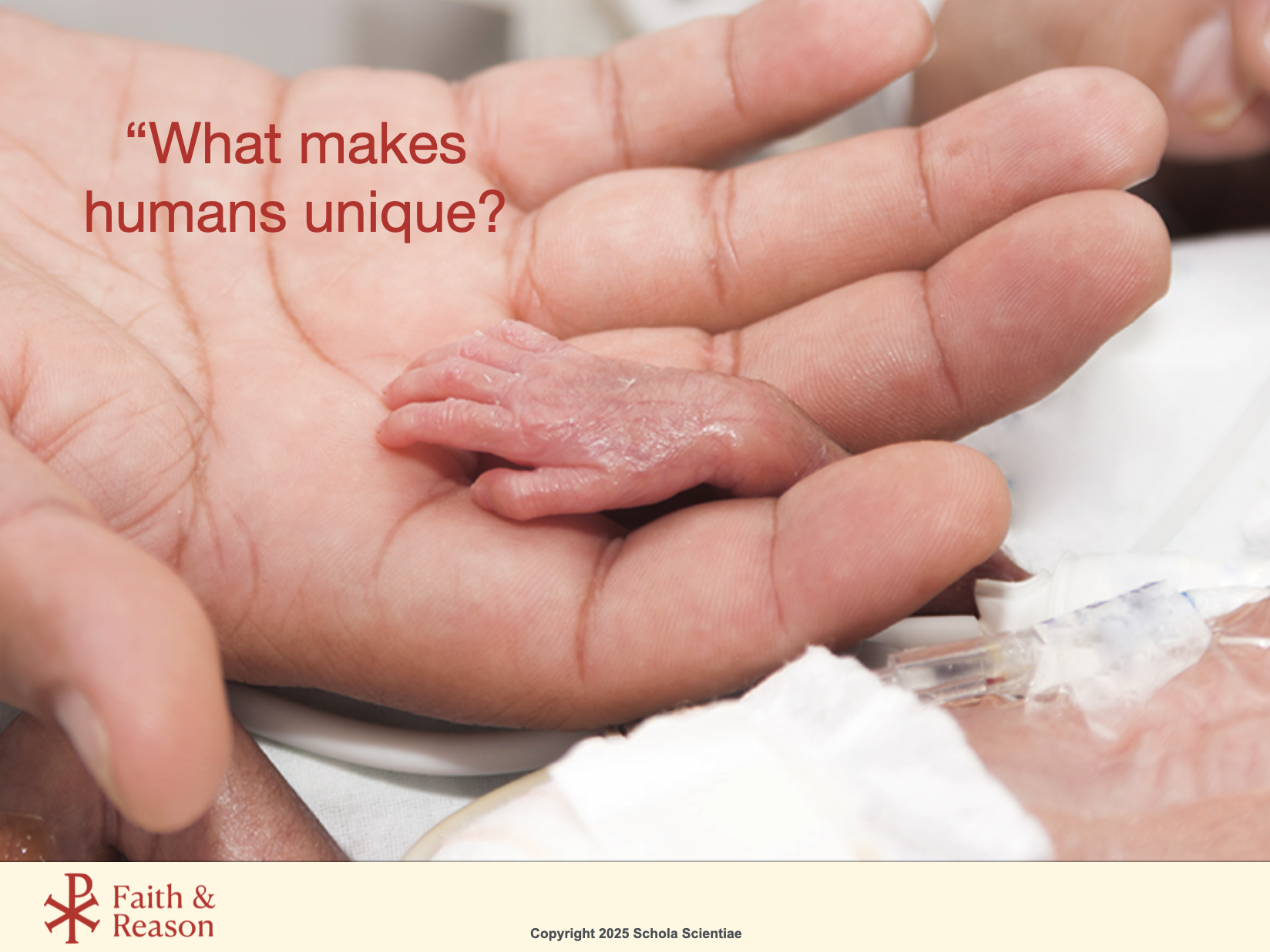
Photograph of a doctor holding a premature baby’s hand in the Neonatal Intensive Care Unit (NICU)
We see the baby’s growth, movements, and reactions—but we don’t see the soul. Both science and faith help us recognize the mystery and dignity of life.
Humans share biology with other animals, but only we are made in the image of God.
CCC 356: “Man is the only creature on earth that God has willed for its own sake.”
Reflection Question: If our biology is similar to other creatures, what does it mean to say humans are “different”?
Reflection Question: Why is it important to believe in both what we can see and what we cannot?
SLIDE HPDtheo-4-7
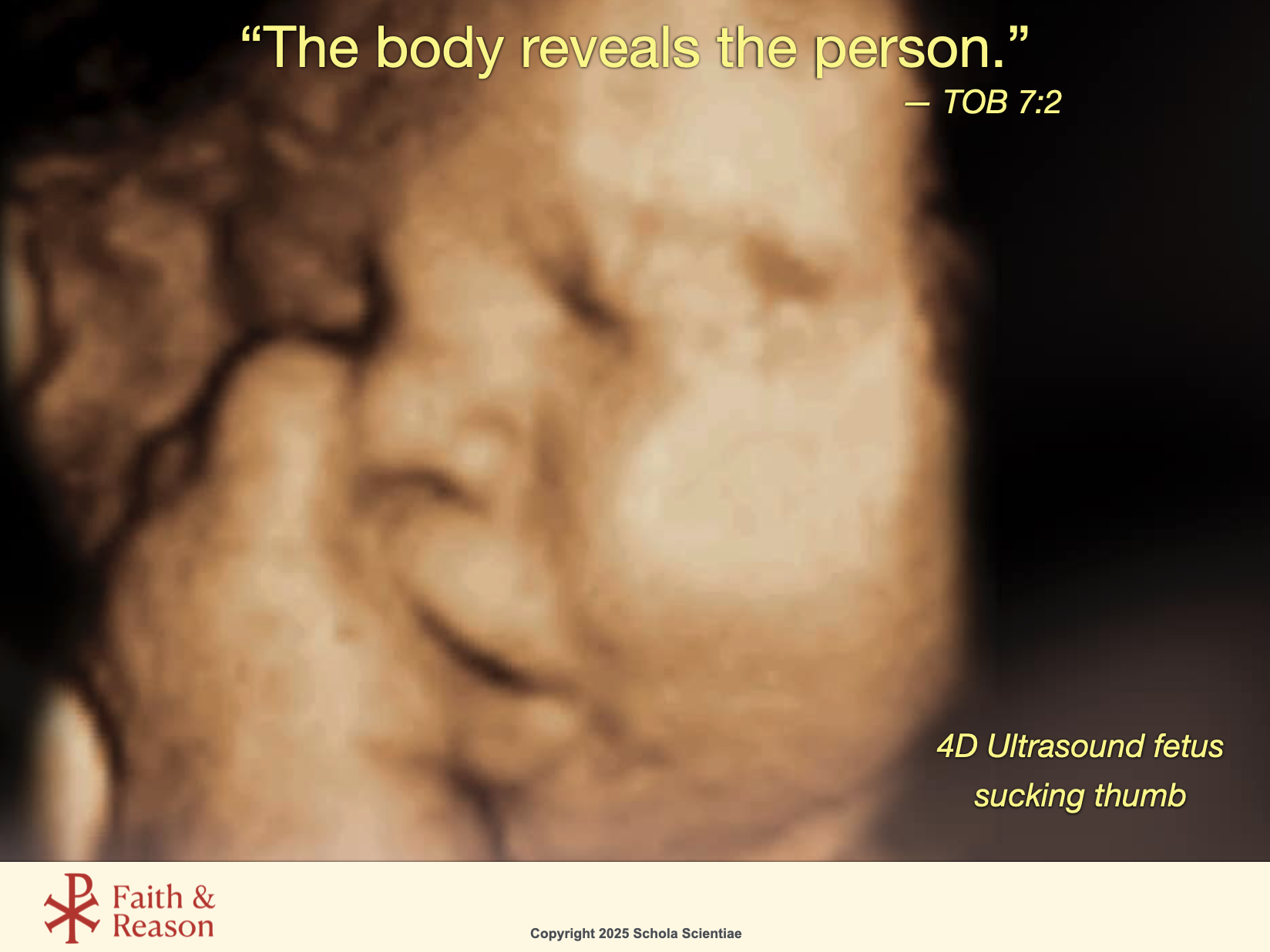
Title: “The body reveals the person.” — TOB 7:2
Theology of the Body teaches that our bodies are not accidents—they are signs. Even before birth, the body communicates identity, vulnerability, and the human call to relationship. The human body is not a shell—it is a sign. Even in the womb, a baby’s body already tells a story of love.
Reflection Question: How does the body of an unborn child already reveal something sacred and personal?
SLIDE HPDtheo-4-8
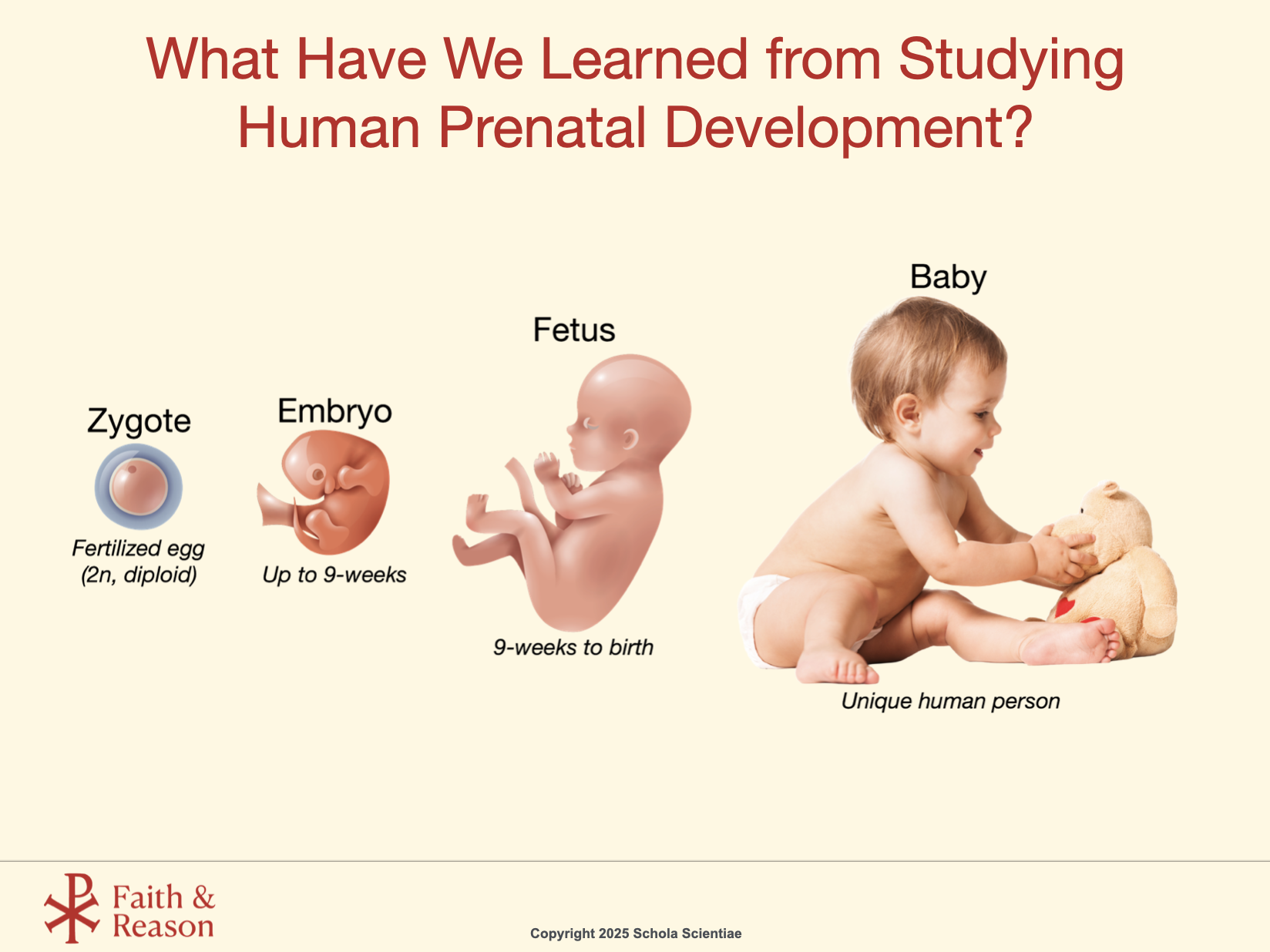
From fertilization to organ growth to birth, every part of development is ordered and purposeful. We are not just a collection of cells—we are a person growing toward fullness. Each stage matters.
Reflection Question: What have you learned about God’s design for human life from Human Prenatal Development?
SLIDE HPDtheo-4-9
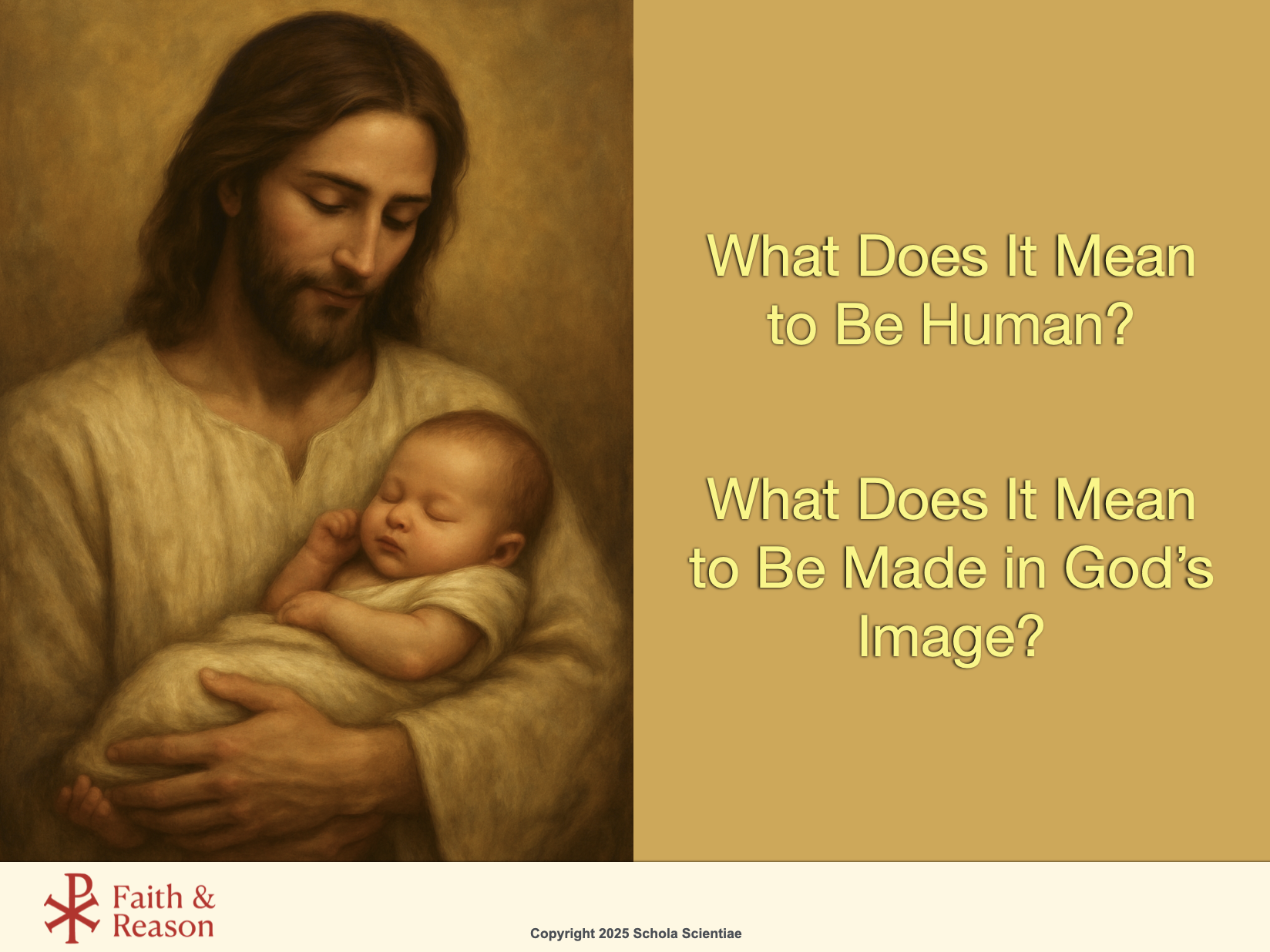
Human value isn’t based on what we can do—but on who we are: known and loved by God. That truth doesn’t start at birth—it starts at the beginning—it starts at conception.
Reflection Question: How does the study of Human Prenatal Development change the way you think about human dignity, even in the earliest stages of life?
SLIDE HPDtheo-4-10
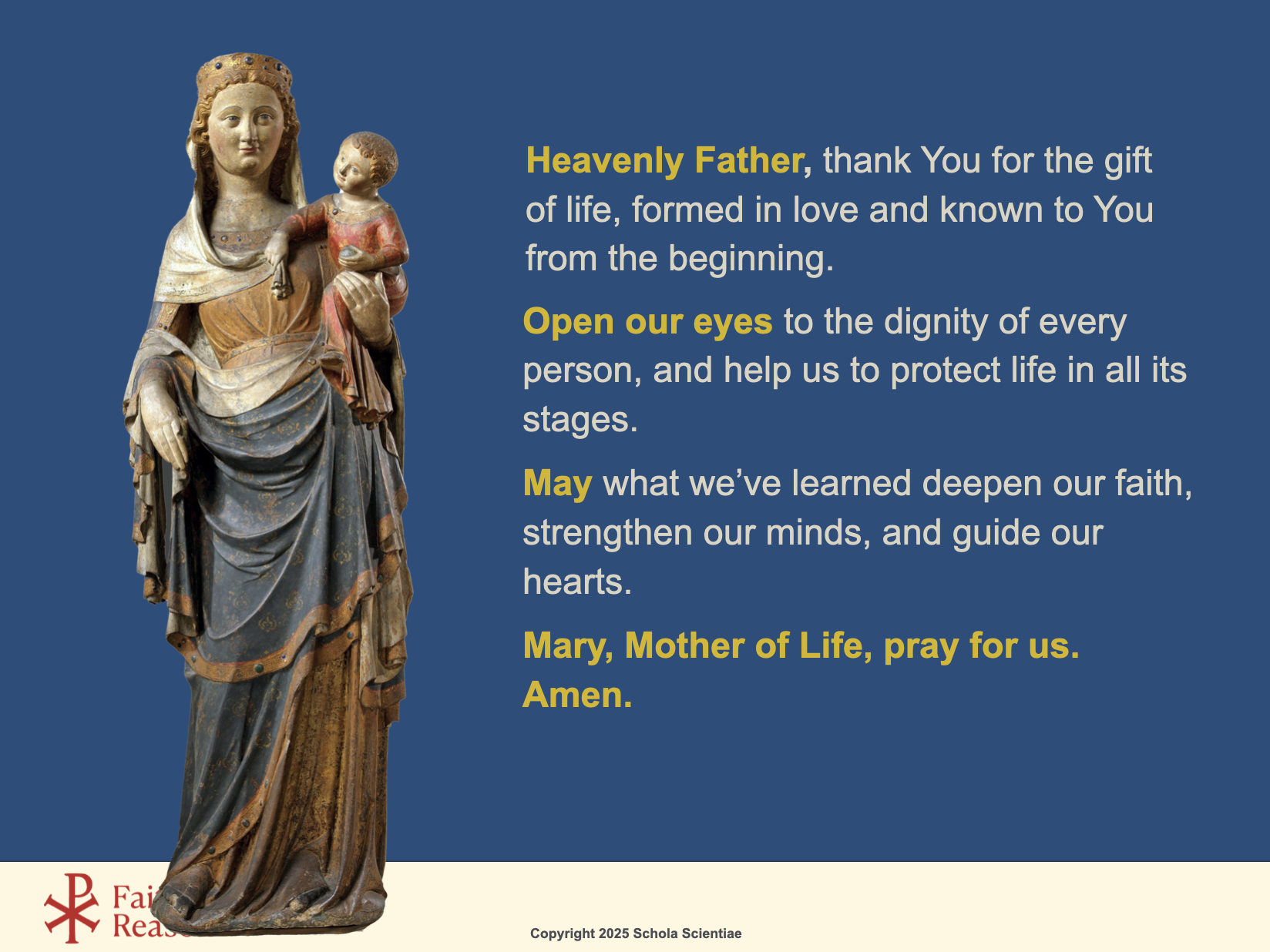
Heavenly Father,
Thank You for the gift of life,
formed in love and known to You from the beginning.
Open our eyes to the dignity of every person,
and help us to protect life in all its stages.
May what we’ve learned deepen our faith,
strengthen our minds, and guide our hearts.
Mary, Mother of Life, pray for us.
Amen.