
Teacher Portal
Investigation 4: PreLab
Preparing for Birth - Late Fetal Development
Purpose of the PreLab
During this PreLab, students prepare for the upcoming laboratory investigation by reviewing key concepts related to fetal growth, maturation, and readiness for birth. Students organize their understanding of how structure and function develop during the final stages of prenatal development so they are ready to interpret observations made during the lab.
Focus Questions:
1. Why is the third trimester an especially important stage of human prenatal development?
The third trimester is a critical period because many organ systems are completing their development while the fetus rapidly gains size, strength, and responsiveness. During this stage, the brain continues to mature, sensory systems become functional, and the fetus prepares for independent life outside the womb. Rather than forming new structures, the body refines and strengthens systems that are already in place.
This period also involves increased interaction with the environment inside the womb. The fetus moves more, responds to stimuli, and becomes increasingly active, showing that development is not passive but dynamic. These changes reflect how prenatal development progresses toward readiness for birth.
Discussion angles students may raise:
“The baby is getting ready to be born.”
“Organs are finishing development.”
“The fetus becomes more active.”
“The brain is still developing.”
Teacher move:
Emphasize preparation, refinement, and responsiveness as key themes of late prenatal development.
2. How does amniotic fluid support and protect the developing fetus during the final months of pregnancy?
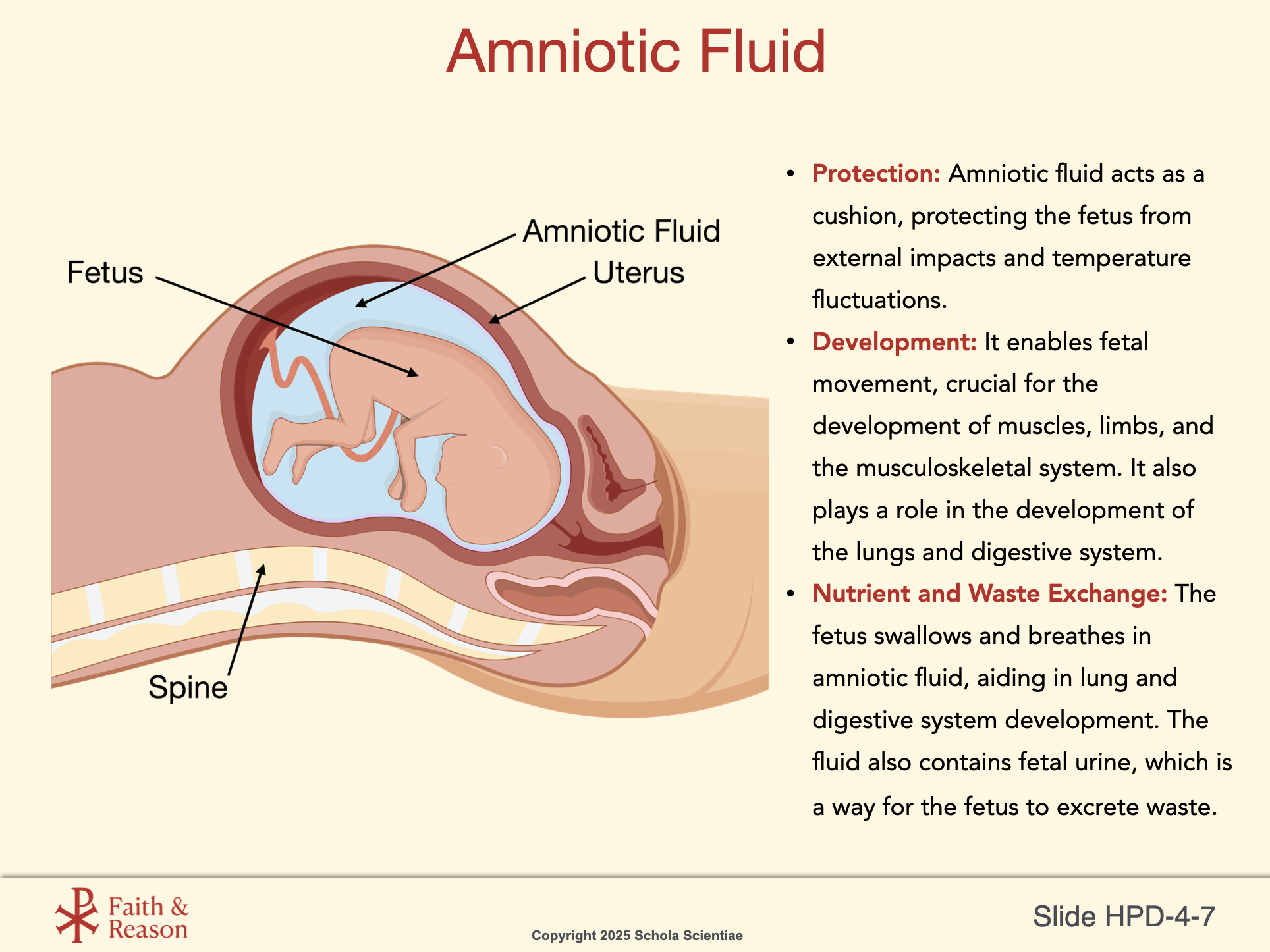
Amniotic fluid creates a protective environment that cushions the fetus from physical impacts and allows safe movement within the womb. By surrounding the fetus, the fluid helps distribute forces evenly, reducing the risk of injury. It also maintains a stable temperature and prevents tissues from sticking together as the fetus grows.
In addition to protection, amniotic fluid supports normal development by allowing movement, which is essential for muscle and bone formation. The fluid-filled environment enables the fetus to practice breathing and swallowing motions, helping prepare vital systems for life after birth.
Discussion angles students may raise:
“The fluid acts like a cushion.”
“It keeps the baby safe.”
“The baby can move around.”
“It helps development, not just protection.”
Teacher move:
Reinforce that amniotic fluid is both protective and developmental, not simply a passive liquid.
3. How can a fetus begin to sense and respond to its environment before birth?
As the nervous system develops, the fetus becomes capable of detecting and responding to stimuli such as sound, movement, and changes in position. By the third trimester, the auditory system is developed enough for sound waves to reach the inner ear, allowing the fetus to hear voices, music, and other external noises filtered through fluid and tissue.
These early sensory experiences help the brain form connections that support learning and recognition after birth. The ability to respond before birth shows that sensory development begins well before a baby enters the outside world.
Discussion angles students may raise:
“Babies can hear before they’re born.”
“The brain is already working.”
“Sound travels through the womb.”
“The baby reacts to things outside.”
Teacher move:
Highlight the idea that sensory development begins prenatally, preparing the fetus for interaction after birth.
4. Why is a fluid-filled environment important for processes like movement and sound transmission in the womb?
Fluids transmit forces and vibrations differently than air, allowing movement and sound to travel efficiently through the womb. A fluid-filled environment helps distribute motion smoothly and enables sound waves to pass through surrounding tissues to reach the fetus. This allows the fetus to experience motion and sound in a controlled, buffered way.
Without fluid, movement could be more damaging and sound transmission would be less effective. The presence of fluid supports both physical safety and sensory development during late pregnancy.
Discussion angles students may raise:
“Sound travels better through water.”
“Fluid softens movement.”
“The environment is controlled.”
“The womb isn’t empty or silent.”
Teacher move:
Emphasize how physical properties of fluids support biological function during prenatal development.
Preparing for Success:
Before beginning this Investigation, students should review several key ideas from the Background Reading and Concept Day slides. These ideas directly influence their success in understanding how the developing fetus is protected, supported, and increasingly responsive during the final months of pregnancy.
To help students succeed:
Direct them to the specific Background Reading anchors linked below.
Encourage them to click the Concept slide thumbnails to review key visuals.
Review the short explanations that clarify why each concept matters for today’s investigation.
This structure removes guesswork and helps both teachers and students feel confident and prepared. These ideas directly shape how students will interpret the sound-in-fluid simulation, amniotic fluid protection model, and third-trimester development concepts in this Investigation.
1. Late Fetal Development Focuses on Growth and Readiness for Birth
Key Idea:
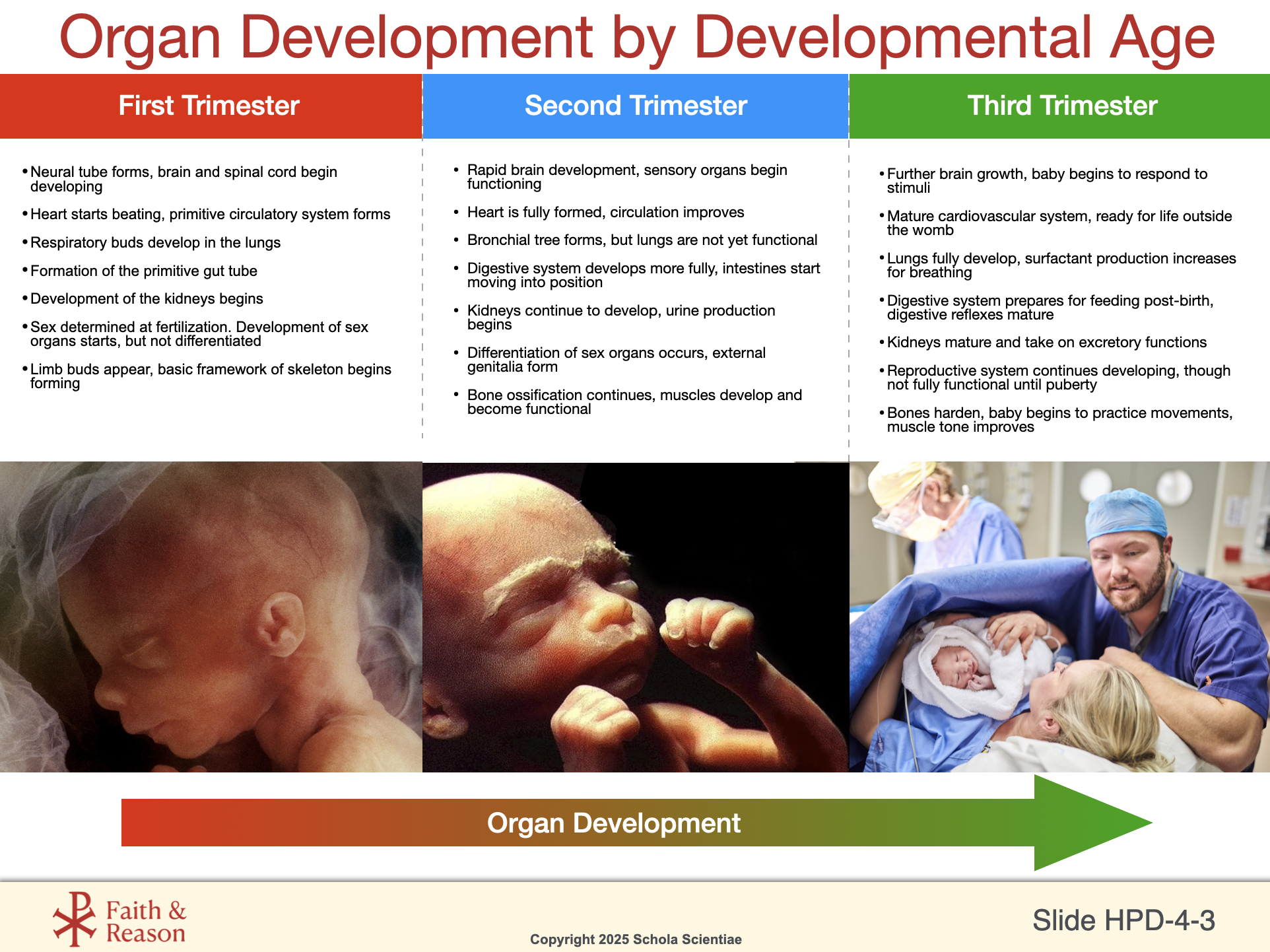
- During the third trimester, most major organs are already formed and continue to mature to support survival outside the uterus.
Background Reading (Readings open in a new window):
Relevant Concept Slides (Click to enlarge):
Why this matters:
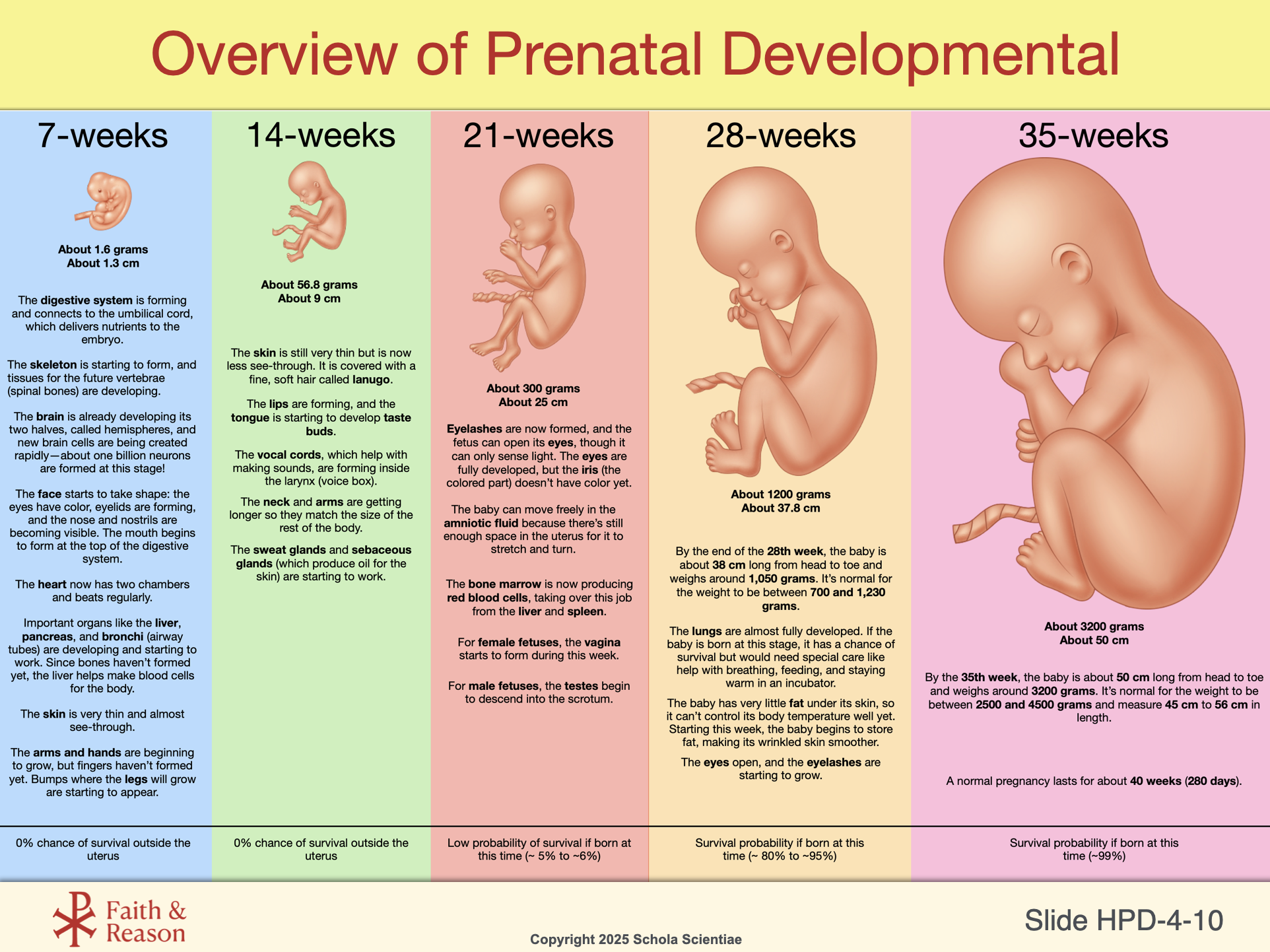
Students must understand that late prenatal development is about refinement and readiness, not initial formation. This frames why organ maturity strongly affects survival outside the uterus.
2. Survival Outside the Uterus Depends on Organ Development
Key Idea:
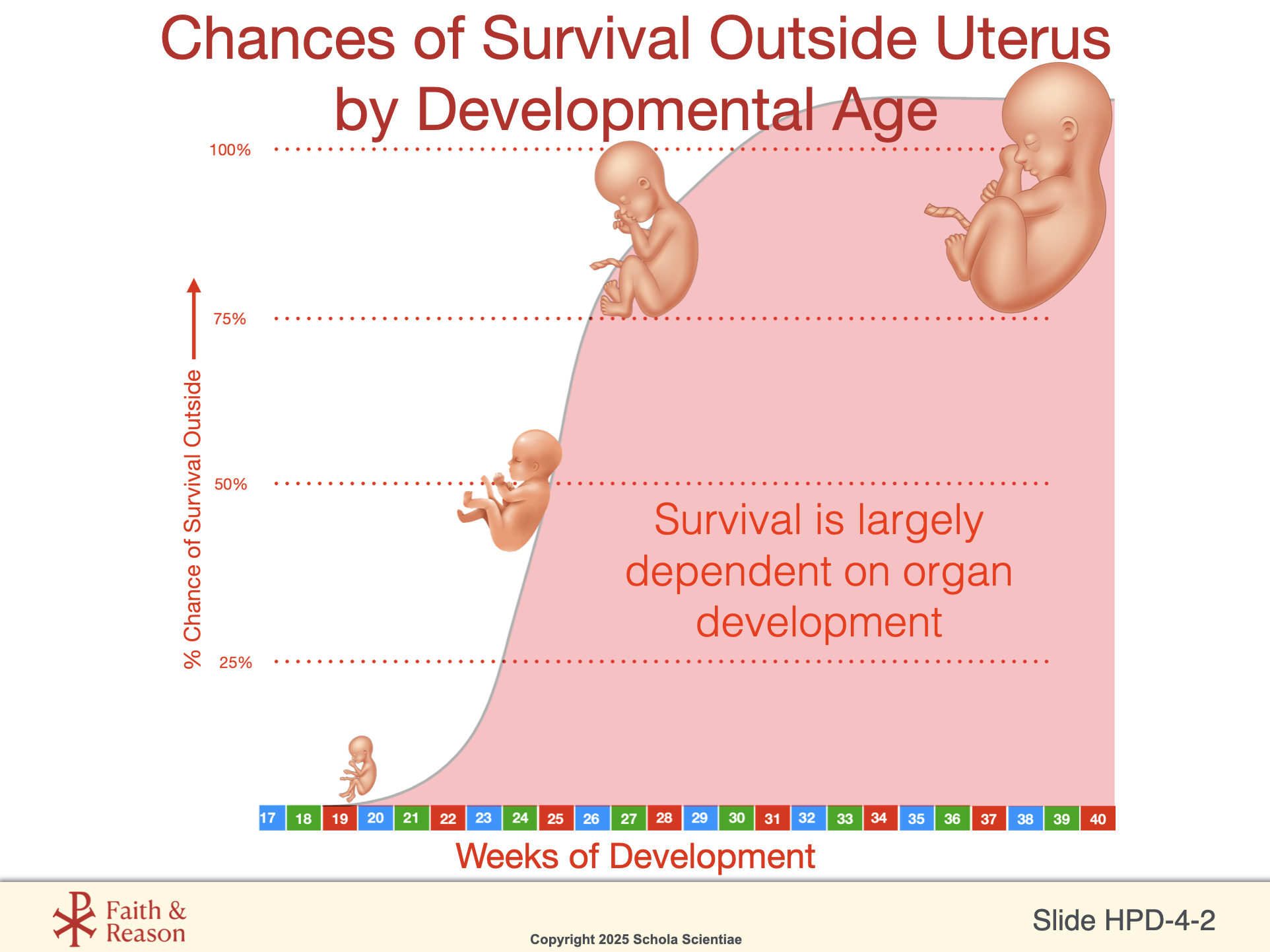
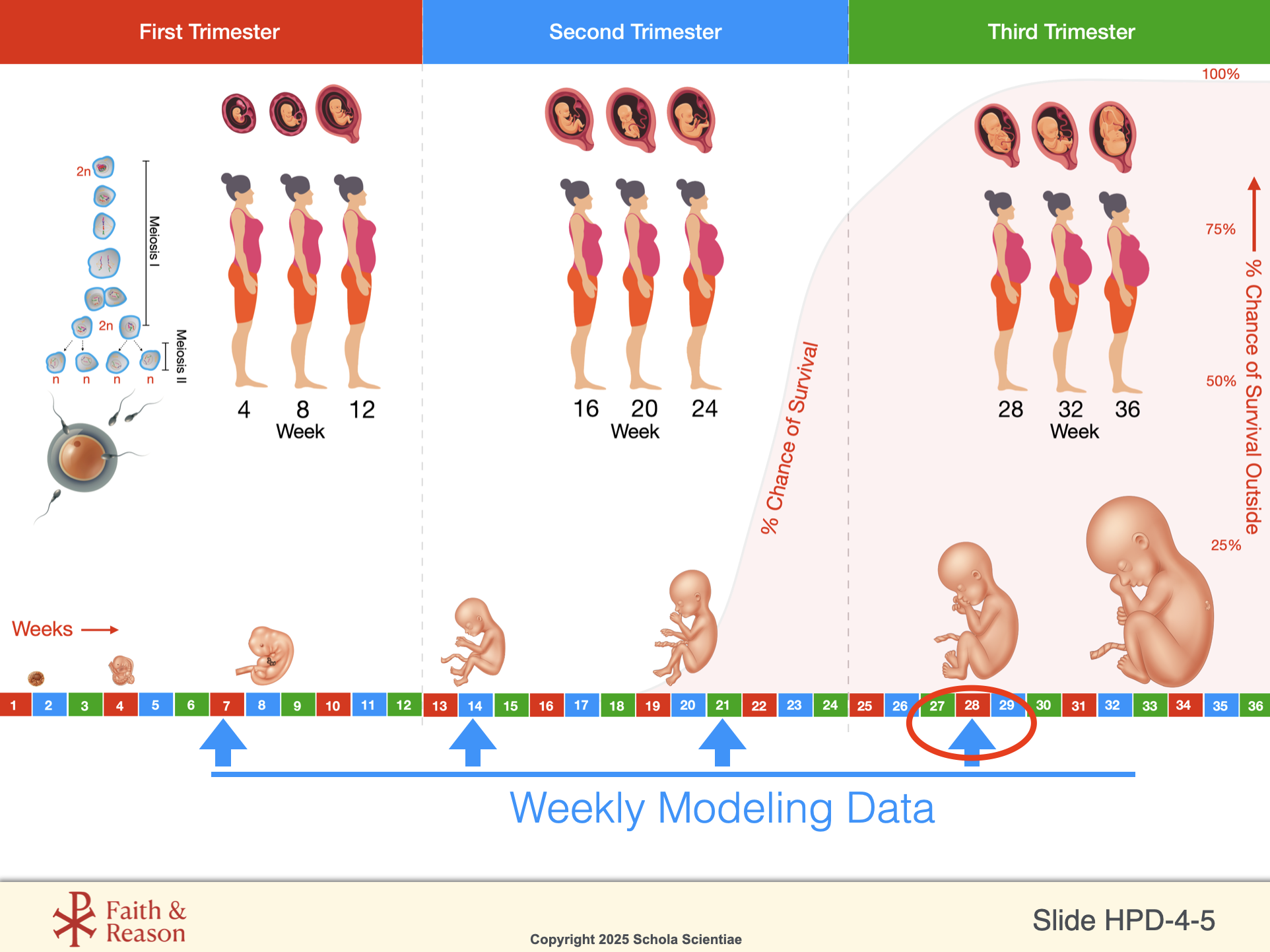
The likelihood of survival outside the uterus increases as vital organs—especially lungs and the nervous system—reach functional maturity.
Background Reading (Readings open in a new window):
Relevant Concept Slides (Click to enlarge):
Why this matters:
Students will analyze survival trends across weeks of development. Recognizing that survival depends on organ readiness, not age alone, prepares them to interpret the modeling data accurately.
3. Amniotic Fluid Protects and Supports the Developing Fetus
Key Idea:
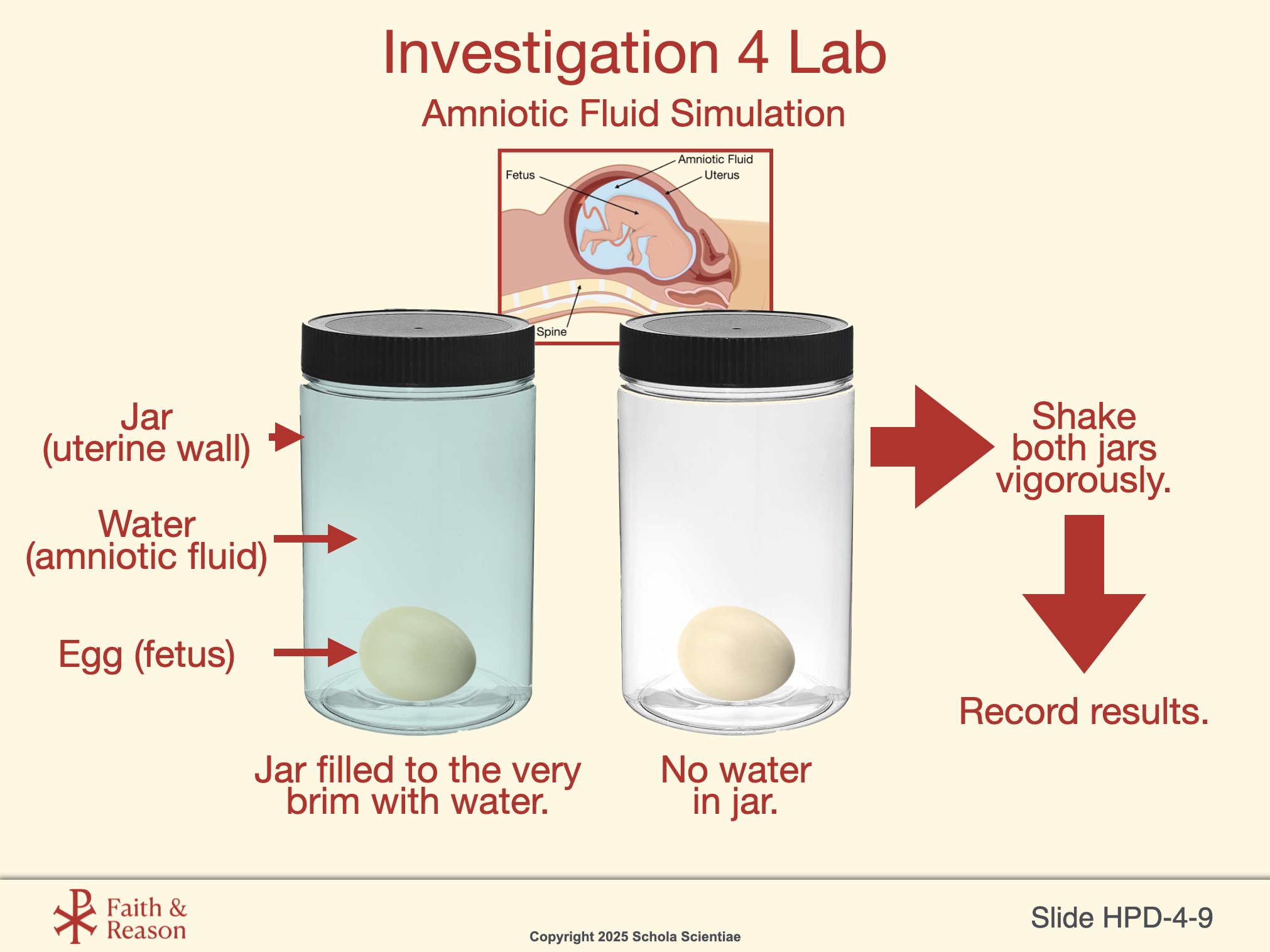
Amniotic fluid cushions the fetus, supports movement, and protects developing organs from physical stress.
Background Reading (Readings open in a new window):
Relevant Concept Slides (Click to enlarge):
Why this matters:
Students will compare conditions with and without fluid during the lab. Understanding the protective role of amniotic fluid ensures they interpret the results as biological protection, not chance.
4. Taste and Sound Can Travel Through Amniotic Fluid and Tissue Before Birth
Key Idea:
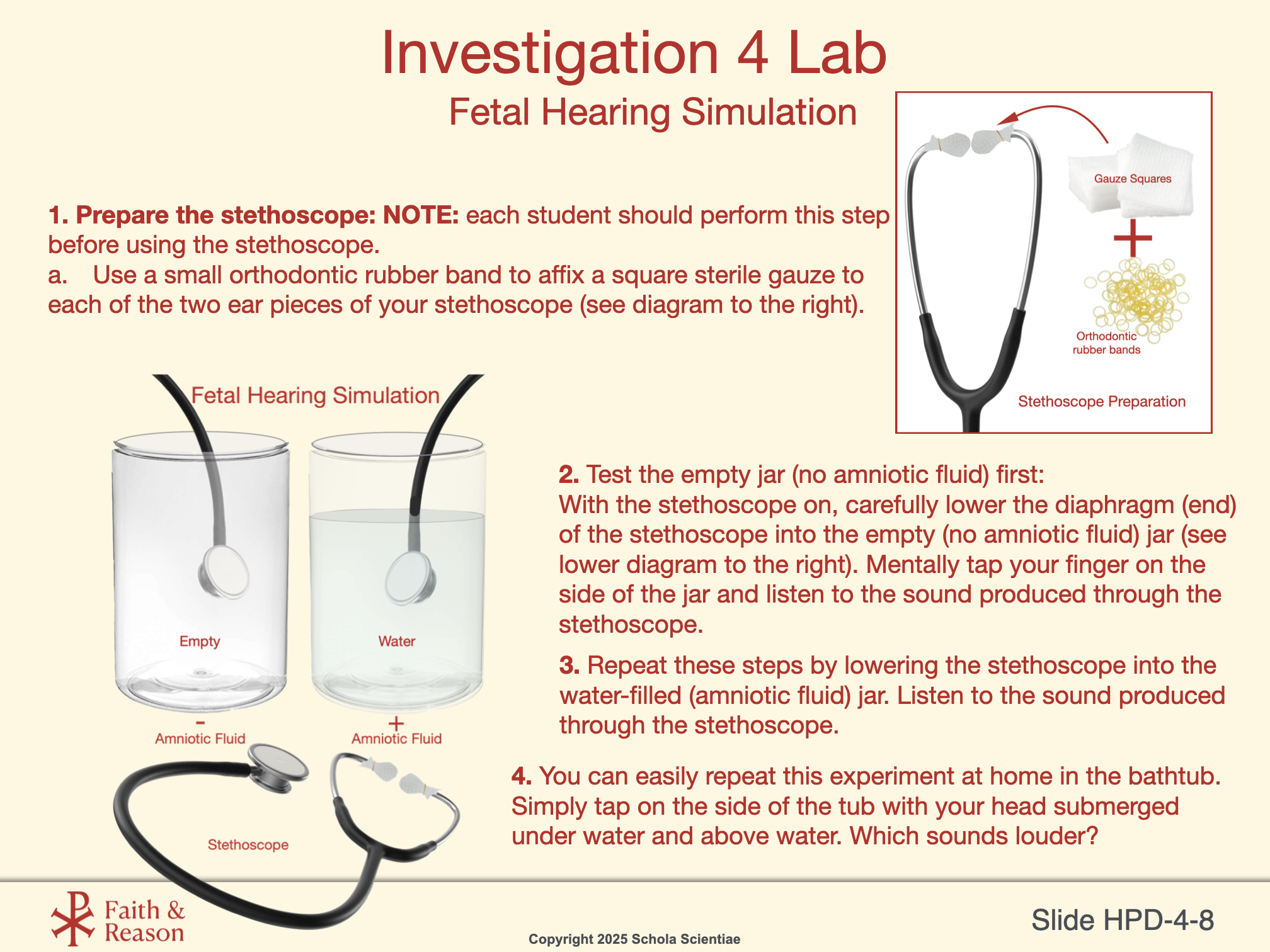
Sound waves can pass through fluid and soft tissue, allowing the fetus to respond to sounds during late pregnancy.
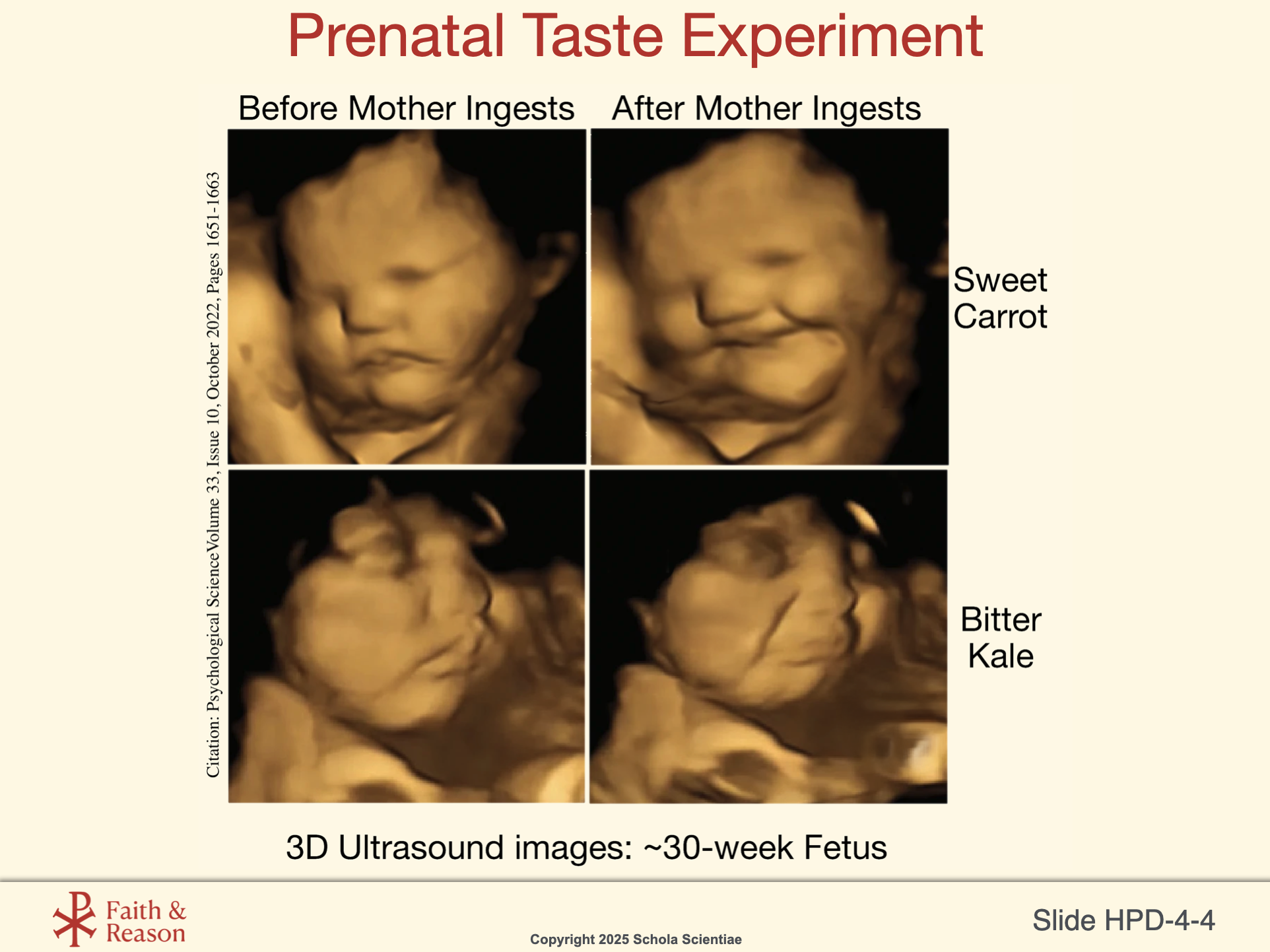
- The fetus can taste chemicals and flavors injested by the mother.
Background Reading (Readings open in a new window):
Relevant Concept Slides (Click to enlarge):
Why this matters:
Students will simulate sound detection without direct visual contact. Understanding how sound travels through materials prepares them to grasp how ultrasound and fetal hearing work before birth.
5. Scientists Use Models to Study What Cannot Be Seen Directly
Key Idea:
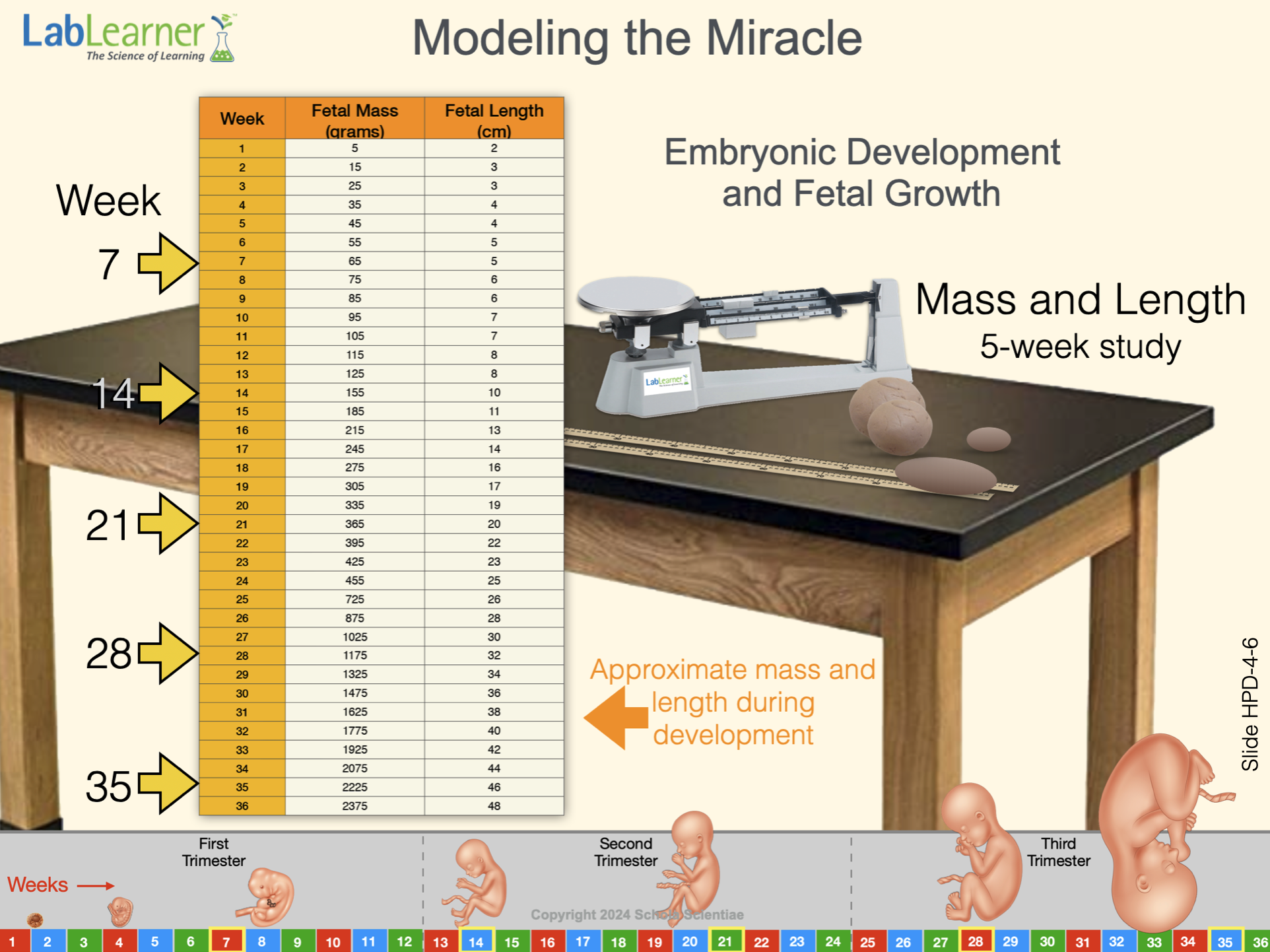
Models allow scientists to study prenatal conditions that cannot be directly observed or experimented on.
Background Reading (Readings open in a new window):
Relevant Concept Slides (Click to enlarge):
Why this matters:
Students must understand that the lab models key functions, not exact replicas. This helps them focus on biological meaning rather than surface details of the model.
Investigation Vocabulary:
Amniotic Fluid (am-nee-OT-ik FLOO-id)
Definition:
The fluid-filled environment that surrounds and protects the developing fetus inside the uterus.
Teacher Notes — Why this matters:
This term anchors the amniotic fluid simulation lab, helping students understand how fluid cushions the fetus, allows movement, and supports development during the third trimester.
Classroom Example:
Teacher asks: “What happens to the egg when it’s shaken with water compared to without water?” Students connect fluid to protection.
Fetus (FEE-tus)
Definition:
The developing human from approximately eight weeks after fertilization until birth.
Teacher Notes — Why this matters:
Students must clearly distinguish between embryonic and fetal stages to understand that HPD4 focuses on growth, maturation, and readiness for birth.
Classroom Example:
Teacher says: “By the third trimester, we call the developing human a fetus because most organs are already formed.”
Organ Development
Definition:
The growth and maturation of body organs so they can function properly, especially as birth approaches.
Teacher Notes — Why this matters:
This concept explains why survival outside the uterus depends on how well organs—particularly the lungs and brain—have matured.
Classroom Example:
Students observe that survival increases as organs become more functional late in pregnancy.
Prenatal Development
Definition:
The process of human development that occurs from fertilization until birth.
Teacher Notes — Why this matters:
HPD4 emphasizes the final phase of prenatal development, when protection, sensory response, and preparation for birth become critical.
Classroom Example:
Teacher asks: “What changes during prenatal development as birth gets closer?”
Sound Waves
Definition:
Vibrations that travel through a medium such as air, liquid, or solid material.
Teacher Notes — Why this matters:
Understanding sound waves prepares students for the ultrasound simulation and explains how sound can travel through fluid and tissue before birth.
Classroom Example:
Students notice differences in sound when tapping through the covered tray during the lab.
Survival Outside the Uterus
Definition:
The ability of a fetus to live independently of the mother’s body if born.
Teacher Notes — Why this matters:
This term helps students interpret survival graphs and understand why survival increases as organ systems mature.
Classroom Example:
Teacher asks: “Why does survival increase so sharply after about 28 weeks?”
Ultrasound
Definition:
A medical imaging technique that uses sound waves to create images of structures inside the body.
Teacher Notes — Why this matters:
The ultrasound simulation lab models how sound waves can detect structures without direct visual contact.
Classroom Example:
Students compare locating the hidden block by sound to how doctors locate a fetus using ultrasound.
Uterus (YOO-ter-us)
Definition:
The muscular organ in which the fetus develops during pregnancy.
Teacher Notes — Why this matters:
Understanding the uterus as a protective environment helps students connect structure, function, and fetal safety.
Classroom Example:
Teacher explains: “The uterus and amniotic fluid work together to protect the fetus.”