
Teacher Portal
Investigation 2: PostLab
Meiosis and Gamete Formation
PostLab Assessment — Investigation 2
Download and administer after completing the Investigation.

Reflecting on Meiosis, Mitosis, and Prenatal Development: The purpose of this PostLab is to help students connect the hands-on modeling they completed in the Lab to the central ideas of this Investigation. Students should now be able to explain how precise cell division makes human prenatal development possible and why errors in these processes can have serious consequences.
Teacher Note: Some concepts in this Investigation—such as fertilization and reproduction—are included for scientific completeness. Teachers may choose to emphasize cell division mechanisms, chromosome behavior, and developmental order, while adjusting the depth of discussion based on classroom context and student readiness.
Focus Questions:
1. How does a tiny embryo eventually become a fully formed baby ready to live outside the womb?
Human prenatal development depends on a sequence of biological processes that occur in a precise, regulated, and highly coordinated manner. From the moment of fertilization, development proceeds through predictable stages that rely on accurate cell division, controlled gene expression, and regulated cell differentiation. Cells do not divide randomly; they follow internal instructions that determine when to divide, how often to divide, and what type of cell to become.
This orderliness allows complex structures—such as tissues, organs, and body systems—to form in the correct locations and proportions. Even small deviations from these regulated processes can disrupt development, which highlights how tightly controlled prenatal growth must be. The remarkable reliability of human development across billions of individuals underscores that these processes are governed by biological laws rather than chance.
Discussion angles students may raise:
“Everything happens in steps.”
“Cells have instructions.”
“It’s not random.”
“Things grow in the right order.”
Teacher move:
Affirm these ideas and emphasize control, regulation, and coordination.
2. How can a single fertilized cell give rise to the trillions of cells in a human body?
A single fertilized cell gives rise to trillions of cells through repeated cycles of mitosis, in which one cell divides into two genetically identical cells. Each of these cells can then divide again, leading to exponential growth in cell number. Early in development, these divisions happen rapidly, allowing the embryo to grow from a microscopic single cell into a multicellular organism.
Importantly, this increase in cell number does not occur all at once but through countless rounds of controlled division. As development progresses, cells also begin to specialize, forming different tissues and organs, even though they all originated from the same original cell. This process shows how growth depends on both cell multiplication and cell organization.
Discussion angles students may raise:
“Cells keep dividing.”
“It doubles each time.”
“Cells start the same but become different.”
“Growth happens gradually.”
Teacher move:
- Reinforce the idea of exponential increase + regulation, not just “more cells.”
- This growth depends on mitosis after fertilization, not meiosis.
3. What role does mitosis play in human growth and development before birth?
Mitosis is the primary mechanism that allows the human body to grow before birth. Through mitosis, cells divide to increase cell number while maintaining genetic consistency. This process enables the formation of tissues and organs and allows the developing embryo and fetus to increase in size and complexity.
Before birth, nearly all growth depends on mitosis. As cells divide, they create the building blocks needed to form structures such as muscles, bones, organs, and the nervous system. Without mitosis, development would stall at an early stage because the organism would lack the necessary number of cells to support growth and specialization.
Discussion angles students may raise:
“Mitosis makes more cells.”
“It helps the baby grow.”
“It builds organs.”
“Cells copy themselves.”
Teacher move:
Clarify that mitosis is not just “making cells” but making growth possible.
4. Why must each new cell receive a complete and accurate set of chromosomes during mitosis?
Each new cell must receive a complete and accurate set of chromosomes because chromosomes contain the DNA instructions that control how the cell functions. These instructions guide processes such as protein production, cell activity, and communication with other cells. If a cell receives too few, too many, or damaged chromosomes, it may not function correctly.
During prenatal development, accuracy is especially important because errors can affect how tissues and organs form. Maintaining the correct chromosome number ensures that cells behave as intended and that growth remains coordinated across the developing body. This need for precision explains why mitosis includes multiple checkpoints and carefully regulated steps.
Discussion angles students may raise:
“Cells need instructions.”
“Mistakes cause problems.”
“DNA controls the cell.”
“Every cell needs the full set.”
Teacher move:
Emphasize precision and reliability, not fear or pathology.
5. How does the hands-on activity in this Lab help you understand the main idea of this Investigation?
The hands-on activity helps students understand the main idea of this investigation by making the abstract process of mitosis visible and tangible. By physically modeling chromosomes and their movement, students can observe how chromosomes are copied, aligned, and separated into two identical sets. This experience helps clarify why mitosis is an orderly, step-by-step process rather than a single event.
Engaging directly with the model allows students to connect their actions to the biological concepts being studied. The activity reinforces that accurate chromosome separation is essential for growth and development and helps students move beyond memorization to genuine understanding. Reflecting on the activity encourages students to link what they did with what they learned.
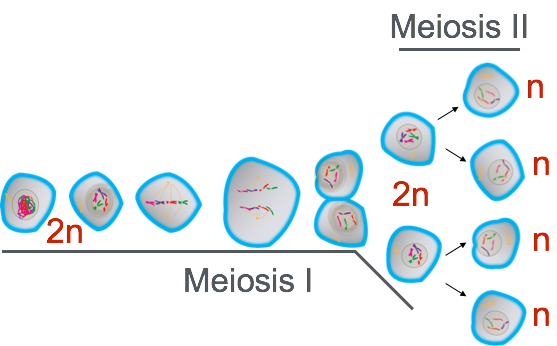
Modeling meiosis helped show why chromosome number must be reduced before fertilization. Students could see that without meiosis, fertilization would double chromosome number each generation, making normal development impossible.
Discussion angles students may raise:
“Seeing it helped.”
“Doing it made it clearer.”
“I understood why stages matter.”
“It wasn’t just words anymore.”
Teacher move:
Guide students to articulate how experience changed understanding, not just that it did.
Think Critically:
How teachers should use these answers
Do not read the suggested answers aloud verbatim. Use them to:
Probe student reasoning
Clarify misconceptions
Connect discussion back to the Lab models and visual evidence
Emphasize why accuracy and order matter, not just what happens
Encourage students to explain their thinking using scientific language rather than personal examples.
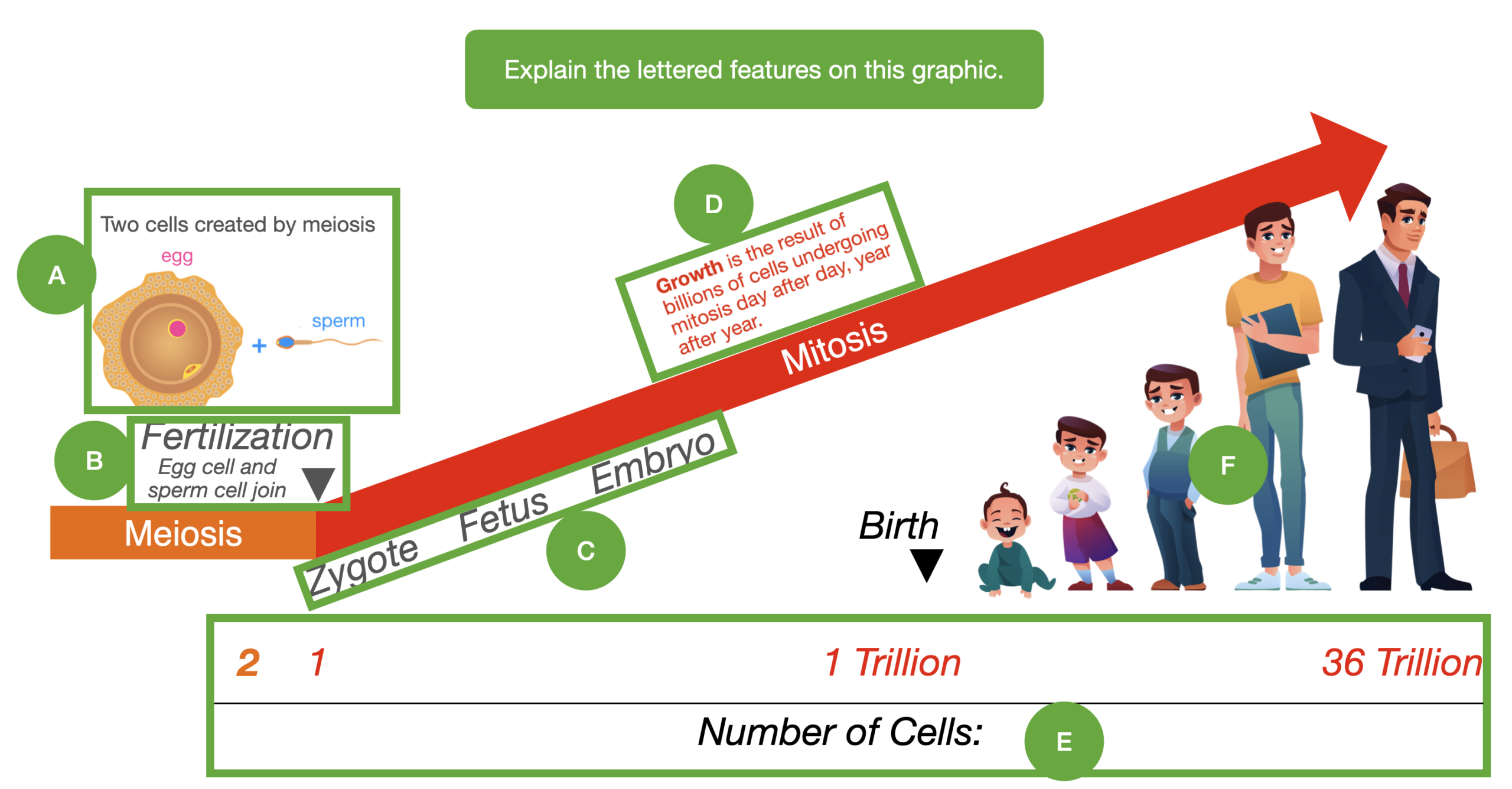
1. The graphic below summarizes the entire process you explored in this Investigation, from meiosis through human growth. Each letter (A–F) highlights a key feature of the process.
Explain what each lettered feature represents and why it is important for understanding human prenatal development and growth.
In your explanation, be sure to describe how meiosis, fertilization, and mitosis are related, and why growth depends on both accuracy and repetition.
Teacher Guidance / Intent (not shown to students)
This question asks students to:
Translate a visual model into scientific language
Demonstrate sequencing and causality
Integrate lab experience with conceptual understanding
Articulate why early precision matters for later growth
Students are not expected to use technical chromosome notation, but should clearly distinguish:
meiosis vs. mitosis
two cells vs. one cell
growth by division, not enlargement
Key teaching point
Human development depends on ordered transitions:
meiosis prepares cells
fertilization creates a new starting point
mitosis builds complexity through repetition
Each step must occur correctly for the next to succeed.
Possible student responses to affirm and extend
“A shows that meiosis makes egg and sperm before fertilization.”
“B shows fertilization, when two cells become one zygote.”
“C shows the early stages after fertilization.”
“D shows that mitosis keeps happening over time.”
“E shows that growth means more cells, not just getting bigger.”
“F shows that all human growth comes from the same process of cell division.”
Stronger responses will note that mistakes early would affect all later cells.
2. During the Lab, you modeled meiosis and fertilization as highly ordered processes. Why is it important that these processes happen in a precise sequence rather than randomly?
Meiosis and fertilization must occur in a precise sequence to ensure that the correct number of chromosomes is passed from one generation to the next. If chromosomes did not separate accurately during meiosis, gametes could receive too many or too few chromosomes. When fertilization occurs, these errors would be carried into every cell of the developing embryo.
Because prenatal development begins with a single cell, any mistake at this stage would be multiplied as cells continue to divide. The Lab model helps show that order and timing are essential safeguards that protect development from error.
Key teaching point:
Precision and sequence are protective features of reproduction, not optional details.
Possible student responses to affirm and extend:
“The steps keep chromosome numbers correct.”
“Mistakes early would affect everything later.”
“The order prevents problems from spreading.”
3. How did physically modeling chromosome separation help you understand why accuracy matters more than speed during early development?
By physically separating chromosomes during the Lab, students could see that division is not just about making more cells—it is about making correct cells. If chromosomes were pulled apart incorrectly, the model quickly showed how errors would occur.
This helps students understand that rapid cell division without accuracy would increase the number of faulty cells. Prenatal growth depends on repeated, careful divisions that build reliably on one another.
Key teaching point:
Growth depends on the quality of cell division, not just the quantity.
Possible student responses to affirm and extend:
“Fast division wouldn’t help if it’s wrong.”
“Accuracy matters more than speed.”
“Mistakes would multiply.”
4. Why is fertilization considered a critical starting point for prenatal development rather than just one step among many?
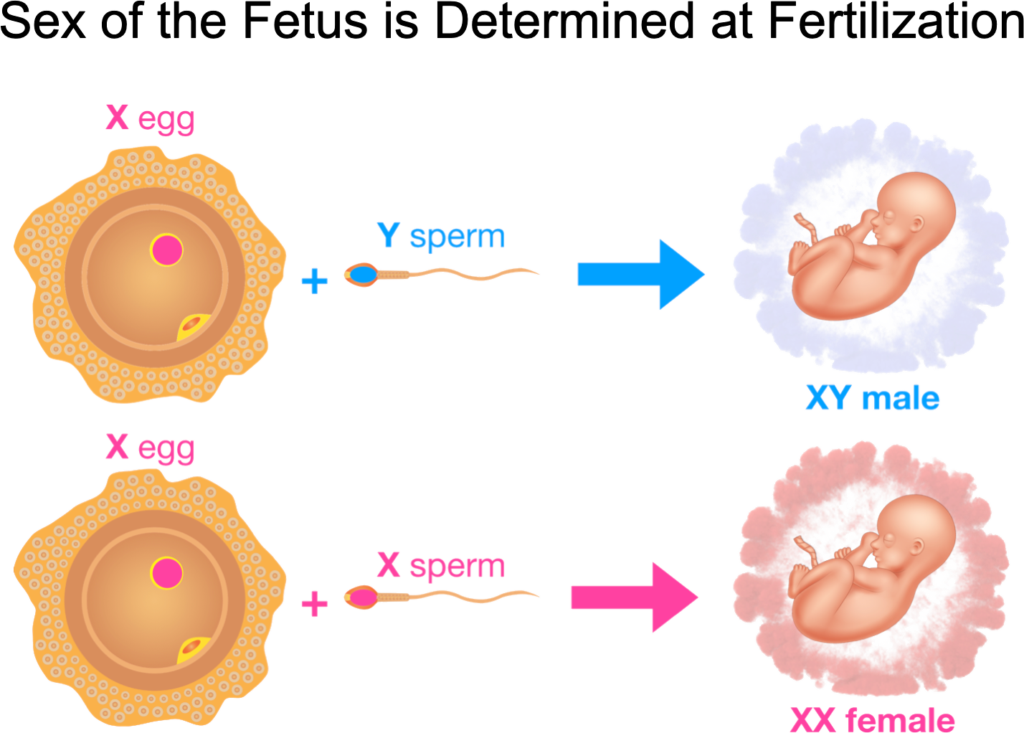
Fertilization establishes the complete genetic foundation for development by combining one set of chromosomes from each parent. At this moment, chromosome number, genetic identity, and biological sex are determined.
Everything that follows—cell division, differentiation, and growth—depends on the accuracy of this starting point. The Lab models reinforce that development does not gradually “figure itself out,” but instead unfolds from information that is present from the very beginning.
Key teaching point:
Prenatal development begins with complete information, not gradual assembly.
Possible student responses to affirm and extend:
“All instructions are set at fertilization.”
“Nothing later can fix early mistakes.”
“Everything builds from that first cell.”