Faith and Reason Series Preview

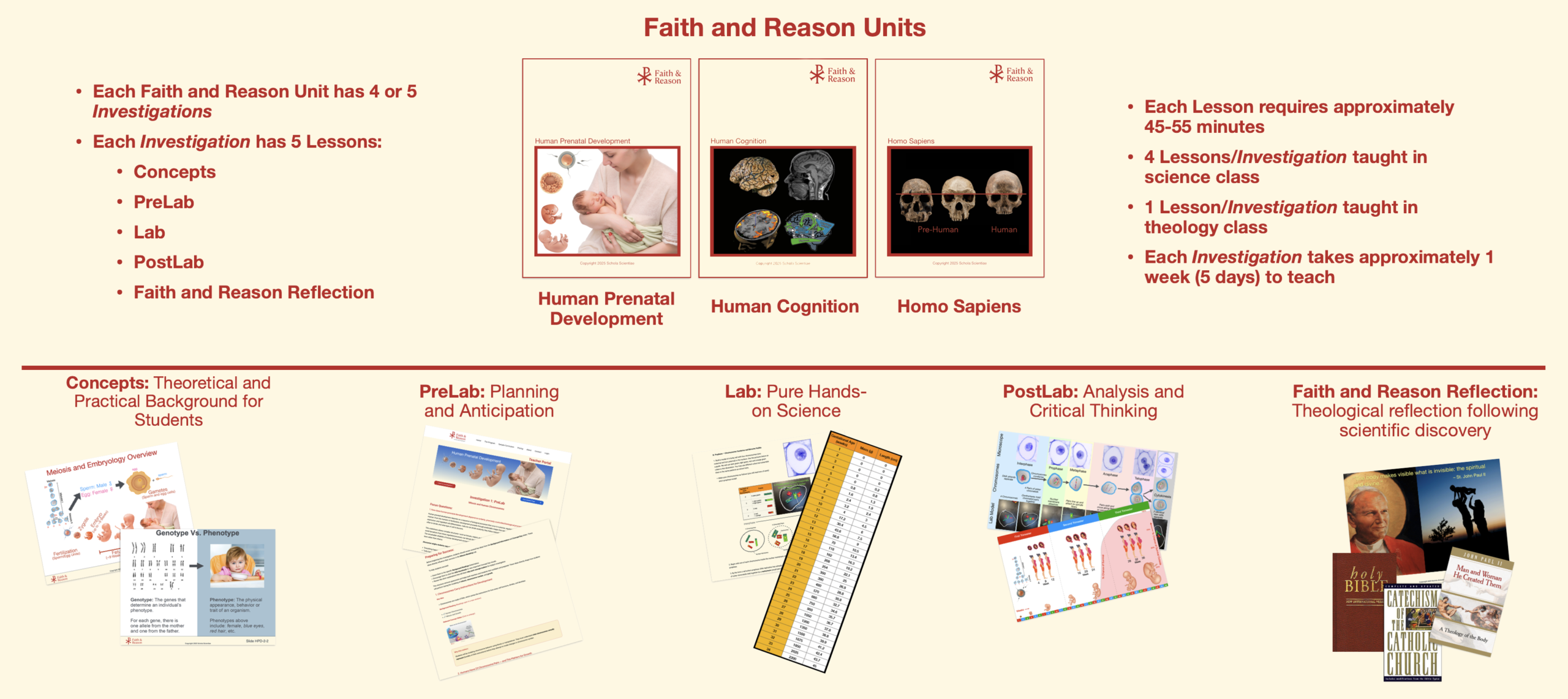
This preview highlights the instructional design and academic rigor that characterize the Faith and Reason Series. While it does not provide access to classroom lessons or materials, it illustrates how the program integrates rigorous science instruction with Catholic intellectual tradition.

All units are developed with explicit attention to Next Generation Science Standards (NGSS), emphasizing scientific practices, crosscutting concepts, and disciplinary core ideas appropriate for middle school learners. Science learning is reinforced through regular, hands-on laboratory investigations, allowing students to engage directly with observation, measurement, modeling, and data analysis.

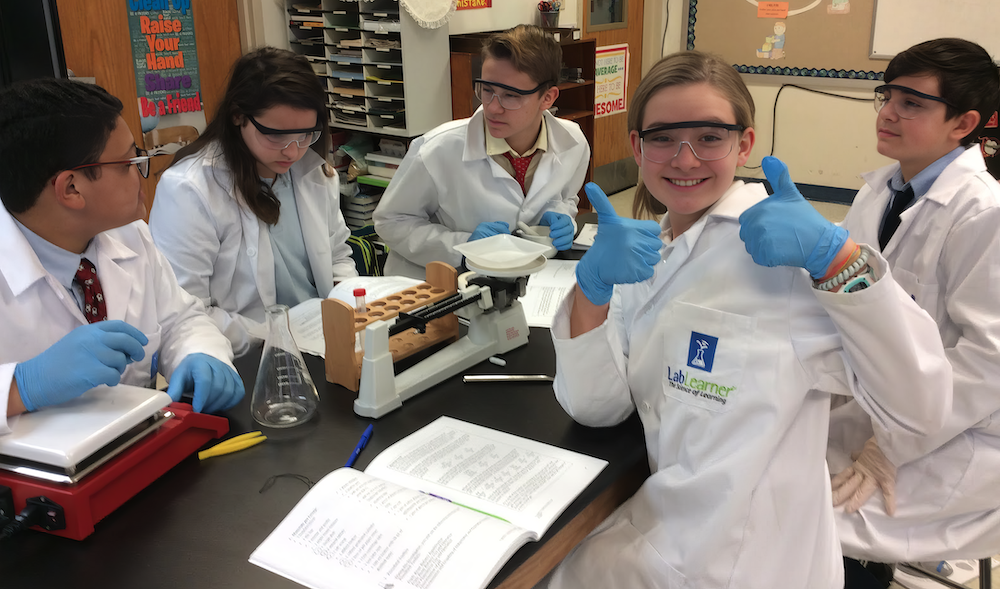
Laboratory experiences are not treated as add-ons, but as central to concept development. Students learn science by doing science—using age-appropriate equipment, guided experimentation, and structured reflection to deepen understanding and retention.

This approach reflects the program’s commitment to forming students who can think scientifically, reason clearly, and engage questions of meaning and responsibility within a Catholic educational context.

Click Image to Enlarge

A Foundational Sequence for Understanding the Human Person

The Faith and Reason Series is organized as a deliberate sequence of units that address essential questions students encounter as they mature intellectually, morally, and spiritually. Rather than treating scientific knowledge and faith formation as separate conversations, each unit introduces scientific understanding alongside guided reflection at moments when students are most receptive to forming lasting and coherent ideas.

The units below work together to establish a foundation for future learning—helping students understand not only how the world works, but what it means to be human within it.

Although the units flow naturally in the order presented, each unit stands independently and may be taught on its own. This design allows Catholic schools and dioceses the freedom to incorporate individual units in ways that best support their existing curriculum, instructional sequence, and faith formation goals.

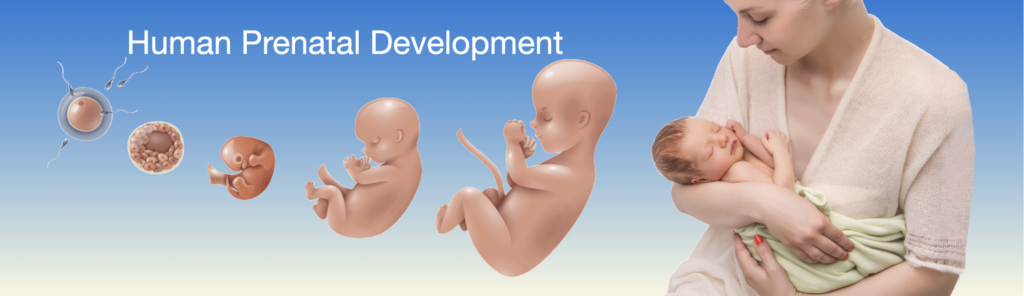
Human Prenatal Development
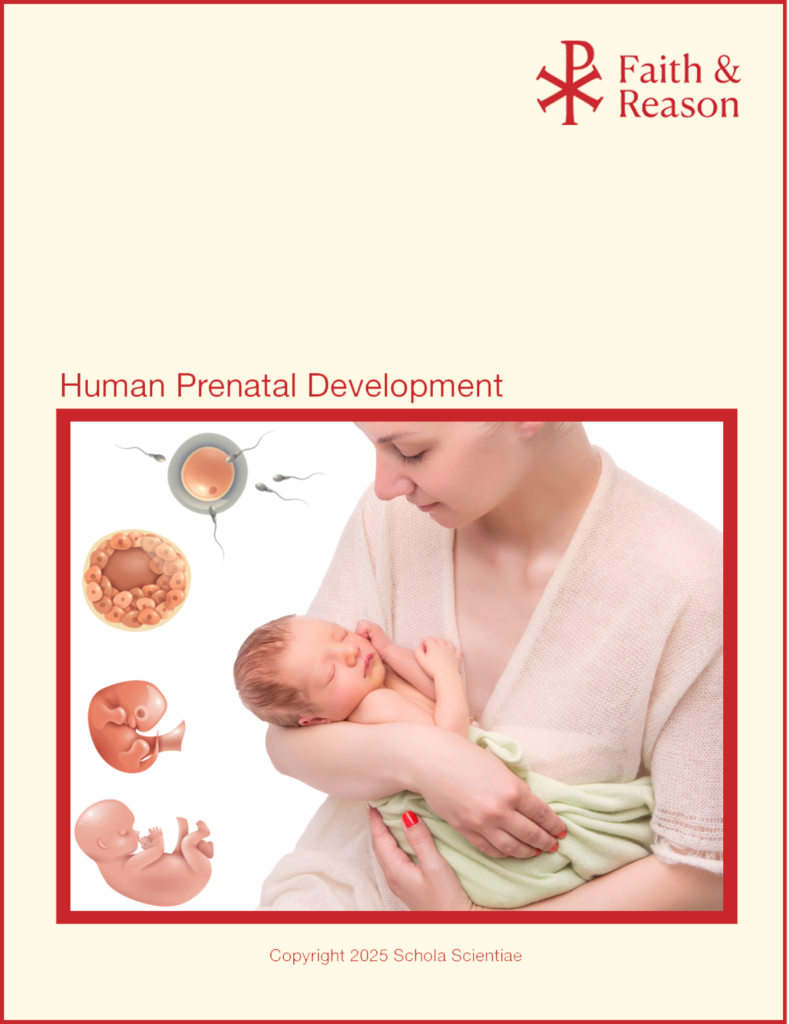
Early adolescence is a formative period in which students begin integrating scientific explanations with questions of identity, meaning, and human dignity. In Catholic education, Human Prenatal Development is intentionally presented first because it addresses these foundational questions at their source: the origin of human life itself, created intentionally by God and endowed with inherent dignity from the moment of conception.

Through rigorous biological science taught within a Catholic worldview, students come to understand prenatal development not only as a biological process, but as part of a larger moral and spiritual reality. Scientific inquiry is paired with age-appropriate reflection drawn from Catholic theology, Scripture, and the Church’s understanding of the human person, helping students form a coherent and respectful understanding of human life.

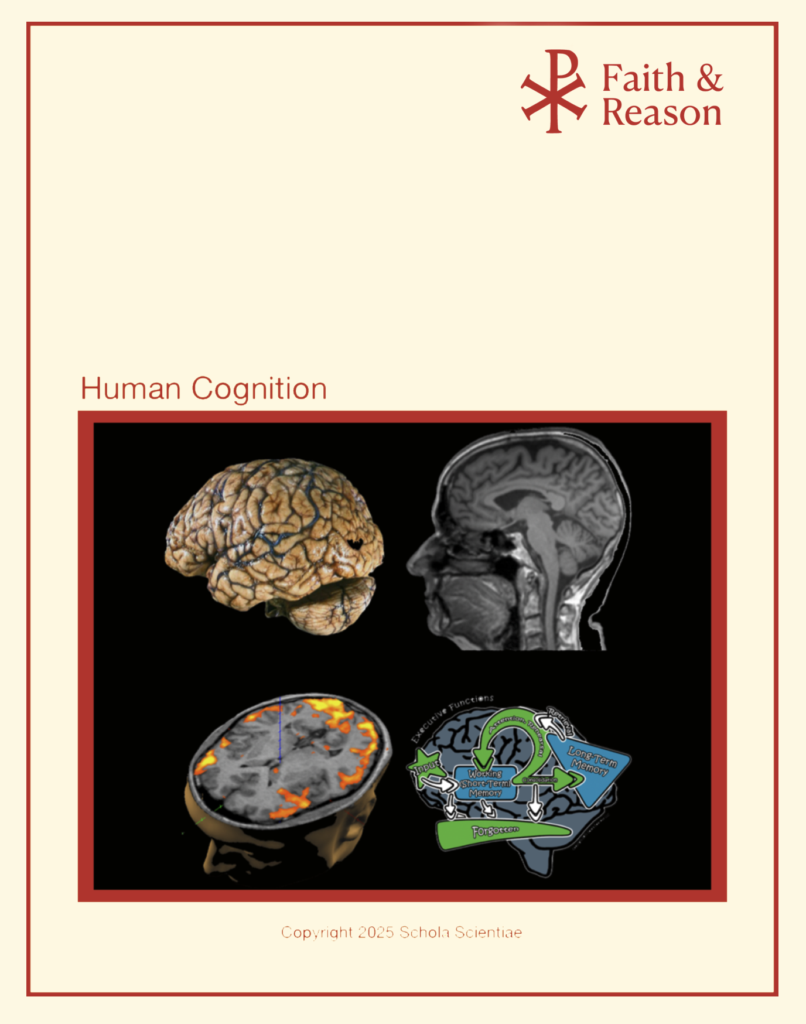
Building upon an understanding of human life as created and dignified, the Human Cognition unit invites students to explore how the human mind develops, learns, and chooses. Within Catholic education, cognition is never treated as a purely mechanical process, but as a capacity intimately connected to reason, conscience, and moral responsibility.

Students investigate memory, attention, decision-making, and self-control through modern cognitive science while engaging Catholic perspectives on the human intellect and free will. This integration helps students recognize that thinking, choosing, and learning are not value-neutral activities, but essential aspects of what it means to grow as a responsible human person made in the image of God.

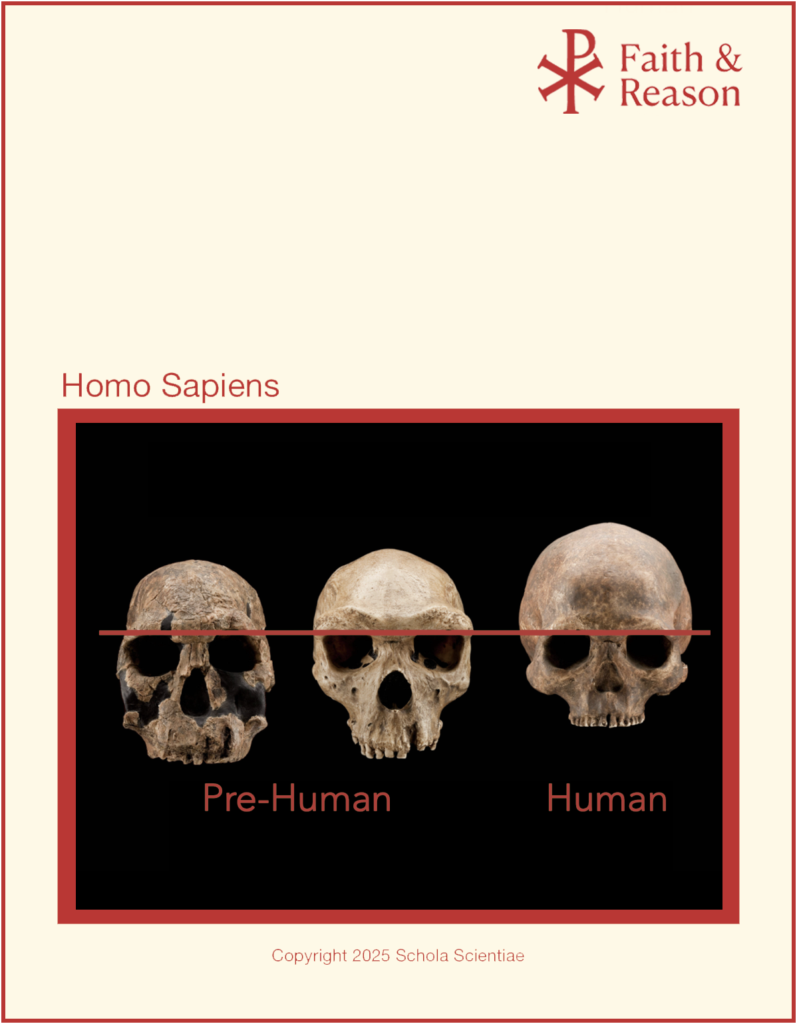
After students understand how the human body develops and how the human mind functions, the Homo Sapiens unit broadens the lens to address a deeper question central to Catholic anthropology: What does it mean to be human?

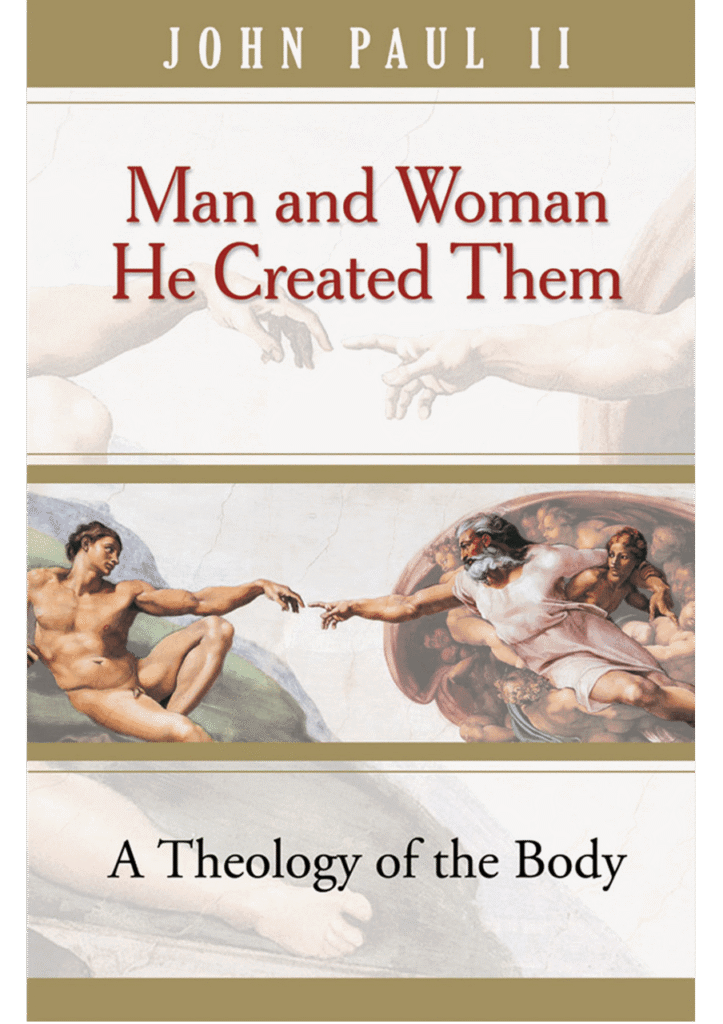
In accordance with St. Pope John Paul II’s teaching on human origins and evolution, this unit presents the scientific study of human evolution as a legitimate and important area of biological inquiry, while firmly situating it within the Catholic understanding of the human person as created by God, endowed with spiritual dignity, and possessing a unique moral and rational nature.

Students explore human origins, biological uniqueness, cooperation, culture, and symbolic thought—examining how scientific evidence regarding human evolution complements, rather than contradicts, the Church’s teaching on the unity of body and soul. In doing so, students are guided to see science not as diminishing human meaning, but as illuminating the remarkable unity of biology, reason, and purpose that defines the human species.

Faith & Reason Reflection

Each weekly Investigation concludes with a guided reflection that connects scientific discovery with Catholic theology, Scripture, and virtue formation. These reflections help students integrate scientific knowledge with meaning, while presenting science and faith as complementary ways of understanding truth.

What Teaching an Investigation Looks Like

Each Investigation is designed to span approximately one instructional week, and each unit (Human Prenatal Development, Human Cognition, and Homo Sapiens) contains 4 or 5 Investigations. Teachers guide students through concept development, hands-on laboratory investigation, and structured reflection. All lesson materials are fully prepared, minimizing advance setup while allowing flexibility in pacing and emphasis.

Easy Theological Connections for Deep Reflection

Every Faith & Reason Investigation is accompanied by complete lesson plans that relate the precise concepts presented in science class and lab to deep theological questions and issues. Thought-provoking slide sets and Theological Reflection Worksheets couple science discovery to scripture, the Catholic Catechism, the Theology of the Body, and Catholic virtues. 

Who's Teaching What?

Two teachers at deskOne Teacher for Both Science & Theology? No problem. The content is organized so you can smoothly move between disciplines. Just follow the guide.

Separate Science and Religion Teachers? Perfect. You can work in parallel or independently. All resources are cross-referenced and ready for easy integration or stand-alone use.

Science Teachers: lead Investigations, labs, and content

Religion Teachers: access Faith & Reason materials and reinforce theological integration

Important Note: This Faith & Reason program is rooted in the Catholic conviction that truth is unified—what we discover through science and what we receive through faith ultimately point to the same reality. To support this integration, each Investigation is designed for students to first encounter the scientific content through hands-on exploration and guided inquiry. Whether science and theology are taught by the same teacher or by different teachers, it is essential that the scientific portion be completed first. The theological reflections that follow are built upon that foundation, helping students see how faith illuminates what they have discovered through reason. This sequence not only deepens understanding, but also forms students to think critically, love truth, and recognize the harmony between God’s creation and His revelation.

Frequently Asked Questions

Q: What if I’m not a science teacher?
A: No problem. The Faith & Reason materials are fully scripted and easy to follow, even for those without a science background. You’ll be guided through every activity and concept.

Q: What if I’m not a religion teacher?
A: You’ll be equipped with relevant Scripture, Catechism connections, and guidance. Whether you’re confident or new to theology, the resources are built to support your classroom role.

Q: Can we teach the science and theology parts separately?
A: Absolutely. Each Investigation is designed to be flexible. Science and theology can be taught by different teachers or as an integrated course.

Q: Does this align with Church teaching?
A: Yes. All theological content aligns with the Catechism of the Catholic Church, Theology of the Body, and Magisterial documents. It’s been carefully developed to respect and deepen Catholic identity.

Q: Is this just for Catholic schools?
A: While rooted in Catholic tradition, the Faith & Reason Series is being used by schools and educators looking for a meaningful, values-based science program that respects both reason and belief.

Q: Can this be used in a homeschool setting?
A: Yes! The structure is flexible enough for both classroom and homeschool use. Many parents find the clarity and integration especially helpful for middle school learners.

Q: Is training available for teachers?
A: Yes. Every purchase includes access to an online support system, how-to guides, and direct support. Schools can also request customized workshops.

Scroll to Top