
Teacher Portal
Investigation 1: PostLab
Mitosis and Human Chromosomes
PostLab Assessment — Investigation 1
Download and administer after completing the Investigation.

Teacher Framing for PostLab
This PostLab discussion is designed to help students move from doing to understanding. Encourage students to explain what happened during each phase of mitosis in their own words, using evidence from the lab model rather than memorized definitions. The goal is for students to recognize mitosis as an organized, purposeful process that supports growth and development.
Discussion Angles
Emphasize that mitosis does not create new genetic information; it preserves it.
Reinforce that organization precedes separation—errors early in the process affect everything that follows.
Help students distinguish between chromosome number and chromosome structure.
Connect the physical model to real biological consequences, such as growth, tissue repair, and development.
Focus Questions:
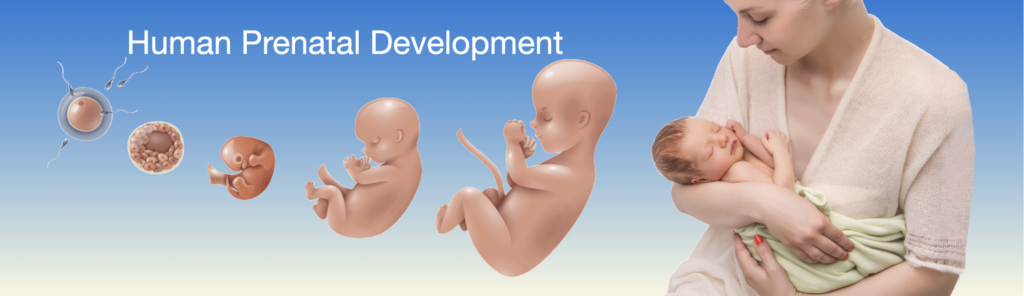
1. How does human prenatal development depend on orderly, precisely controlled biological processes?
Human prenatal development depends on a sequence of biological events that must occur in a precise and regulated order. From fertilization onward, development unfolds through predictable stages governed by accurate cell division, faithful chromosome duplication, and controlled gene expression. Cells divide, specialize, and organize according to internal instructions that determine when division occurs, how chromosomes are distributed, and what role each new cell will play.
The modeling activities in this Investigation make clear that development is not random. Each step builds on the success of the previous one. Small errors in chromosome number or separation can disrupt development, highlighting how tightly regulated prenatal growth must be. The reliability of this process across billions of human lives underscores that development follows biological laws rather than chance.
Discussion angles students may raise:
“Everything has to happen in the right order.”
“If something goes wrong early, it affects everything later.”
“Cells don’t just divide whenever they want.”
“There are rules that control growth.”
Teacher move:
Affirm these observations and emphasize order, regulation, and coordination as defining features of prenatal development.
2. How can a single fertilized cell give rise to the trillions of cells in a human body?
A single fertilized cell gives rise to trillions of cells through repeated cycles of mitosis, in which one cell divides into two genetically identical cells. Each of these cells can then divide again, leading to exponential growth in cell number. Early in development, these divisions happen rapidly, allowing the embryo to grow from a microscopic single cell into a multicellular organism.
Importantly, this increase in cell number does not occur all at once but through countless rounds of controlled division. As development progresses, cells also begin to specialize, forming different tissues and organs, even though they all originated from the same original cell. This process shows how growth depends on both cell multiplication and cell organization.
Discussion angles students may raise:
“Cells keep dividing.”
“It doubles each time.”
“Cells start the same but become different.”
“Growth happens gradually.”
Teacher move:
Reinforce the idea of exponential increase + regulation, not just “more cells.”
3. How does mitosis allow cells in a developing embryo to remain genetically identical while increasing in number?
Mitosis ensures that each new cell receives an exact copy of the original cell’s genetic material. Before division, the cell duplicates its chromosomes so that two identical sets are present. During mitosis, these duplicated chromosomes are carefully separated and distributed evenly into two daughter cells. As a result, each new cell contains the same genetic information as the original cell, allowing the embryo to grow while maintaining genetic consistency across all cells.
Student Discussion Angles
Focus on chromosome duplication and separation
Connect chromosome behavior to genetic identity
Reinforce the idea of accuracy and control in cell division
Link the physical model from the lab to the abstract genetic outcome
Teacher Move
Have students refer back to their mitosis models and describe how chromosomes were handled during division. Prompt them to explain why even small errors in chromosome separation could affect development. Reinforce that mitosis is not just about making more cells, but about preserving the same genetic instructions in every cell.
4. How does chromosome accuracy influence healthy prenatal development?
Healthy prenatal development depends on the accurate duplication and separation of chromosomes during every cell division. Each chromosome carries genes that guide cell behavior, structure, and function. Errors in chromosome number or structure can interfere with normal development and lead to serious consequences.
The lab model demonstrates how chromosomes must align, separate, and be distributed evenly. This precision ensures that cells receive the correct genetic instructions needed for normal growth. Chromosome accuracy is therefore foundational to all later stages of development.
Discussion angles students may raise:
“Chromosomes control everything the cell does.”
“Mistakes at this level have big effects.”
“This helps explain genetic conditions.”
Teacher move:
Connect chromosome accuracy to cause-and-effect reasoning in biology: small molecular events lead to large developmental outcomes.
5. How did the hands-on modeling activity deepen your understanding of prenatal development?
By physically modeling mitosis and meiosis, students transformed abstract textbook diagrams into concrete experiences. Manipulating chromosome models made the sequence, structure, and logic of cell division visible and memorable. Students could see how repeated, accurate divisions allow a microscopic embryo to grow into a complex human organism.
This activity reinforces the central idea of the Investigation: prenatal development depends on repeated, precise biological processes operating reliably over time.
Discussion angles students may raise:
“Doing it helped me understand it better.”
“It made the steps easier to remember.”
“I can now picture what’s happening inside cells.”
Teacher move:
Highlight the value of modeling as a scientific tool and reinforce that understanding mechanisms leads to deeper biological insight.
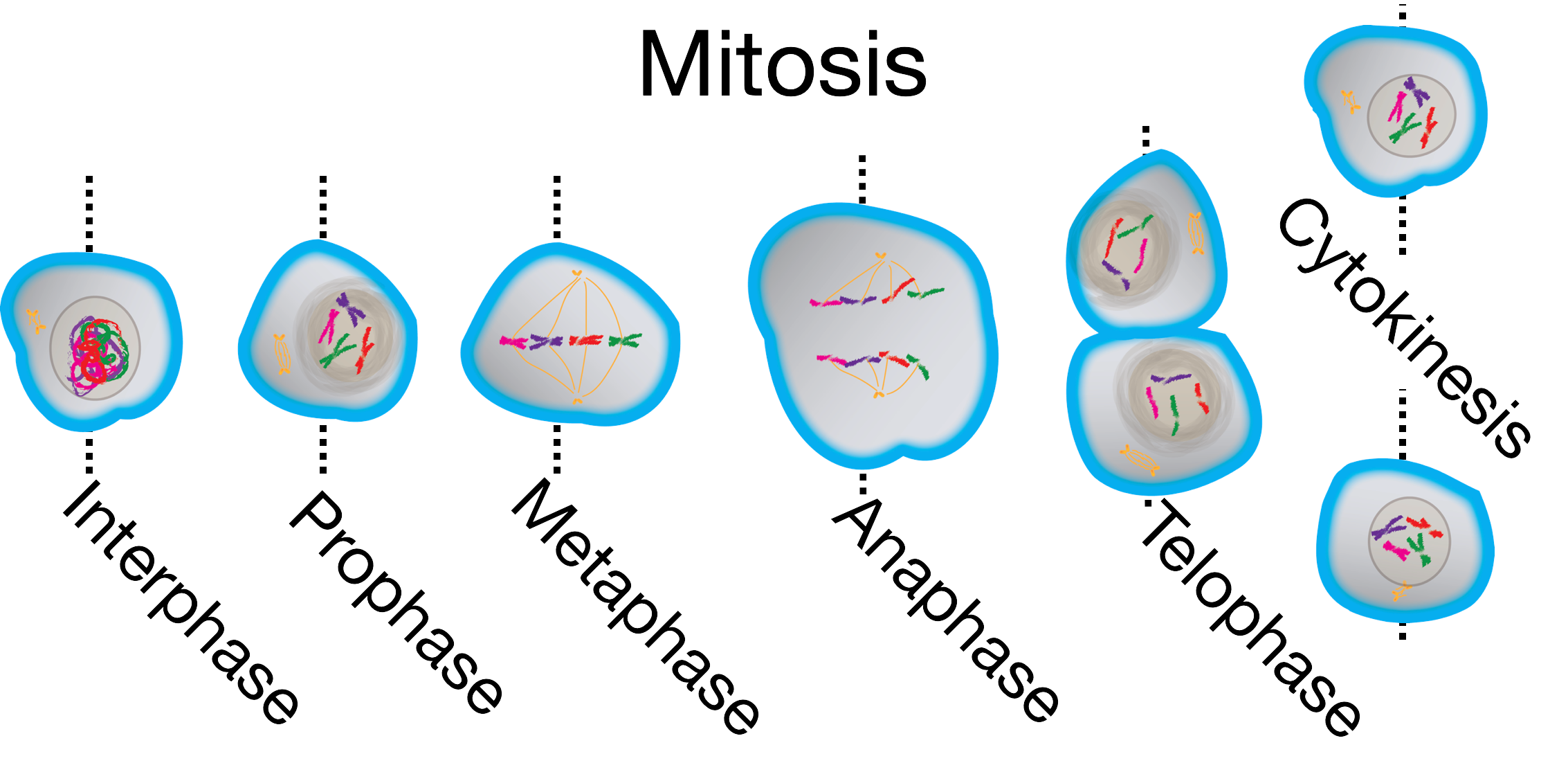
Reference Diagram: Mitosis Stages
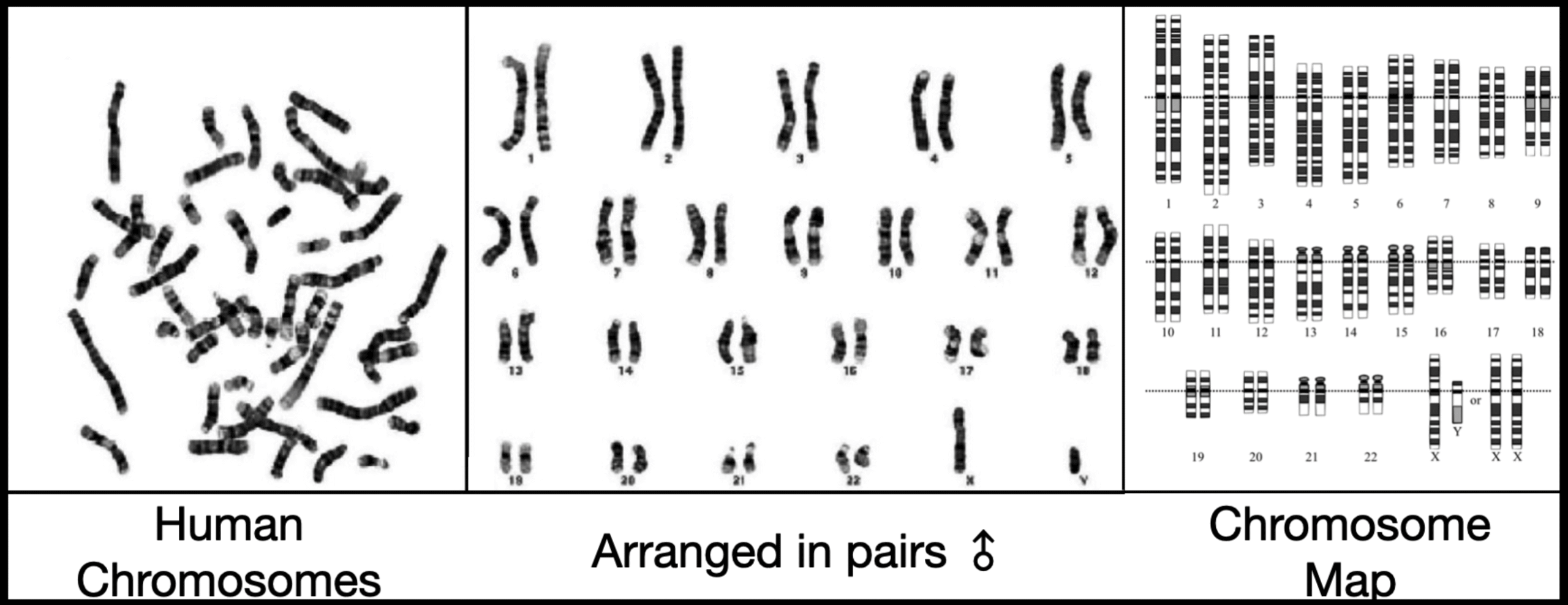
Reference Diagram: Human Chromosomes (and Karyotype)
Think Critically:
How teachers should use these answers
Do not read them aloud verbatim. Use them to:
- Probe student reasoning
- Redirect misconceptions
- Connect answers back to the Lab experience
Encourage students to explain why, not just what
1. Imagine that mitosis occurred without carefully controlled stages. What specific problems might arise during human prenatal development?
If mitosis occurred without carefully controlled stages, chromosome separation would become unreliable. Cells might receive too many chromosomes, too few chromosomes, or damaged genetic material. Because prenatal development depends on billions of precise cell divisions, even small errors early in development could be multiplied as cells continue to divide.
Without controlled stages, tissues and organs would not form in an organized way. Cells could divide at the wrong time, stop dividing when growth is needed, or divide uncontrollably. This would disrupt the coordination required for proper body structure, size, and function. The existence of distinct stages in mitosis helps prevent these problems by ensuring chromosomes are copied, aligned, and separated accurately every time.
Key teaching point:
Order and regulation are not optional features of mitosis — they are essential safeguards for development.
Possible student responses to affirm and extend:
“Cells would get mixed-up DNA.”
“Mistakes would spread as cells divide.”
- “The body wouldn’t grow correctly.”
2. During the Lab, you modeled or observed how chromosomes separate into two identical sets. How did this activity help you understand why growth before birth depends on repeated, accurate cell division rather than just rapid cell division?
The Lab activity demonstrates that cell division must be both accurate and repeated to support prenatal growth. By physically modeling chromosome duplication and separation, students can see that speed alone is not enough. If chromosomes are not divided correctly, rapid cell division would only increase the number of faulty cells.
The activity highlights that mitosis is a step-by-step process designed to minimize errors. Each round of accurate division builds on the previous one, allowing growth to occur in a controlled and reliable manner. This helps students understand why prenatal development depends on precision just as much as on the number of divisions that occur.
Key teaching point:
Growth depends on quality of division, not just quantity.
Possible student responses to affirm and extend:
“If you rush, mistakes happen.”
“Errors would keep repeating.”
“Accuracy matters more than speed.”
3 All the cells in the human body begin with the same genetic information. Why, then, is it important that mitosis produces identical cells during early prenatal development?
During early prenatal development, producing genetically identical cells ensures that all cells have access to the same complete set of instructions. This genetic consistency allows cells to work together as the body grows and begins forming tissues and organs. If cells were genetically different at this stage, development would become uncoordinated, and structures might not form properly.
Mitosis provides a stable foundation upon which later specialization can occur. Although cells will eventually take on different roles, they must first share the same genetic blueprint. Identical cells allow growth to proceed in a predictable and organized way before differentiation begins.
Key teaching point:
Consistency comes before specialization.
Possible student responses to affirm and extend:
“Cells need the same instructions at first.”
“Differences happen later.”
“Growth has to stay organized.”
Synthesis Prompt (Whole-Class Discussion):
Ask students to reflect on how mitosis allows a human being to grow from a single cell into a complex organism while remaining genetically consistent. Emphasize that this process must occur accurately and repeatedly throughout prenatal development.