
Teacher Portal
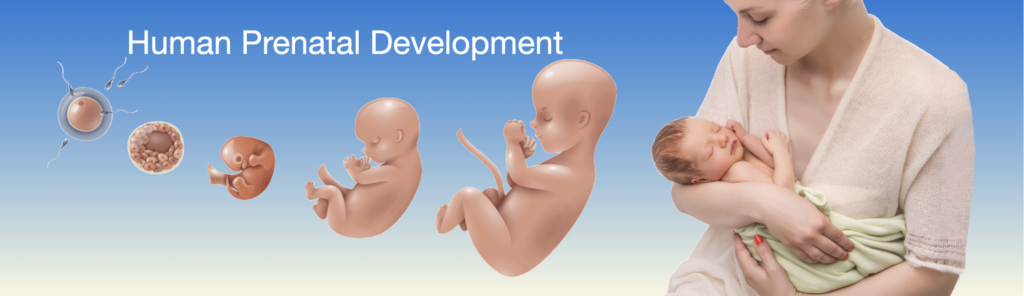
Investigation 3: Faith and Reason Reflection
Maternal-Fetal Interaction
Navigate:
Once the slide presentation is launched:
- use your left and right arrows to advance or go back in the slide presentation, and
- hover your mouse over the left edge of the presentation to get a view of the thumbnails for all the slides so that you can quickly move anywhere in the presentation.
- Click HERE to launch the slide presentation for the CELL.
SLIDE HPDtheo-3-1
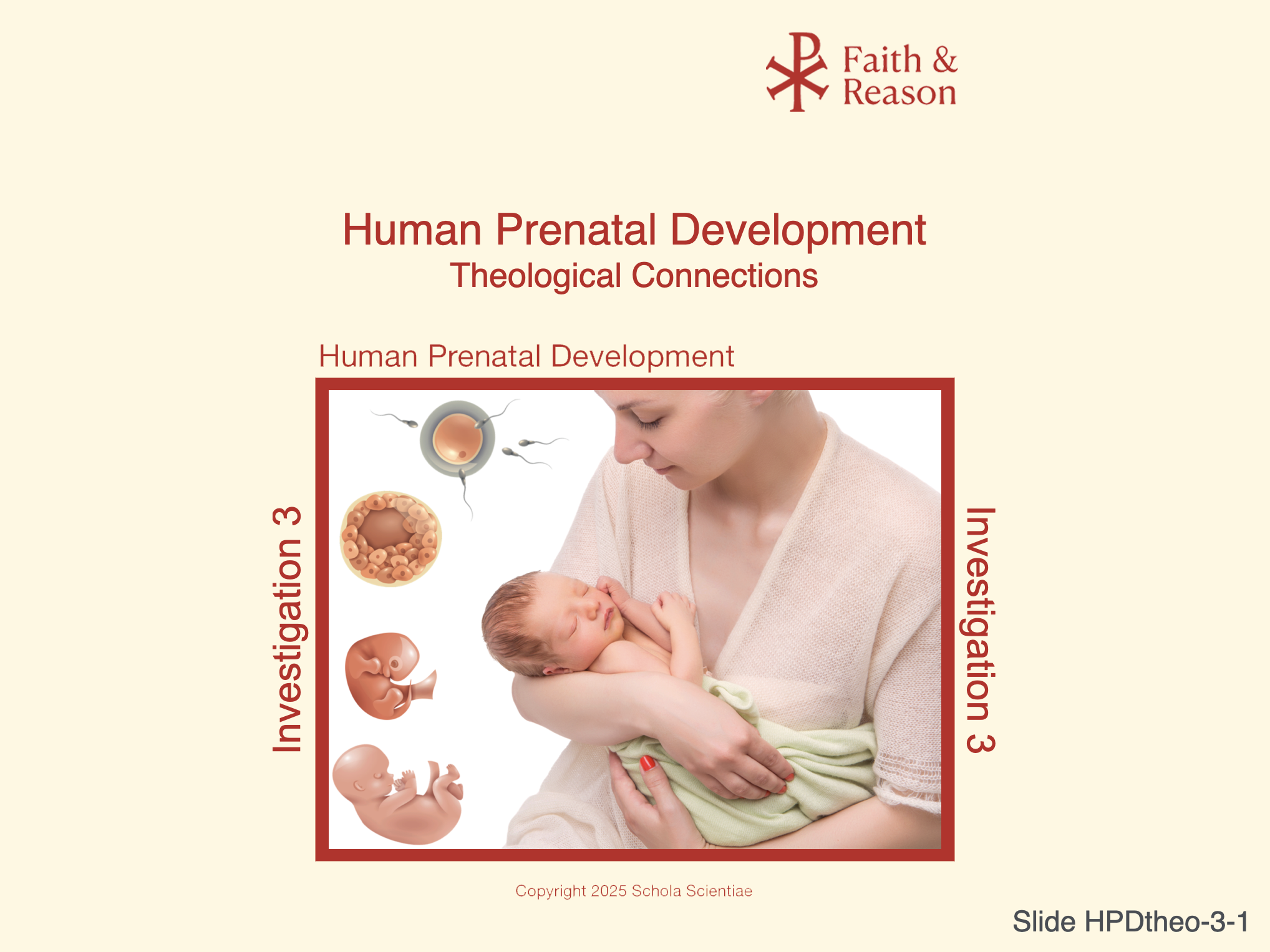
Human Prenatal Development – Theological Connections (Introduction)
This introductory slide sets the tone for the Human Prenatal Development Investigation 3 Theology lesson. It visually connects the scientific journey from fertilization to birth with the theological theme of God’s design and love for human life at every stage.
• Reflection Question: What do you notice about the way human life grows from the very beginning?
SLIDE HPDtheo-3-2
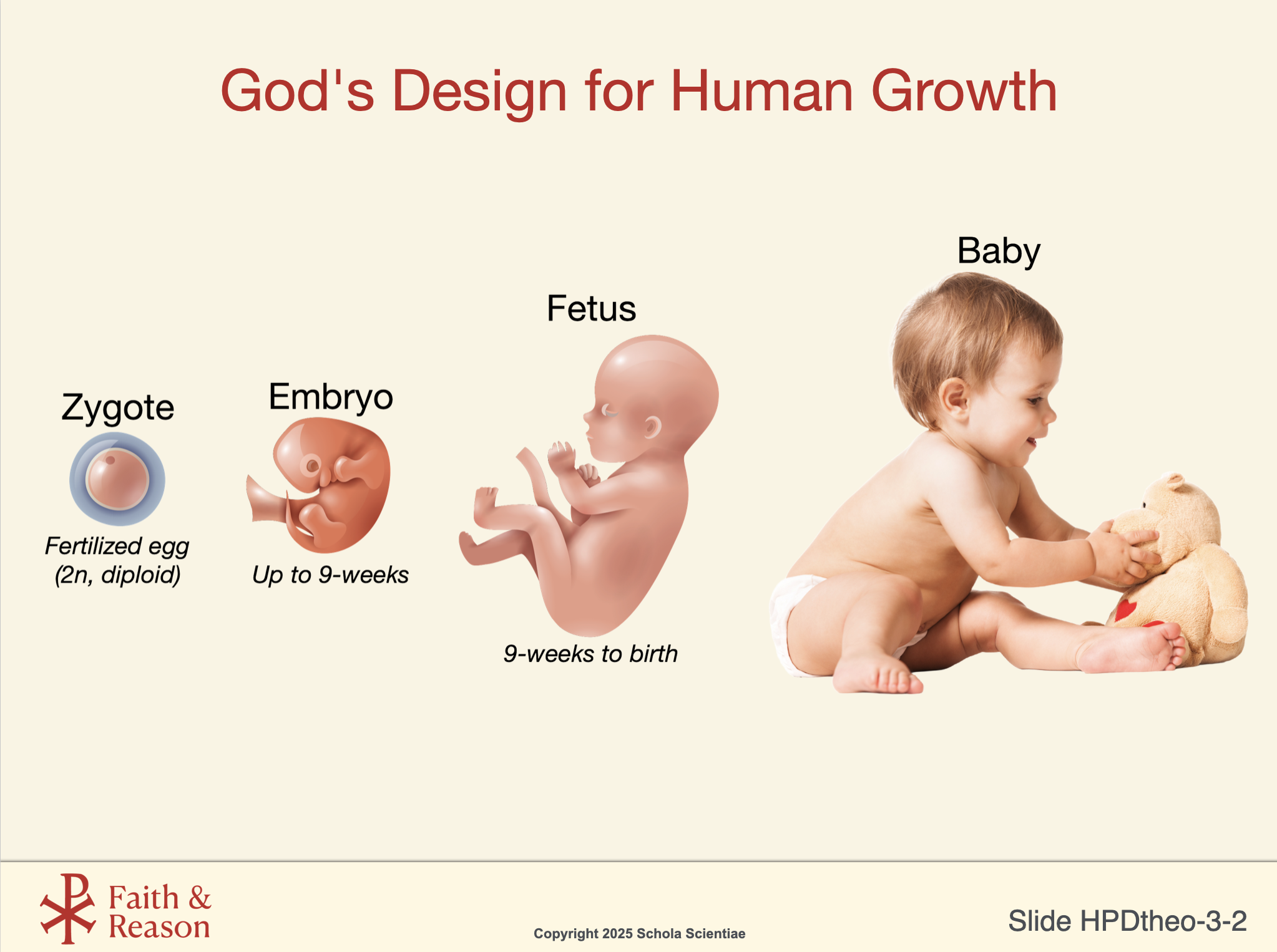
From the moment of fertilization, God has designed human life to grow, change, and develop. Every stage of life — even the very smallest — follows an orderly, purposeful plan.
Discussion Question:
Q: When does a new human life begin according to our faith?
A: At fertilization, when the zygote forms, a unique human life begins.
Reflection Question: How does the ordered growth of a human from a single cell help you appreciate God’s wisdom and care?
SLIDE HPDtheo-3-3
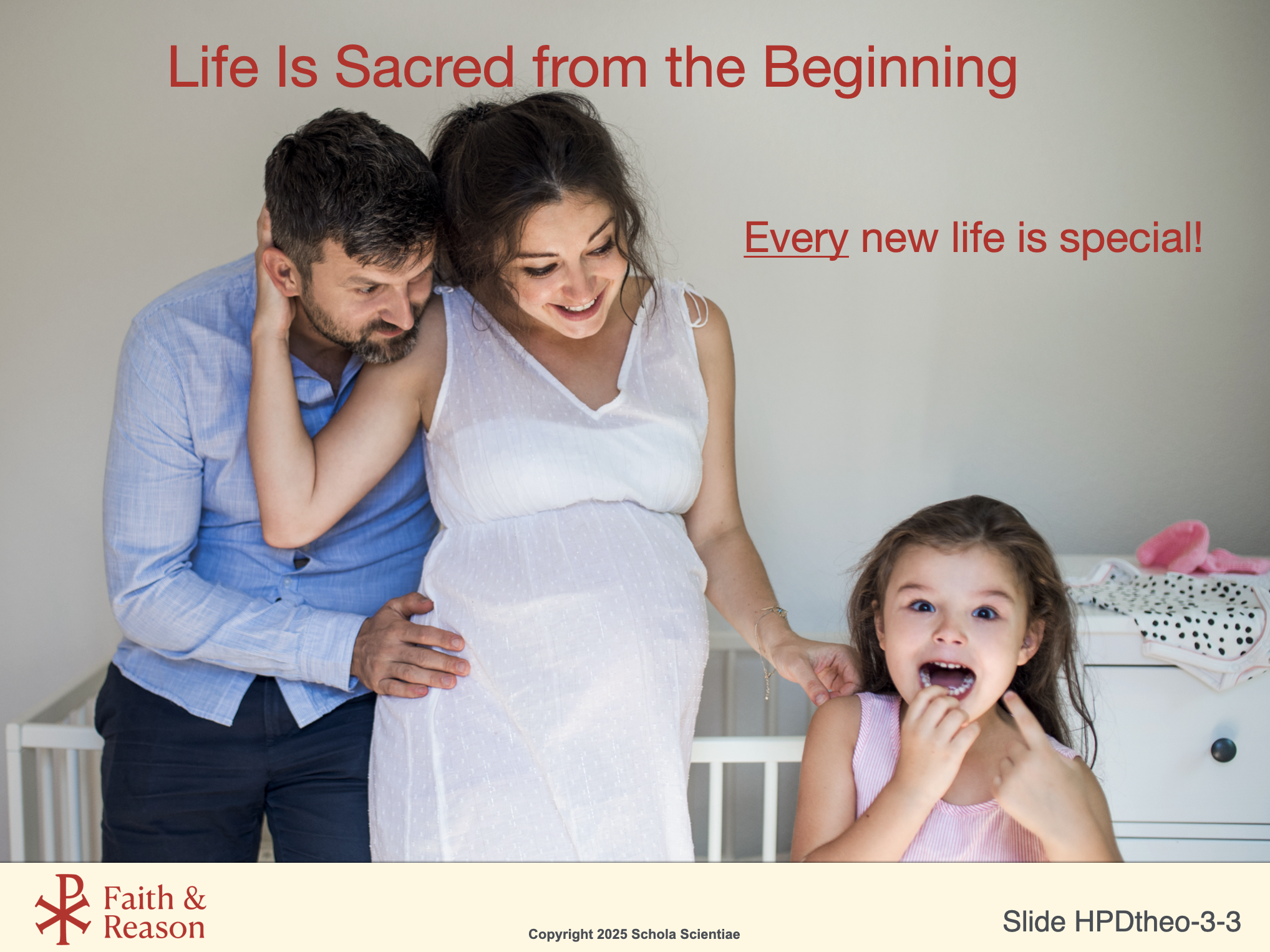
Even before a human can be seen with special instruments, it is clear that life is precious and loved by God. Being small does not make a life less valuable.
Discussion Question:
Q: Why do we say that every life is special from the beginning?
A: Because every life is created by God, with dignity and purpose.
Reflection Question: Why is it important to protect and respect human life even when it is very small and developing?
SLIDE HPDtheo-3-4
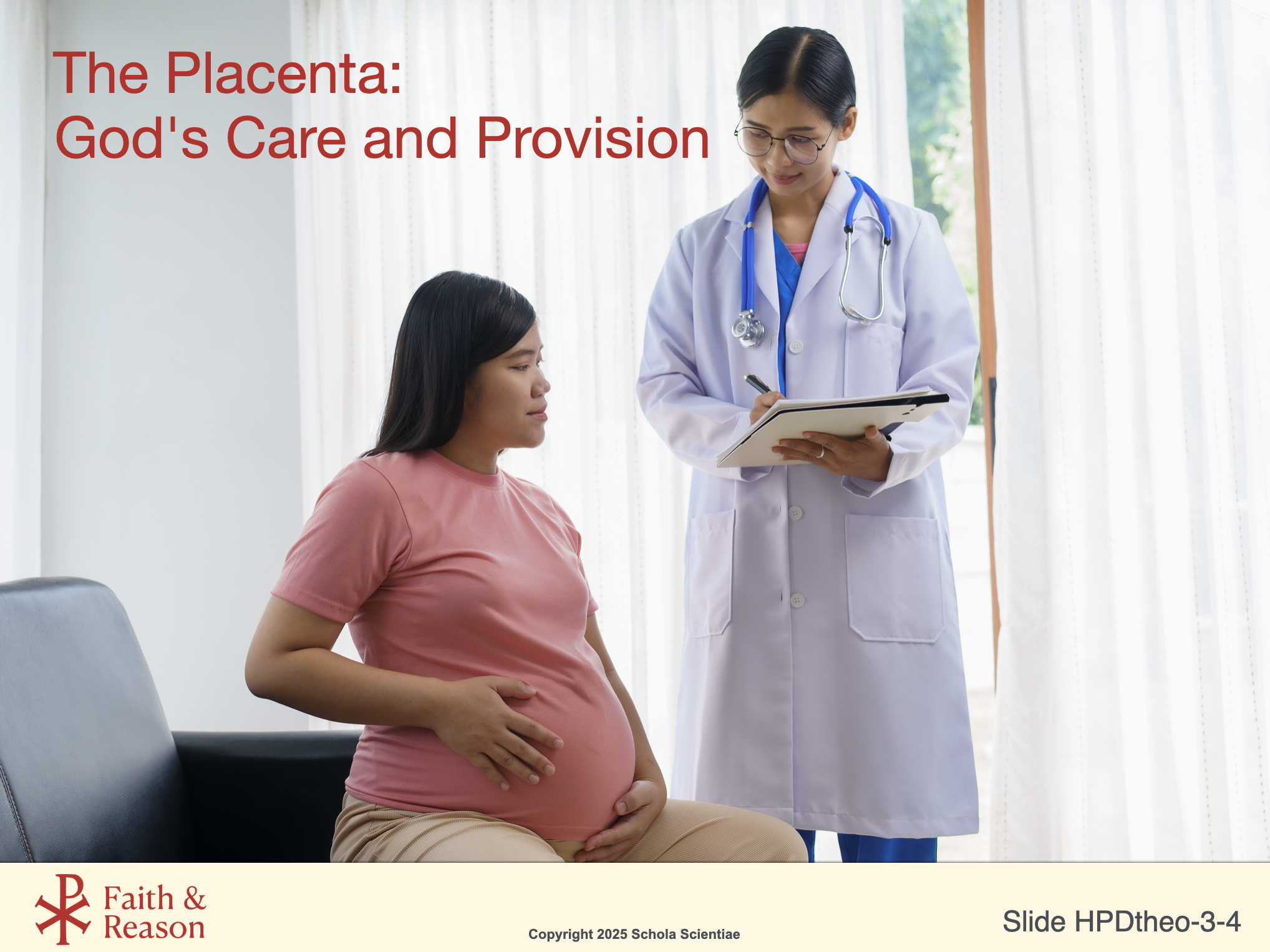
God designed the placenta as a special way to nourish and protect the developing child within the mother. It is a beautiful example of God providing what is needed for life to grow safely.
Discussion Question:
Q: How does the placenta reflect God’s care for unborn life?
A: It nourishes, protects, and connects mother and baby.
Reflection Question: What does the placenta teach us about the way God provides for all living things, even before birth?
SLIDE HPDtheo-3-5
Virtues of Trust and Hope
Much of human development happens unseen, requiring patience and trust. In the same way, God invites us to trust that He is always working, even when we cannot see it.
Reflection Question: How can remembering the hidden growth of a baby teach you to have trust and hope in your own life?
SLIDE HPDtheo-3-6
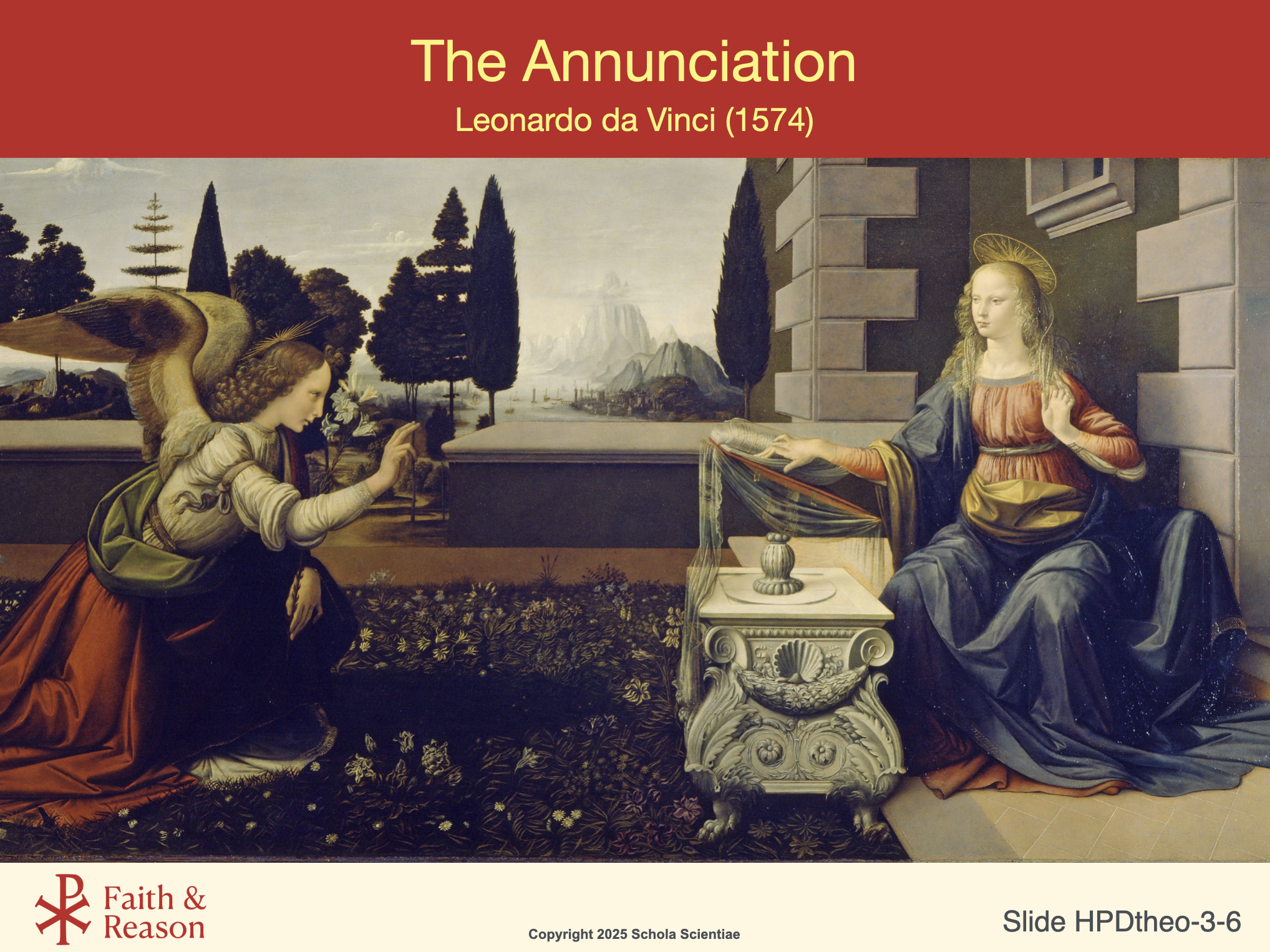
Jesus’ human development began at conception. He experienced life from its earliest moments.
Jesus became truly human, beginning His life just like us — as a single cell growing inside His mother. He experienced all the stages of development we study, making every part of human life holy.
Discussion Question:
Q: What does the Annunciation teach us about Jesus’ humanity?
A: He shared fully in every human stage, beginning as a single cell.
Reflection Question: How does knowing that Jesus once grew from a single cell help you understand His love for all human life?
SLIDE HPDtheo-3-7
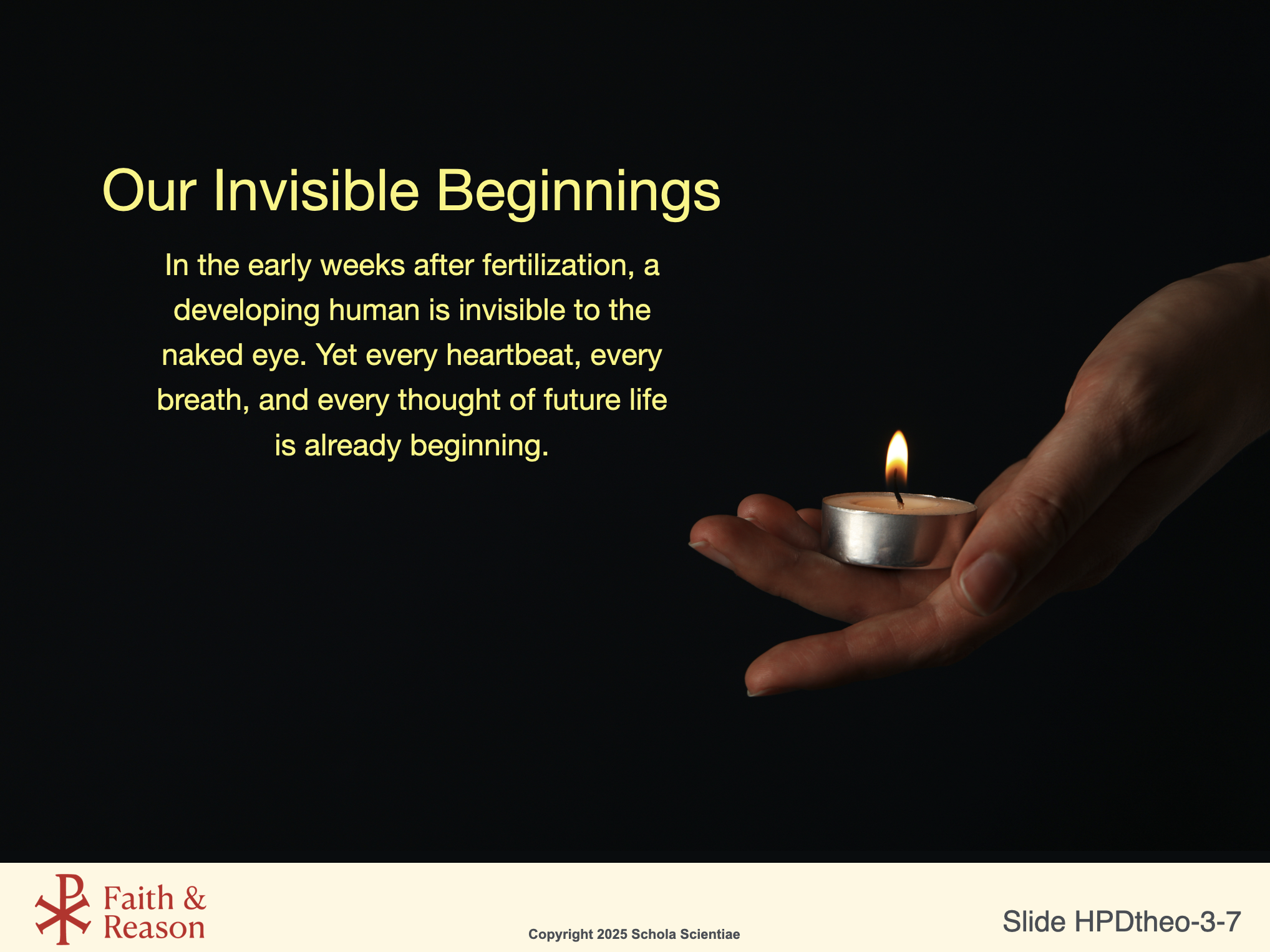
In the early weeks after fertilization, a developing human is invisible to the naked eye. Yet every heartbeat, every breath, and every thought of future life is already beginning.
Even when unseen, new life is sacred and real.
Discussion Question:
Q: What does this candle remind us about early life?
A: That even hidden life is precious and full of promise.
Reflection Question:
How can remembering your own invisible beginnings change the way you see others?
SLIDE HPDtheo-3-8
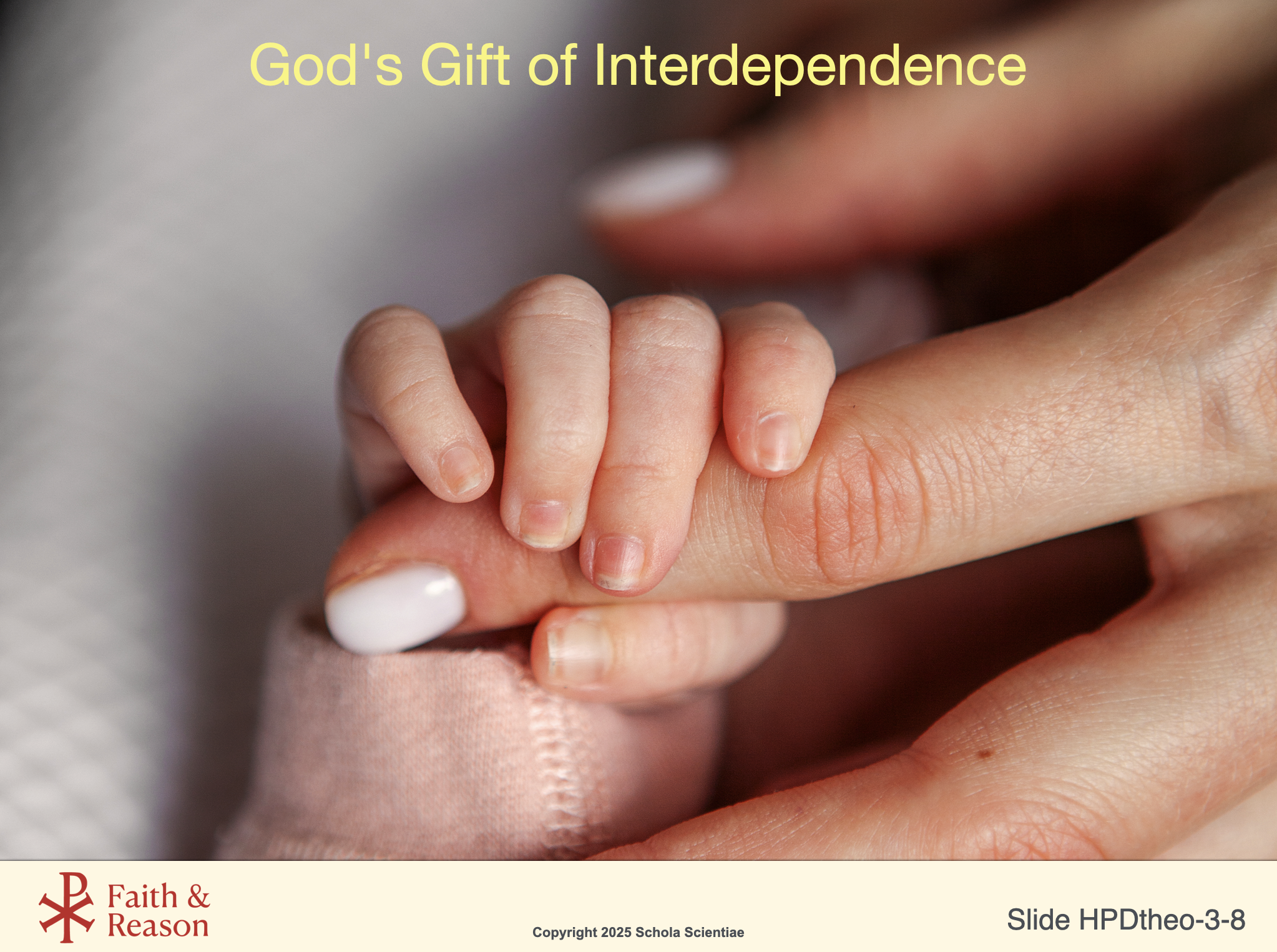
God’s Gift of Interdependence
God made human life dependent on others from the very start. No one is self-sufficient at birth; we are cared for, protected, and nurtured.
We are created to depend on each other throughout our lives, starting even before birth.
Discussion Question:
Q: Why is interdependence important in human life?
A: It reminds us we are made for community and care.
Reflection Question:
What does our dependence on others teach us about how God designed human relationships?
SLIDE HPDtheo-3-9
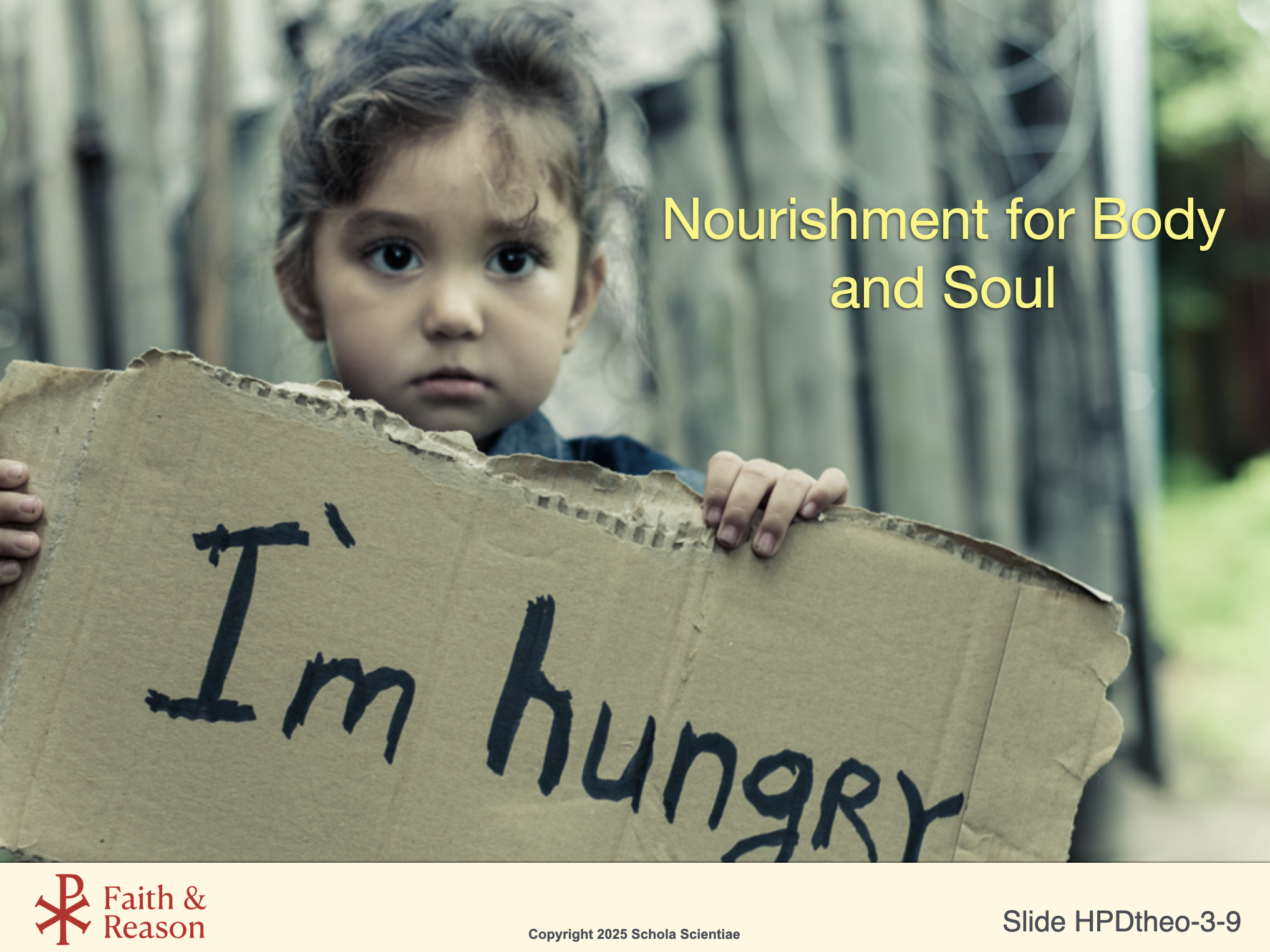
Nourishment for Body and Soul
Caring for physical and spiritual needs is part of protecting human dignity.
As a baby receives nourishment through the placenta, so we are also called to nourish one another’s hearts and spirits.
Discussion Question:
Q: How can we help nourish others today?
A: By acts of kindness, sharing, and protecting life.
SLIDE HPDtheo-3-10
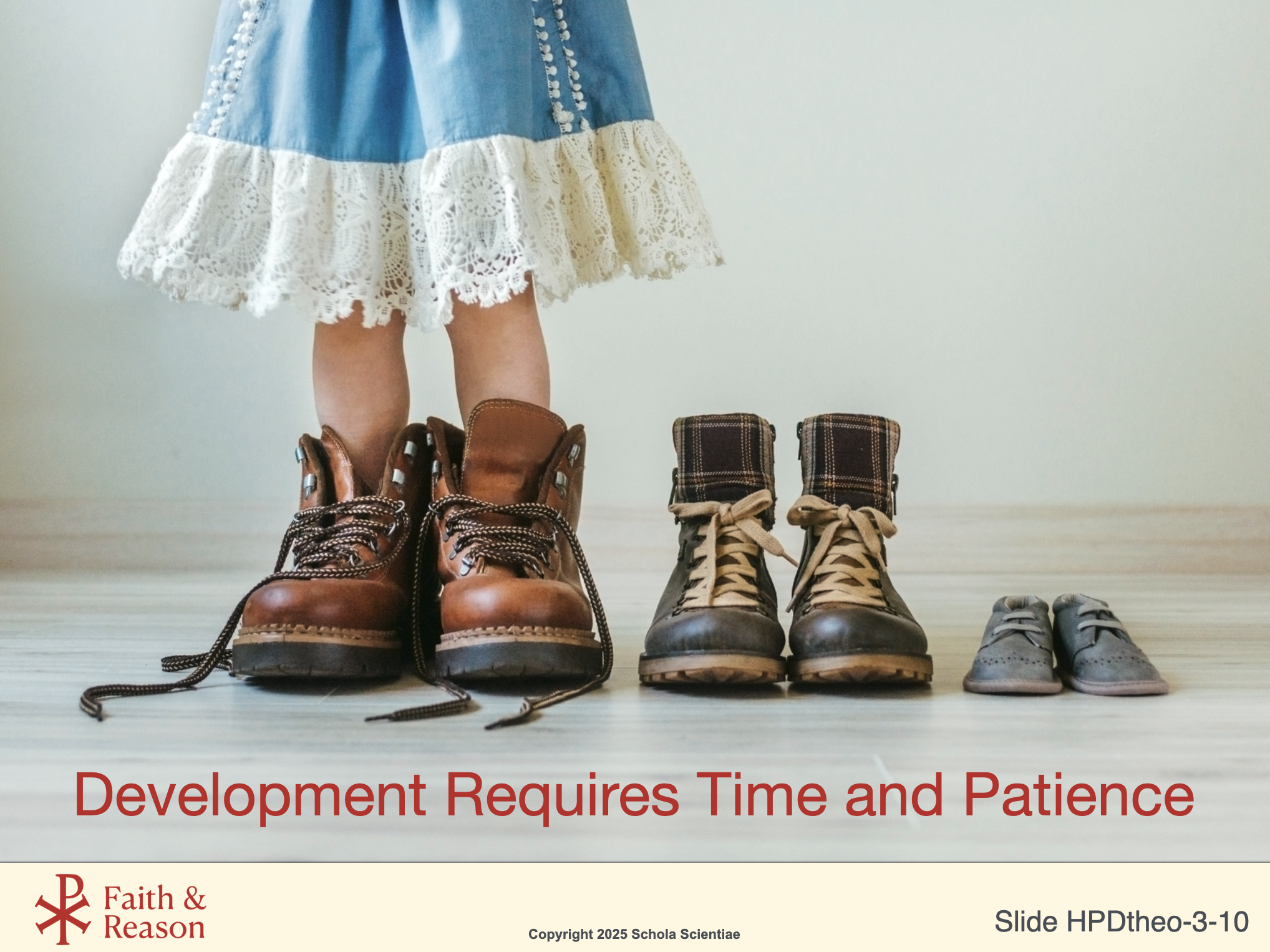
Development Requires Time and Patience
A baby grows slowly over months inside the uterus. Growth, whether physical or spiritual, takes time and trust in God’s timing.
Development takes time. God asks us to be patient with ourselves and others.
Discussion Question:
Q: How can patience help us appreciate God’s plan?
A: It allows us to trust that each stage has value and purpose.
Reflection Question:
What is something you are working on growing in your own life right now?
SLIDE HPDtheo-3-11
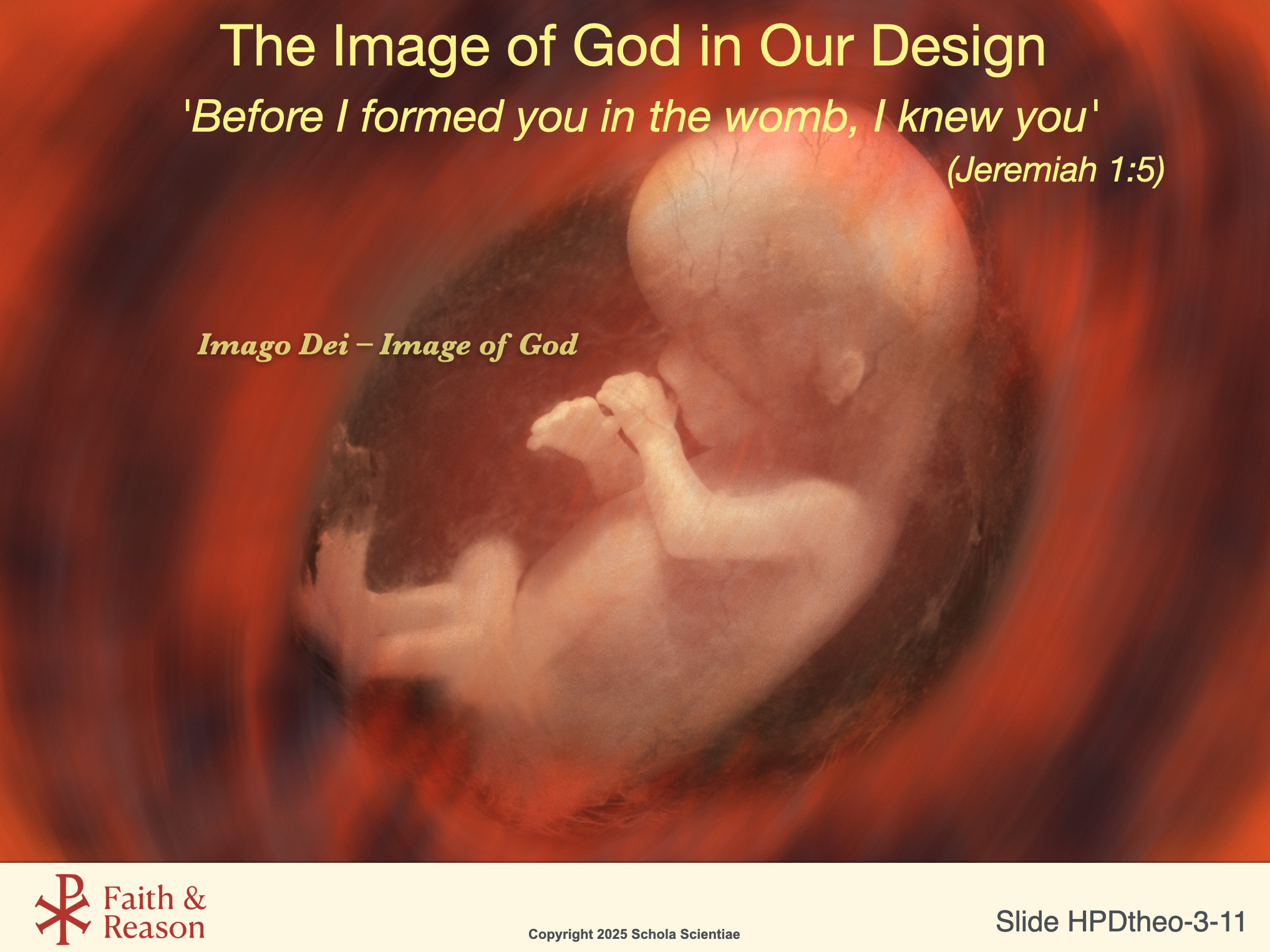
The Image of God in Our Design
From the very beginning, every human reflects God’s image and love. God’s love for you began even before you were born.
Discussion Question:
Q: What does Jeremiah 1:5 tell us about when God knows us?
A: Before we are even formed, God knows and loves us.
Reflection Question: How does it feel to know that God has loved you since before you even existed?
SLIDE HPDtheo-3-12
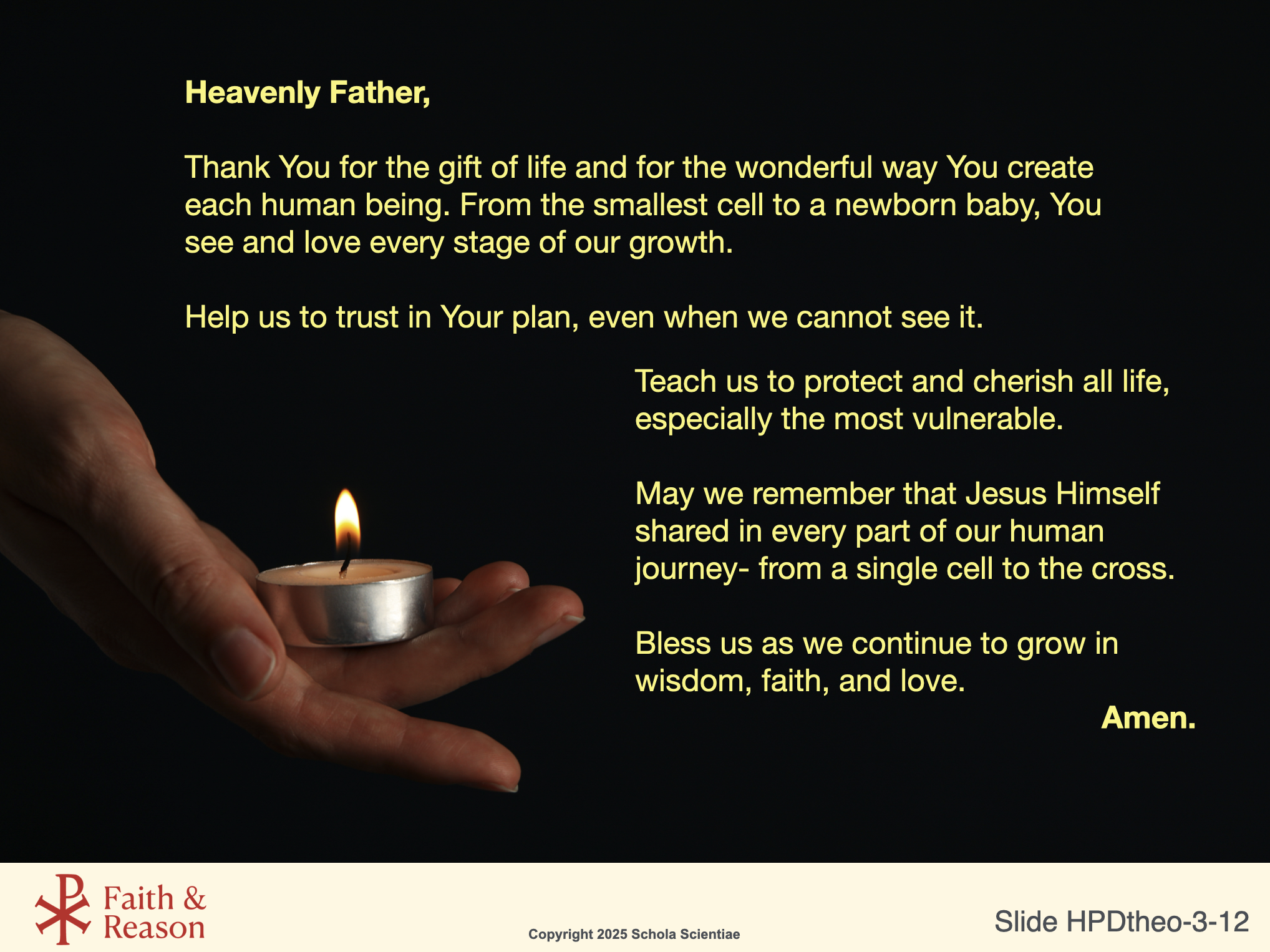
Heavenly Father,
Thank You for the gift of life and for the wonderful way You create each human being. From the smallest cell to a newborn baby, You see and love every stage of our growth.
Help us to trust in Your plan, even when we cannot see it.
Teach us to protect and cherish all life, especially the most vulnerable. May we remember that Jesus Himself shared in every part of our human journey – from a single cell to the cross. Bless us as we continue to grow in knowledge, faith, wisdom, and love.
Amen.