Teacher Portal
Investigation 3: PreLab
Maternal-Fetal Interaction
In this PreLab, students prepare to investigate how human growth depends on both accurate cell division and carefully regulated exchange between mother and developing child. Students review the structure and function of human chromosomes and the role of mitosis in growth, repair, and development. They then consider the placenta—an extraordinary biological interface that allows nutrients, gases, and wastes to move between two genetically distinct individuals without mixing their blood. By examining how simple filtration works and where it falls short, students begin to recognize the limits of mechanical models when describing living systems. This preparation will help students approach the laboratory activity with clarity, curiosity, and thoughtful attention to how biological systems maintain life.
Purpose of the PreLab
During this PreLab, students prepare for the upcoming laboratory investigation by reviewing key ideas related to maternal–fetal interaction and placental function. Students organize their understanding of how nutrients, gases, and wastes are transported between mother and developing child, and begin considering the limits of simplified models as they prepare to interpret observations made during the lab.
Focus Questions:
1. Why is mitosis essential for human growth and development from a single cell to a multicellular organism?
Mitosis is a type of cell division responsible for growth and tissue repair. Human prenatal development depends on a sequence of biological processes that occur in a precise, regulated, and highly coordinated manner. From the moment of fertilization, development proceeds through predictable stages that rely on accurate cell division, controlled gene expression, and regulated cell differentiation. Cells do not divide randomly; they follow internal instructions that determine when to divide, how often to divide, and what type of cell to become.
This orderliness allows complex structures—such as tissues, organs, and body systems—to form in the correct locations and proportions. Even small deviations from these regulated processes can disrupt development, which highlights how tightly controlled prenatal growth must be. The remarkable reliability of human development across billions of individuals underscores that these processes are governed by biological laws rather than chance.
Discussion angles students may raise:
• “Everything happens in steps.”
• “Cells have instructions.”
• “It’s not random.”
• “Things grow in the right order.”
Teacher move:
Affirm these ideas and emphasize control, regulation, and coordination.
2. Why is a specialized uterine environment, including the placenta, essential for continued prenatal development rather than simple growth of cells alone?
Cell division alone is not enough to support prenatal development. As the embryo grows, it requires a carefully regulated environment that provides nutrients and oxygen, removes wastes, and protects the developing tissues. The uterus and placenta create this specialized environment, allowing growth to continue safely over time.
The placenta acts as an interface between the mother and the developing fetus. It supports growth by allowing selective exchange of materials while also limiting direct mixing of maternal and fetal blood. This balance helps protect the fetus while still meeting its changing needs as development progresses.
Discussion angles students may raise:
“Cells need nutrients and oxygen to keep growing.”
“The placenta helps protect the fetus while still letting things pass.”
“Growth needs the right environment, not just more cells.”
“The uterus supports development in ways cells can’t do on their own.”
Teacher move:
Emphasize that growth depends on maintaining a stable, regulated environment in addition to accurate cell division, and that developing systems require protection as well as supply.
3. What is the placenta, and how does it function as a site of exchange between mother and developing child?
The placenta is a temporary organ that forms during pregnancy and connects the developing child to the mother. It allows oxygen, nutrients, and other essential substances to move from the mother’s bloodstream to the developing child, while carbon dioxide and metabolic wastes move in the opposite direction. Importantly, maternal and fetal blood do not normally mix.
Instead, exchange occurs across specialized placental structures that keep the two circulatory systems separate while still supporting growth and development. This arrangement protects both mother and child while ensuring that the developing organism receives what it needs to survive and grow.
Discussion angles students may raise:
• “The blood doesn’t mix.”
• “Stuff moves both ways.”
• “The baby depends on the placenta.”
• “It’s like a connection point.”
Teacher move:
Emphasize that growth depends not only on making new cells, but on maintaining the conditions that allow those cells to survive, function, and develop properly.
4. Why is the placenta more accurately described as a selective interface rather than a simple filter?
A simple filter separates materials based mainly on size, allowing smaller particles to pass through while blocking larger ones. While this idea can help model certain aspects of exchange, it does not fully explain how the placenta works. Some large molecules are transported across the placenta, while some smaller substances are blocked or tightly regulated.
The placenta uses specialized biological mechanisms to control what passes through, when it passes through, and in what direction. This selectivity allows the placenta to support life in ways that mechanical filtration alone cannot explain, revealing the limitations of simple models when describing living systems.
Discussion angles students may raise:
• “It’s not just size that matters.”
• “Some things are allowed and others aren’t.”
• “The model doesn’t explain everything.”
• “Living systems are more complex.”
Teacher move:
Reinforce the idea that models are useful but limited, and that biological systems involve active regulation rather than passive filtering.
Preparing for Success:
Before beginning this Investigation, students should review several key ideas from the Background Information and Concept Day slides. These ideas directly influence their success in the Mitosis Modeling Lab.
To help students succeed:
Direct them to the specific Background Readings linked below.
Encourage them to click the slide thumbnails to view important Concept Day visuals.
Review the short explanations that tell them why each concept matters for today’s investigation.
This structure removes guesswork and helps both teachers and students feel confident and prepared. These ideas directly shape how students will perform during the modeling of mitosis, chromosome number, and growth.
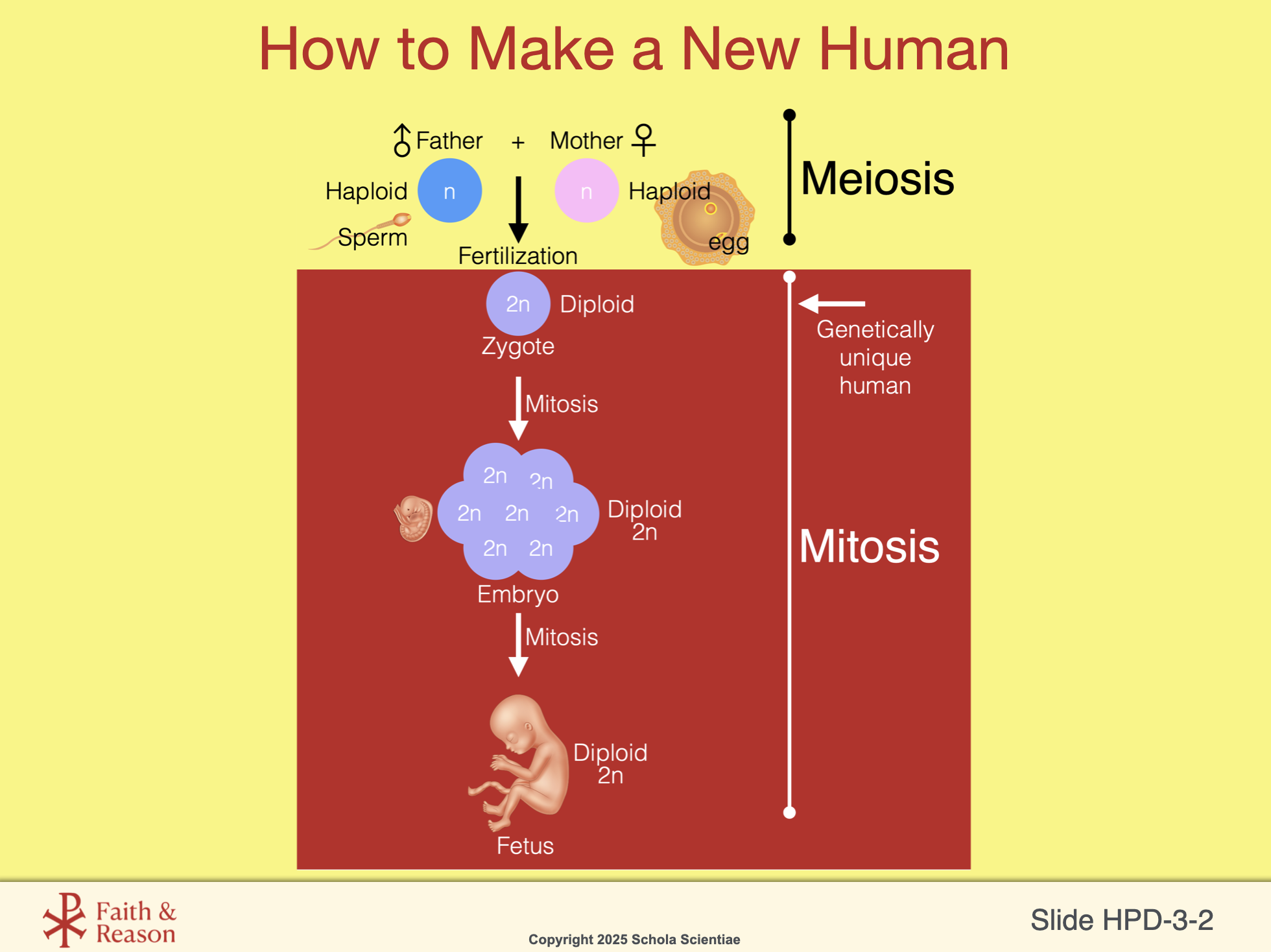
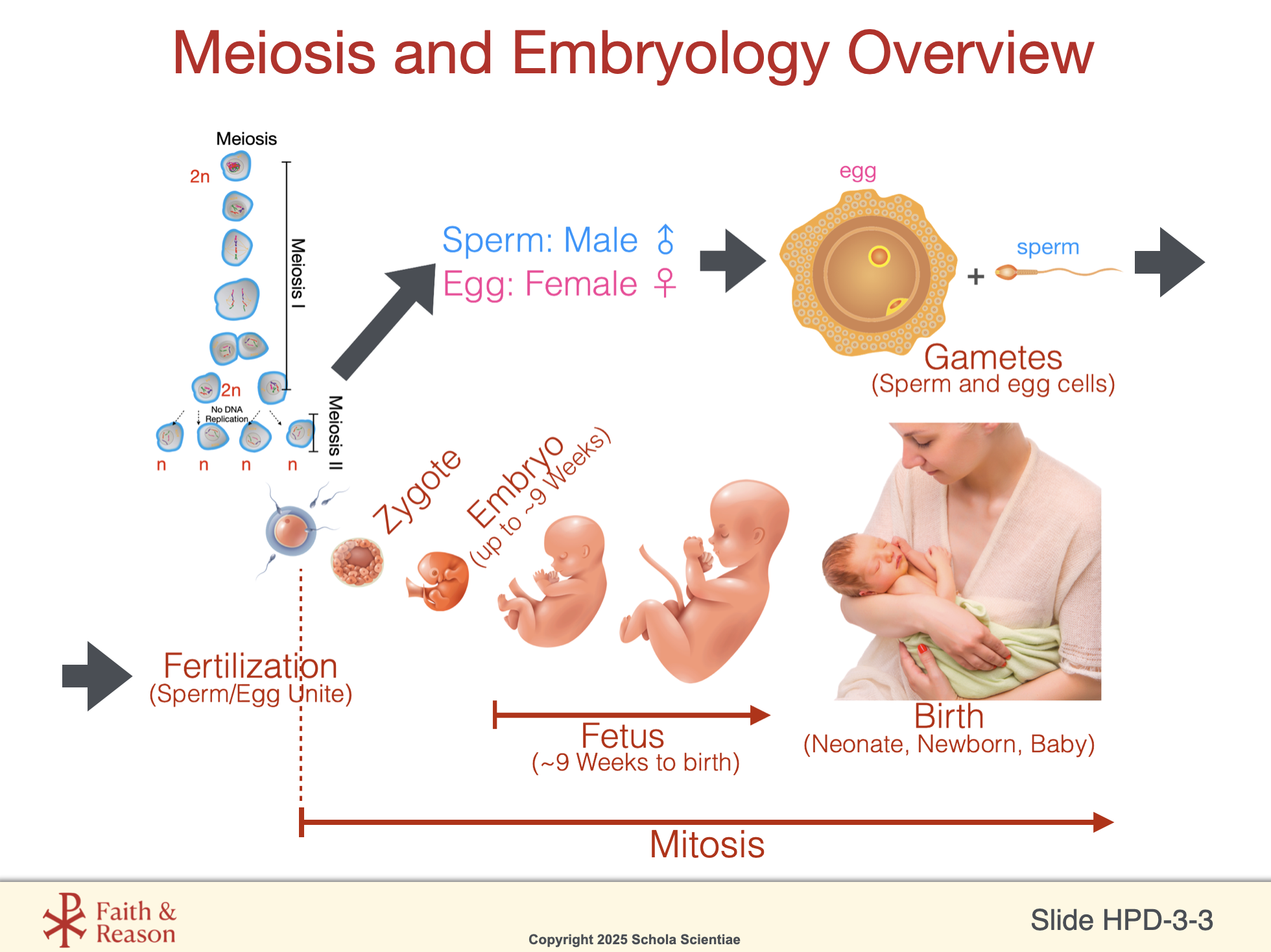
1. Human Development Begins With a Single Cell and Continues by Mitosis
Key Idea:
• A new human begins as a single fertilized cell and grows through repeated mitotic cell divisions.
Background Reading (Readings open in a new window):
Relevant Concept Slides (Click to enlarge):
Why this matters:
Students must understand that mitosis—not meiosis—drives growth after fertilization. This prepares them to correctly interpret later models of development and growth.
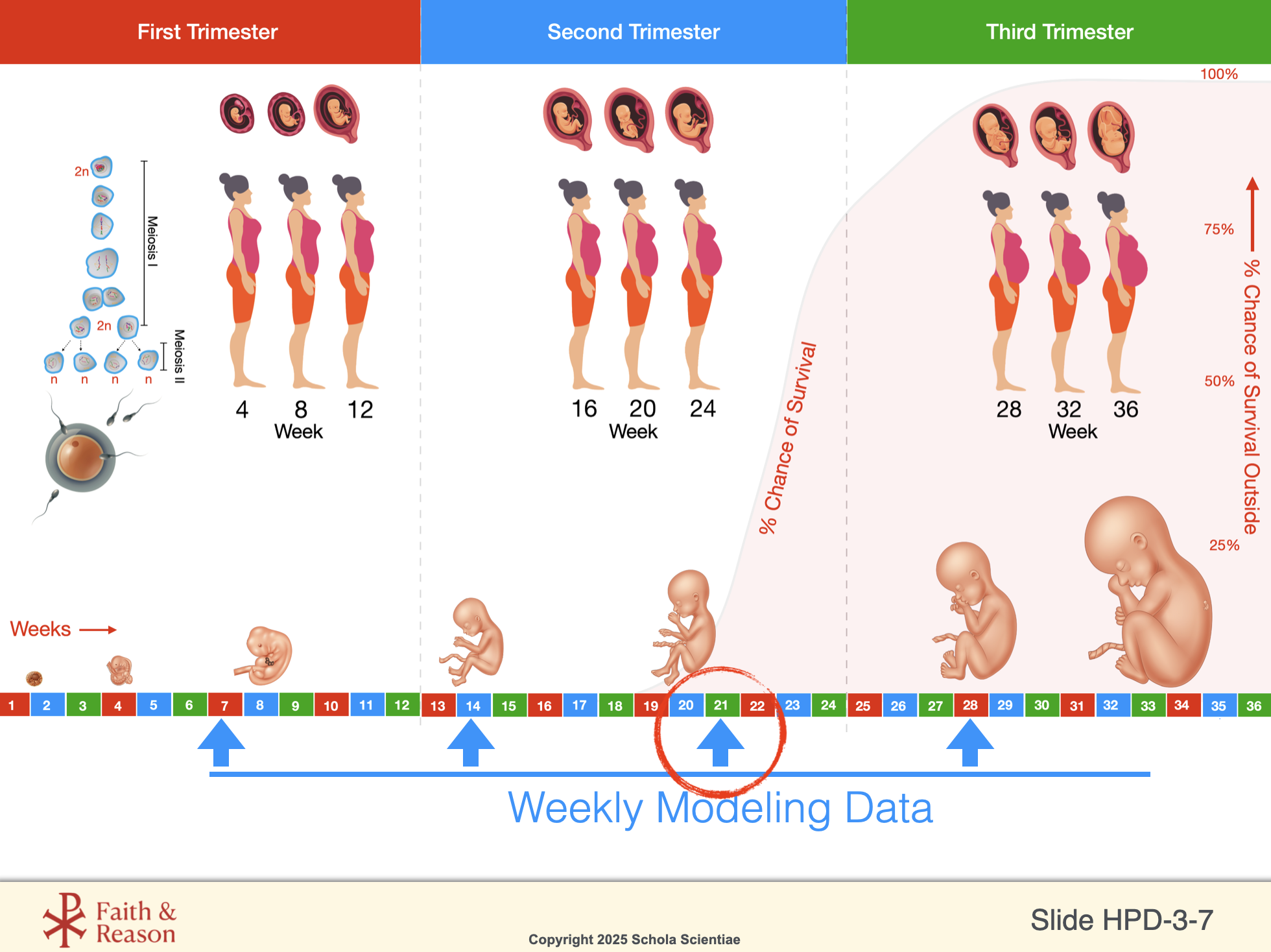
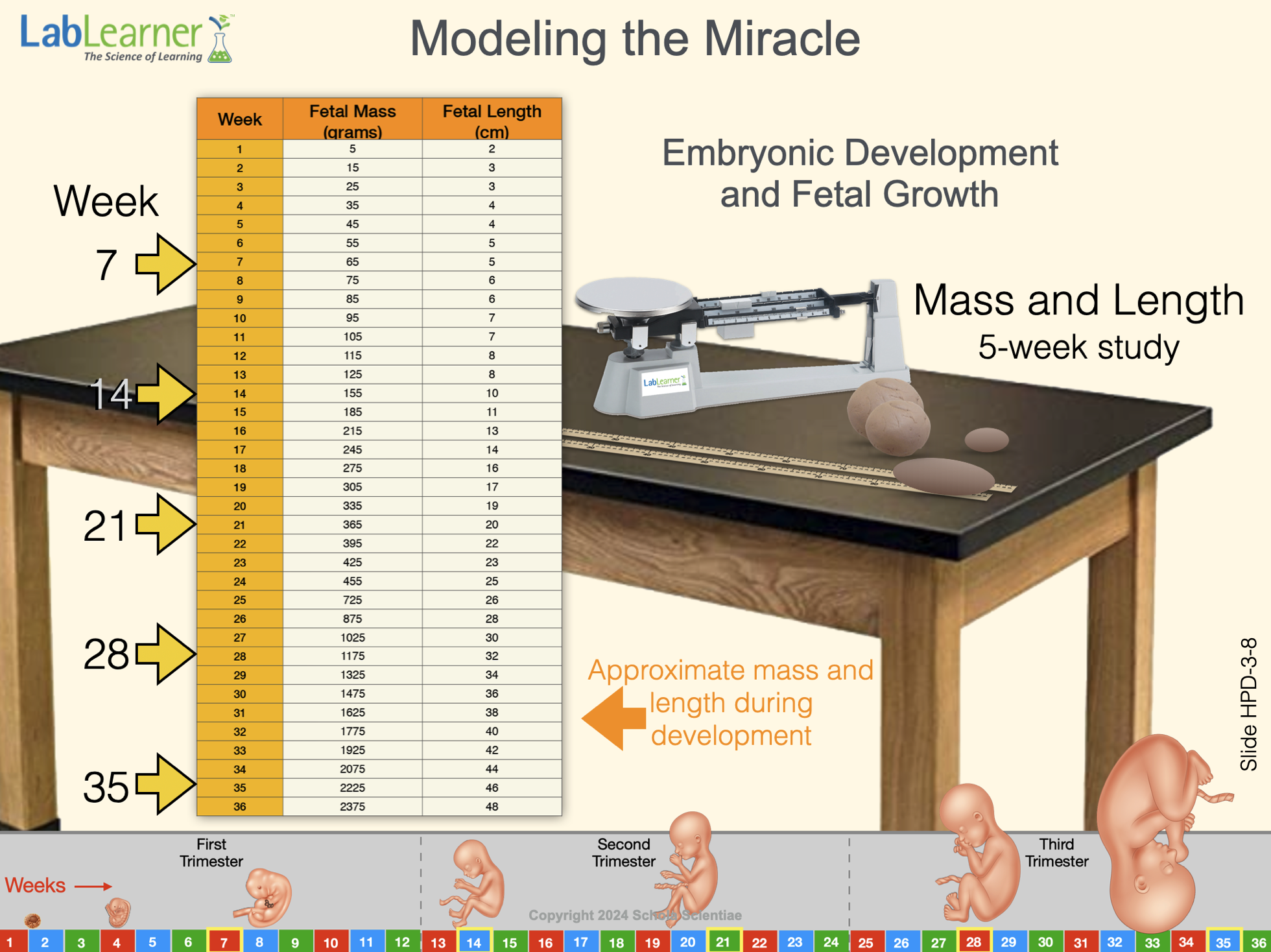
2. Growth Occurs Within a Structured Developmental Timeline
Key Idea:
• Human development follows recognizable stages that occur over time.
Background Reading (Readings open in a new window):
🔗 First Trimester: Embryonic Development
🔗 Second Trimester: Fetal Development
🔗 Third Trimester: Growth and Birth
Relevant Concept Slides (Click to enlarge):
Why this matters:
Understanding developmental timing helps students interpret growth data and recognize that changes in size, mass, and structure occur gradually and predictably.\
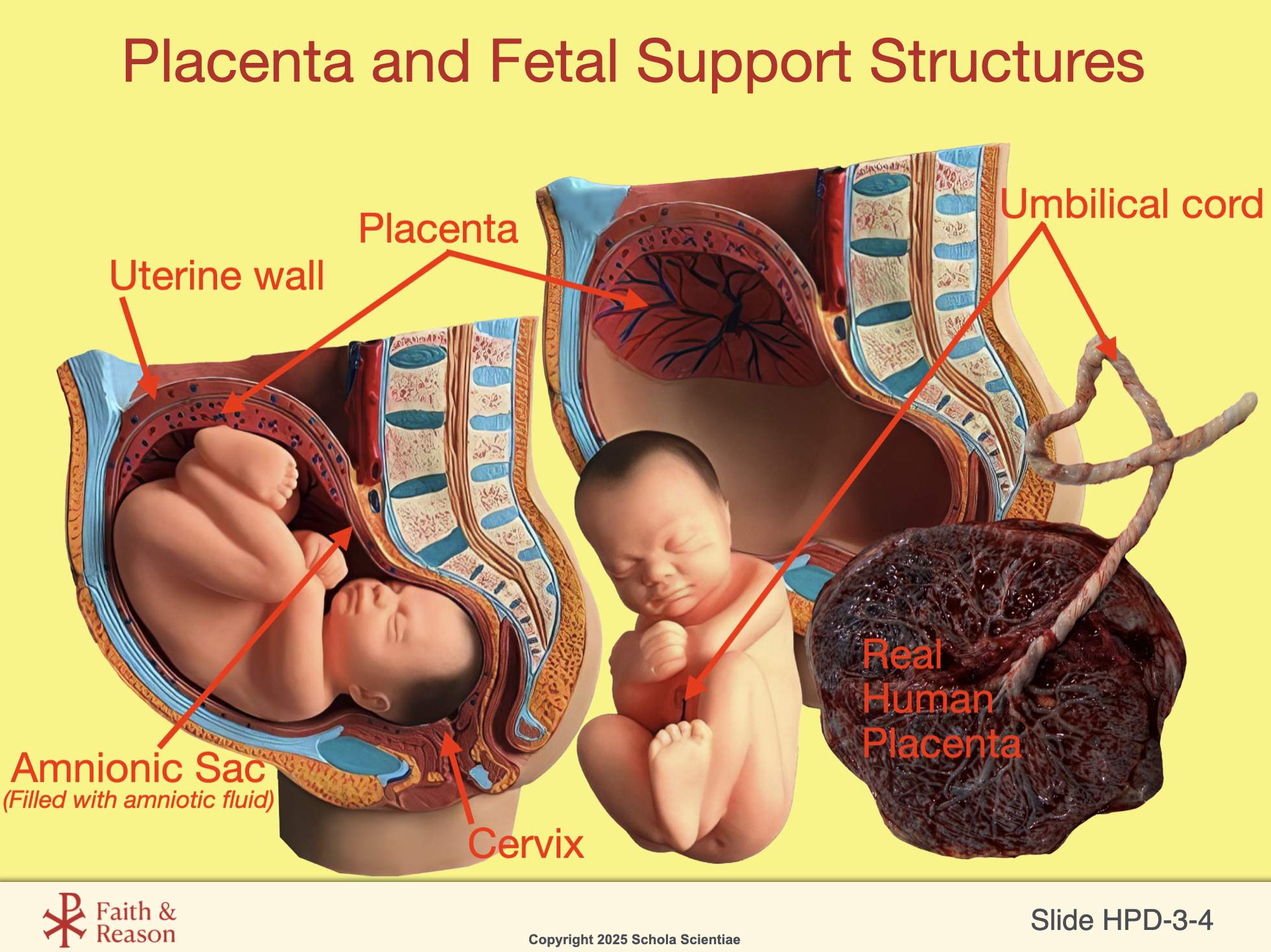
3. The Placenta Supports the Developing Fetus
Key Idea:
• The placenta provides oxygen, nutrients, and waste removal while protecting the fetus.
Background Reading (Readings open in a new window):
Relevant Concept Slides (Click to enlarge):
Why this matters:
Before modeling placental transport, students must understand the placenta as a support organ, not simply a passive connection between mother and fetus.
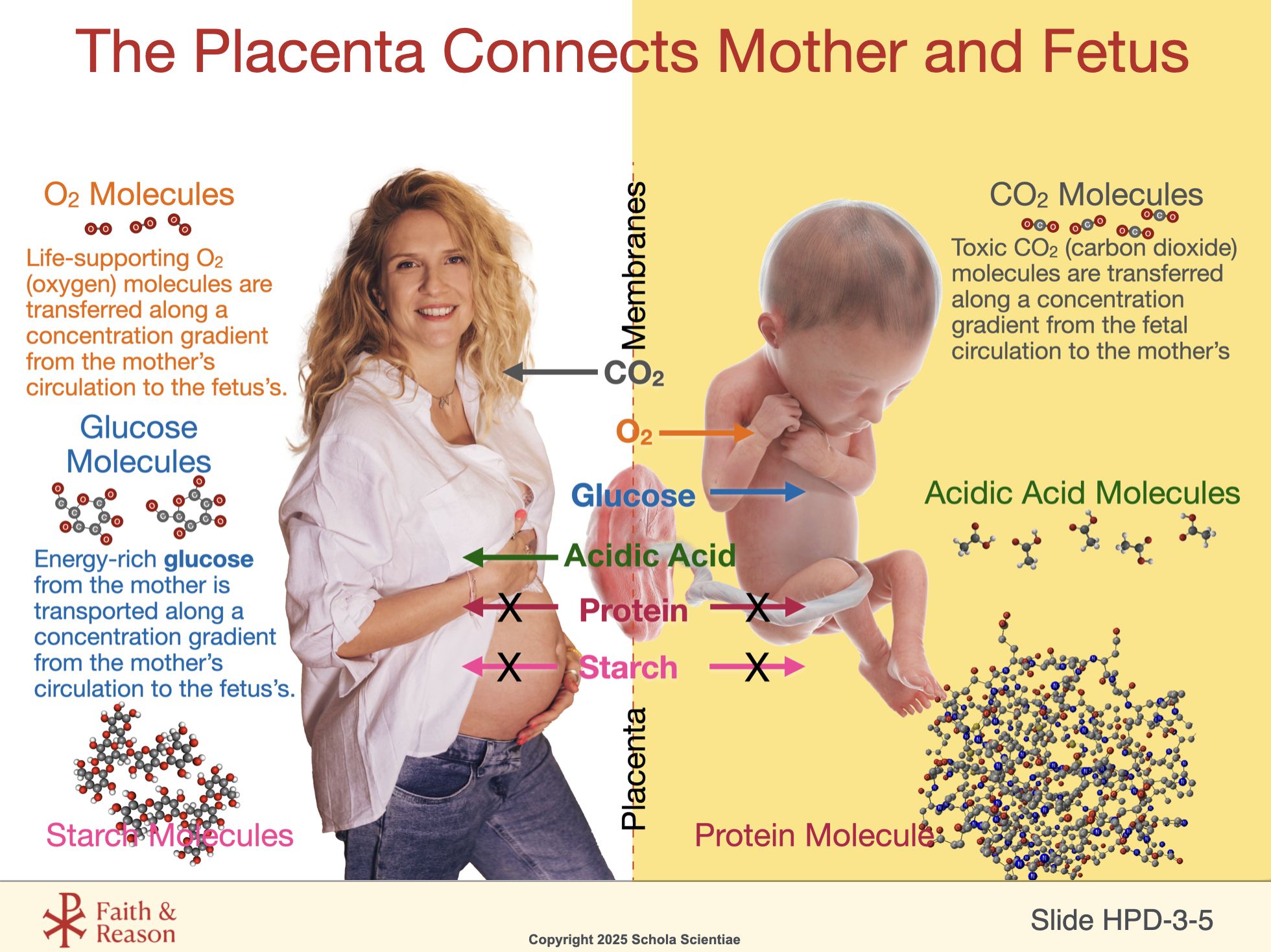
4. The Placenta Allows Exchange Without Mixing Blood
Key Idea:
• Substances move between mother and fetus without direct blood mixing.
Background Reading (Readings open in a new window):
Relevant Concept Slides (Click to enlarge):
Why this matters:
This prepares students to correctly interpret the filtration lab as a model of limited passage, rather than assuming unrestricted transfer.
5. Scientific Models Help Explain—but Do Not Fully Replicate—Living Systems
Key Idea:
• Models highlight important features of biological systems while simplifying reality.
Background Reading (Readings open in a new window):
Relevant Concept Slides (Click to enlarge):
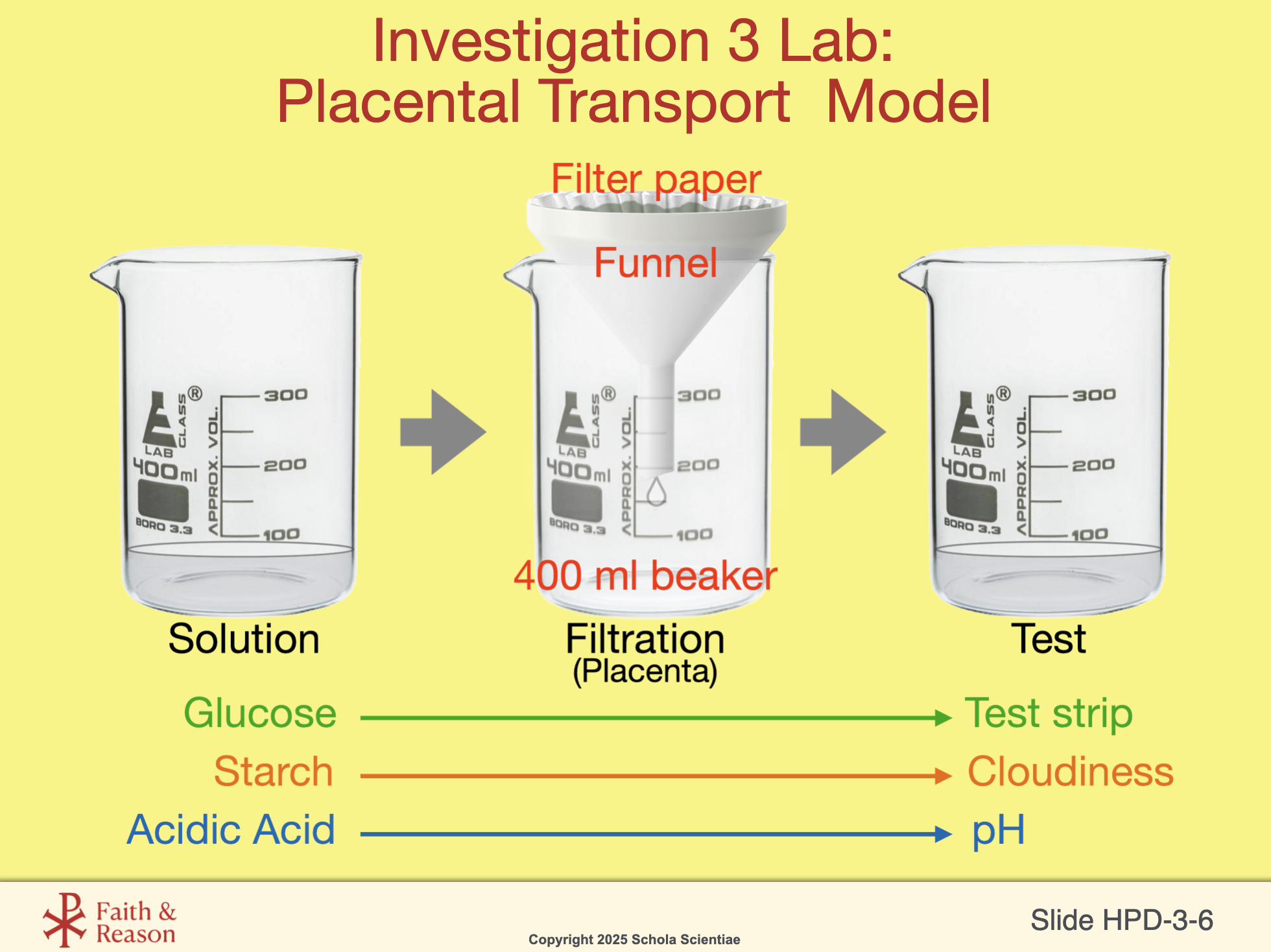
Why this matters:
Students must understand that the filtration setup represents one idea—limited passage—rather than a complete explanation of how the placenta functions.
Investigation Vocabulary:
Barrier
Definition:
A structure that separates two regions while controlling what can pass between them.
Teacher Notes — Why this matters:
This term supports the Lab modeling activity, reinforcing that the placenta is both a connector and a protector.
Classroom Example:
Teacher states: “The placenta is not just a bridge—it is a barrier with rules.”
Diffusion (dih-FYOO-zhun)
Definition:
The movement of molecules from an area of higher concentration to an area of lower concentration.
Teacher Notes — Why this matters:
Diffusion is one of the key mechanisms students will apply when modeling placental exchange in the Lab.
Classroom Example:
Teacher asks: “Why does oxygen move from the mother’s blood into the fetus’s blood?” Students connect it to concentration differences.
Placenta (pluh-SEN-tuh)
Definition:
A temporary organ that forms during pregnancy and allows materials such as oxygen, nutrients, and wastes to be exchanged between the mother and the developing fetus.
Teacher Notes — Why this matters:
This term anchors the entire HPD3 Investigation and prepares students to understand how exchange occurs without direct blood mixing.
Classroom Example:
Teacher asks: “If the mother and fetus have separate blood supplies, how can oxygen and nutrients still reach the fetus?” Students point to the placenta as the exchange interface.
Selective Permeability (suh-LEK-tiv pur-mee-uh-BIL-uh-tee)
Definition:
The property of a membrane that allows some substances to pass through while restricting others.
Teacher Notes — Why this matters:
This concept is essential for understanding how the placenta protects the fetus while still allowing necessary exchange.
Classroom Example:
Teacher explains: “The placenta acts like a filter—it allows nutrients and oxygen through, while blocking many harmful substances.”
Umbilical Cord (um-BIL-ih-kul kord)
Definition:
A flexible structure that connects the fetus to the placenta and contains blood vessels that transport materials to and from the fetus.
Teacher Notes — Why this matters:
Students often think the umbilical cord connects directly to the mother; this term clarifies the placenta’s central role.
Classroom Example:
Teacher states: “The umbilical cord is the fetus’s supply line—but it connects to the placenta, not directly to the mother.”
Waste Products
Definition:
Substances produced by normal metabolic processes that must be removed from the body, such as carbon dioxide.
Teacher Notes — Why this matters:
Students often focus on what enters the fetus; this term emphasizes that waste must also leave the fetal bloodstream.
Classroom Example:
Teacher asks: “If nutrients enter the fetus, what must leave?” Students identify waste products like carbon dioxide.